Creamy Pumpkin Pasta with Spinach and Parmesan
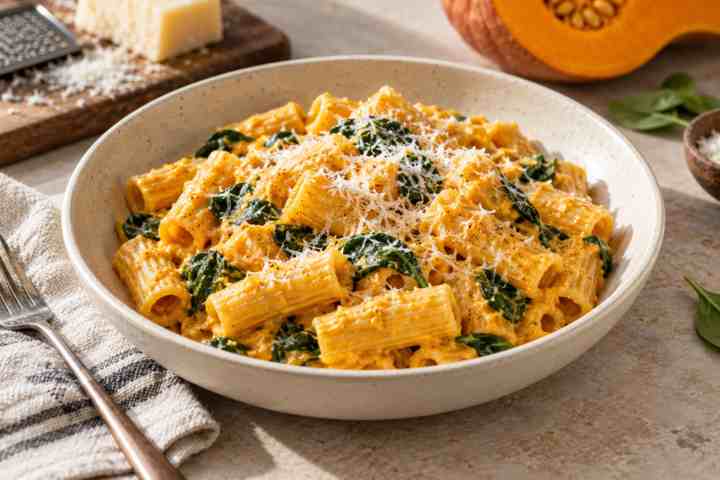
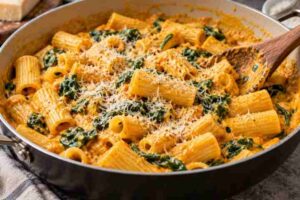
Creamy pumpkin pasta turns plain canned pumpkin into a savory dinner with garlic, sage and Parmesan. Rigatoni catches the orange sauce inside its tubes, while spinach adds a soft green contrast. The pumpkin supplies body, so the sauce needs only a modest amount of cream rather than a large pot of dairy.
The useful trick is to keep some pasta cooking water before draining. A splash loosens the pumpkin and helps the sauce spread evenly without washing away its flavor. Finish the cheese off the heat, then serve while the coating is glossy. The quantities below make four main-dish portions.
Why pumpkin works in a pasta sauce
Plain pumpkin puree is already cooked and smoothly mashed, so it can thicken a sauce without flour. Broth brings it to a stirrable consistency; cream rounds out its earthy flavor. Garlic and dried sage keep the result savory, and a small pinch of nutmeg adds warmth without making the bowl taste like dessert.
This creamy pumpkin pasta uses two pans with overlapping jobs: boil the pasta while the sauce gently simmers in a skillet. A wide skillet makes tossing easier than a small saucepan. Choose one deep enough to hold all the cooked rigatoni without spilling when you fold in the spinach.
Ingredients and buying notes
For four portions, use 340 g dry rigatoni, 15 ml olive oil, three garlic cloves (9 g), 244 g plain pumpkin puree, 120 ml low-sodium vegetable broth, 120 ml heavy cream, ½ teaspoon dried sage, ⅛ teaspoon nutmeg, ½ teaspoon fine salt, ¼ teaspoon black pepper, 140 g baby spinach and 50 g finely grated Parmesan. Reserve 240 ml pasta water, but add only what the sauce needs.
Read the can label carefully. Pumpkin pie filling contains sugar and spices and will produce a different dinner. Smooth homemade puree can work if it is about as thick as canned puree; drain a watery batch first. The recipe uses only one cup, so transfer unused canned pumpkin to a covered container and refrigerate promptly.
Freshly grated Parmesan usually melts more smoothly than coarse shreds. Grate it finely so it can disappear into the warm sauce quickly. Traditional Parmesan may contain animal rennet; choose a suitable microbial-rennet hard cheese if cooking for a vegetarian. Use low-sodium broth because the cheese and salted pasta water also contribute seasoning.
How to make creamy pumpkin pasta
1. Cook the pasta and reserve water
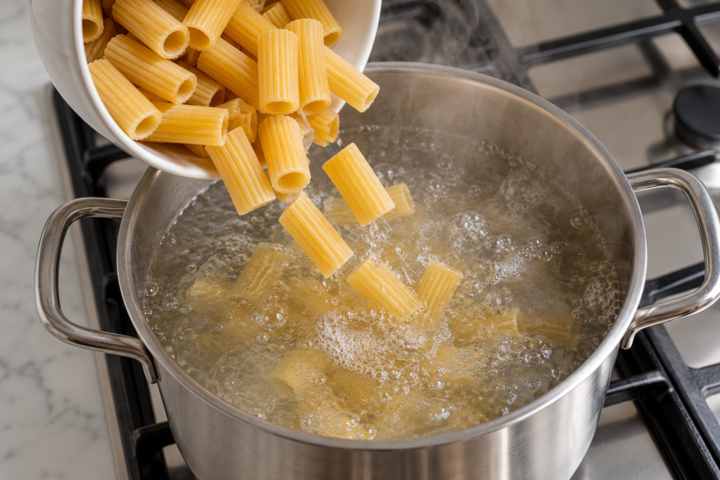
Bring a large pot of water to a boil and salt lightly. Cook rigatoni according to its package until just al dente, usually 10–12 minutes. Before draining, scoop out 1 cup (240 ml) cooking water. Drain without rinsing. Start the sauce while the pasta cooks.
2. Make the pumpkin sauce
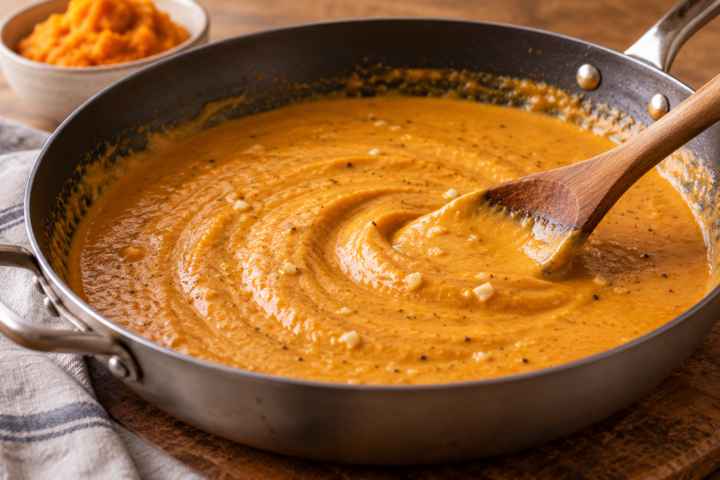
Heat olive oil in a wide, deep skillet over medium-low heat. Add garlic and stir for 30 seconds without browning. Whisk in pumpkin puree, vegetable broth, cream, sage, nutmeg, measured salt and pepper. Bring to a gentle simmer, then cook 4–5 minutes, stirring, until smooth and hot. Avoid a hard boil.
3. Fold in spinach, pasta and cheese
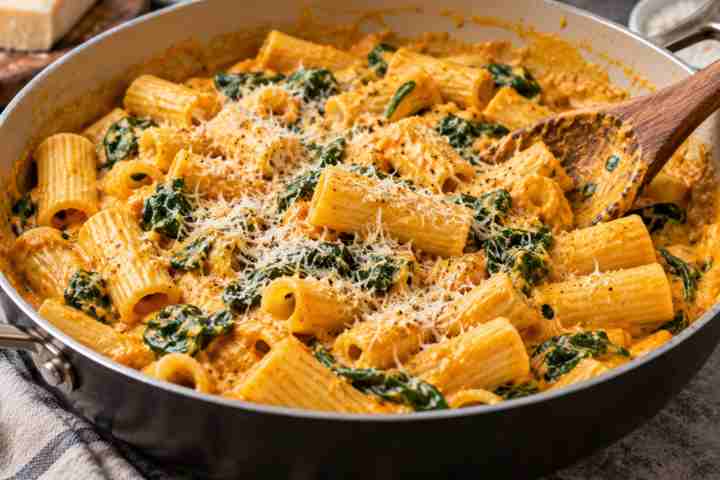
Add spinach to the sauce in handfuls, stirring for 1–2 minutes until wilted. Add drained pasta and ¼ cup (60 ml) reserved water. Toss over low heat for 1 minute, then remove from heat and fold in Parmesan. Add more reserved water a tablespoon at a time until the sauce coats the pasta smoothly. Taste and divide among four bowls.
How to get a smooth coating
The finished sauce should cling to the ridges with a little movement left in the pan. Pumpkin thickens further as it stands, so stop slightly looser than the consistency you want on the plate. Add the reserved water in small splashes, tossing between additions. You may not need the whole cup.
A fierce boil can make the sauce reduce too quickly and encourage the cheese to clump. Keep the heat low once cream enters the skillet. Remove the pan from the burner before adding Parmesan, and stir until melted. If the pasta has cooled while waiting, warm it gently in the sauce before that final cheese addition.
Practical substitutions
Penne, shells or fusilli can replace rigatoni at the same dry weight. Their cooking times differ, so use the package instructions and check a piece before draining. Gluten-free short pasta is another option, although it can break more easily; fold gently and serve promptly. The nutrition changes with the pasta you choose.
For a lighter sauce, replace the heavy cream with an equal volume of half-and-half. It will be thinner and needs especially gentle heat. For a dairy-free variation, use an unsweetened cooking cream alternative and a melting dairy-free hard-cheese alternative; expect a different flavor and texture. Do not assume a strongly coconut-flavored product will taste neutral.
Frozen chopped spinach is useful if thoroughly thawed and squeezed dry. Use about 100 g after squeezing, then heat it through in the sauce before adding pasta. Kale needs a longer cooking stage and is not a direct last-minute swap. Avoid adding frozen greens straight from the freezer, which can dilute the sauce unpredictably.
Troubleshooting
Sauce too thick? Turn off the heat and toss in hot pasta water one tablespoon at a time. Sauce too thin? Toss the pasta over low heat briefly before adding the cheese. The starch and pumpkin will help it tighten. Do not add flour directly to a finished skillet; it can leave lumps and a raw taste.
If the pumpkin tastes flat, first check the salt, then add a little more black pepper. More nutmeg will not replace seasoning and can quickly dominate. If cheese forms small strands, the pan may have been too hot or the grating too coarse. Stir in a spoonful of warm water off the heat rather than boiling it harder.
What to serve with it
Serve creamy pumpkin pasta in warm shallow bowls with a crisp green salad. For a bread option, try broiler garlic bread. Keep extra Parmesan at the table rather than mixing in an unmeasured handful, especially when comparing portions or nutrition.
For a vegetable side, balsamic roasted Brussels sprouts bring a sharper flavor. If your household prefers a tomato-based dinner, tomato paste sauce offers a separate pantry option. Use the remaining pumpkin for another meal such as pumpkin baked oatmeal, keeping that recipe’s measurements separate.
Storage and reheating
Divide leftovers into shallow containers and refrigerate within two hours, or one hour above 90°F (32°C), following USDA leftover guidance. Keep at 40°F (4°C) or below and use within 3–4 days. Do not leave the entire skillet out until completely cold.
Reheat a portion gently with a splash of water or milk, stirring and checking several spots until it reaches 165°F (74°C), as advised in USDA reheating guidance. A covered microwave-safe bowl also works; pause to stir for even heating. Freeze in individual containers for best quality up to two months. Thaw overnight in the refrigerator; the cream sauce may separate slightly.
Frequently asked questions
Can I make the sauce ahead?
Yes. Refrigerate the cooked sauce separately and cook fresh pasta when serving. Warm the sauce gently and loosen it with the new pasta cooking water. Follow the same 3–4 day refrigerated limit, counted from when the sauce was first cooked.
Is the sauce sweet?
It has pumpkin’s mild natural sweetness, balanced by garlic, broth and cheese. There is no added sugar or syrup. Use plain puree and the measured small pinch of nutmeg to keep the flavor savory.
Can I double the recipe?
Double the ingredients and use a larger pot plus a very wide skillet or Dutch oven. Reserve extra pasta water, but still add it gradually. A crowded small pan makes even tossing difficult and can leave some pasta dry.
A savory way to use canned pumpkin
Creamy pumpkin pasta is most satisfying when the sauce stays smooth, the spinach is just wilted and the rigatoni keeps a little bite. Reserve the cooking water, melt the cheese off the heat and serve promptly. This easy canned pumpkin pasta with spinach gives you a practical fall dinner without roasting a whole pumpkin first.
Follow us on Pinterest · Follow us on Instagram

Creamy Pumpkin Pasta with Spinach and Parmesan
Ingredients
Method
- Bring a large pot of water to a boil and salt lightly. Cook rigatoni according to its package until just al dente, usually 10–12 minutes. Before draining, scoop out 1 cup (240 ml) cooking water. Drain without rinsing. Start the sauce while the pasta cooks.

- Heat olive oil in a wide, deep skillet over medium-low heat. Add garlic and stir for 30 seconds without browning. Whisk in pumpkin puree, vegetable broth, cream, sage, nutmeg, measured salt and pepper. Bring to a gentle simmer, then cook 4–5 minutes, stirring, until smooth and hot. Avoid a hard boil.
- Add spinach to the sauce in handfuls, stirring for 1–2 minutes until wilted. Add drained pasta and ¼ cup (60 ml) reserved water. Toss over low heat for 1 minute, then remove from heat and fold in Parmesan. Add more reserved water a tablespoon at a time until the sauce coats the pasta smoothly. Taste and divide among four bowls.

Notes
Get easy recipes in your inbox
Join TasteWiser for new recipes, cooking tips and fresh inspiration.
Confirm your email to subscribe. Unsubscribe anytime.