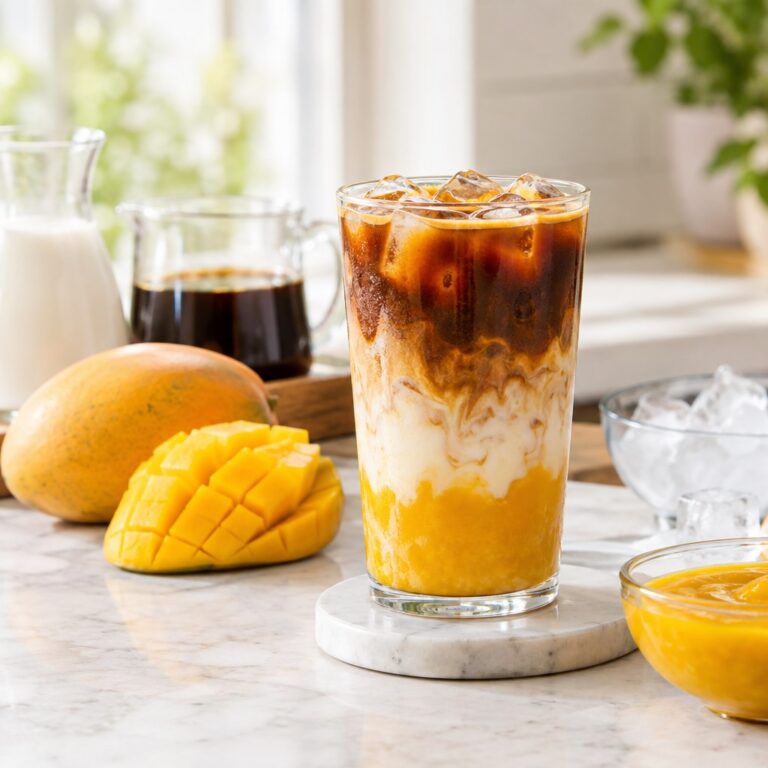
Anti-Inflammatory Meals: 3 Easy, Balanced Dinner Recipes
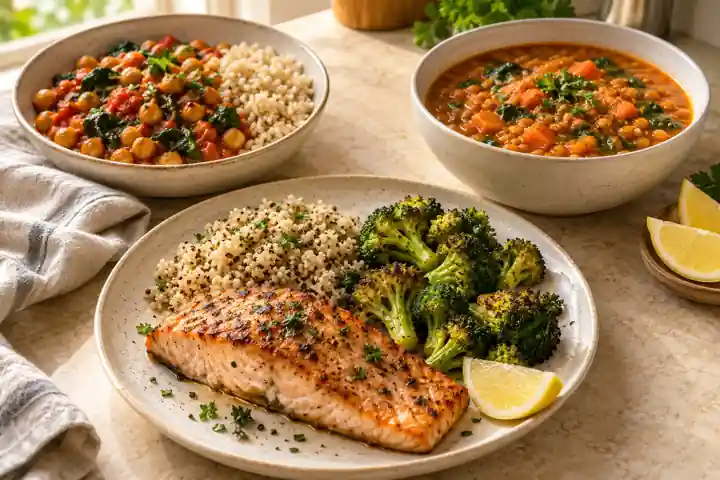
Anti-inflammatory meals can start with everyday ingredients: vegetables, beans, whole grains, olive oil and fish. These three dinners turn that idea into food you can put on the table: lemon salmon with quinoa and broccoli, chickpea-spinach brown rice bowls, and a hearty red lentil vegetable soup.
If you searched for “anti inflammation meals,” the useful starting point is an overall eating pattern rather than a single special ingredient. Here, the recipes take inspiration from Mediterranean-style eating. They offer variety and balanced ingredients; no individual dinner can promise to treat inflammation or replace medical care.
Each recipe in this anti-inflammatory meals collection serves two and includes its own measurements, nutrition information and printable card at the end. Jump to the recipe cards, or use the comparisons below to choose a dinner.
What does anti-inflammatory eating mean?
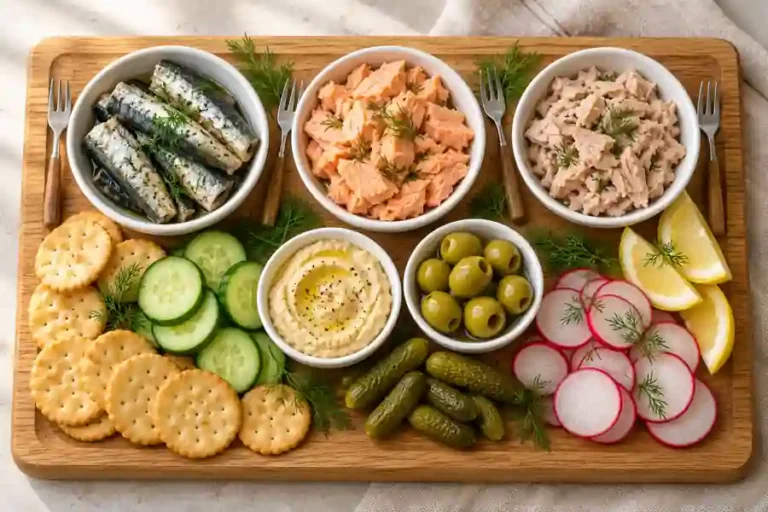
There is no single, universally defined anti-inflammatory diet. Research on Mediterranean-style patterns suggests that a combination of plant foods, unsaturated fats and other foods may influence markers of inflammation. The evidence concerns patterns followed over time, not a guaranteed response to one bowl of soup. Sardines are another Mediterranean staple, so try sardines breakfast.
Harvard’s Nutrition Source review discusses this research and its limitations. Its Mediterranean diet overview describes an approach centered on vegetables, fruit, legumes, whole grains, olive oil and foods such as fish. These recipes use that ingredient pattern as cooking inspiration.
For practical anti-inflammatory meals, think about what you can include regularly: a vegetable you enjoy, a source of protein, a whole grain or legume, and flavorful seasoning. Portion size and individual dietary needs still matter. If you need a diet for a diagnosed condition, a registered dietitian can help adapt the ingredients and portions.
Choose one of these three dinners
| Meal | Main ingredients | Useful when you want |
|---|---|---|
| Lemon salmon plate | Salmon, quinoa, broccoli, olive oil | A fish dinner with a whole-grain side |
| Chickpea-spinach rice bowl | Chickpeas, brown rice, tomatoes, spinach | A plant-based pantry meal |
| Red lentil vegetable soup | Red lentils, carrots, tomatoes, spinach | A hearty one-pot vegan dinner |
These anti-inflammatory meals share several ingredients, so you can shop for all three without filling the cupboard with separate sauces. Onion, garlic, lemon, spinach and olive oil work across the recipes. The salmon plate adds fish, while the bowls and soup provide two legume-based choices. For another light soup, try our Mediterranean lemon chicken soup.
1. Lemon salmon with quinoa and broccoli
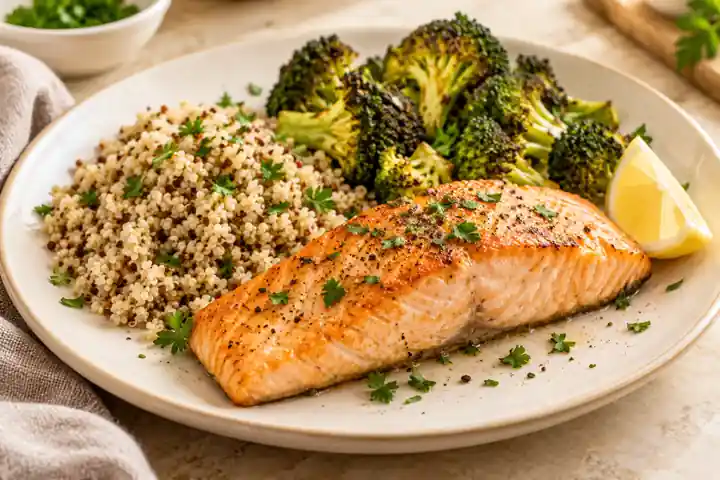
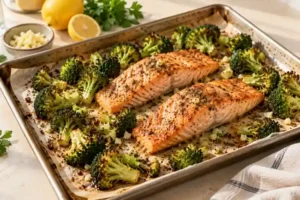
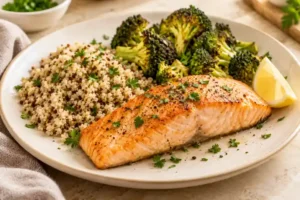
This plate combines a baked salmon fillet with a modest mound of quinoa and a generous portion of broccoli. Lemon and garlic season the meal without a separate bottled dressing. It is the fish option in this collection of anti-inflammatory meals.
Ingredients for two servings
- 300 g salmon, divided into two similar fillets; fully thawed if frozen
- 90 g dry quinoa, rinsed
- 240 ml water, or the amount directed on your quinoa package
- 300 g broccoli florets, cut into similar pieces
- 1 tablespoon/15 ml olive oil, divided
- 2 garlic cloves, minced
- 2 tablespoons/30 ml lemon juice
- ¼ teaspoon fine salt and ¼ teaspoon black pepper
- 2 tablespoons chopped parsley
Cook the grain and roast the vegetables
Heat the oven to 400°F/200°C. Put the rinsed quinoa and water in a saucepan, bring to a boil, then cover and simmer gently according to the package, usually about 15 minutes. Remove from the heat, leave covered for 5 minutes and fluff with a fork. Add a little water during cooking if the pan dries before the grain softens.
Toss the broccoli with two teaspoons of the oil and half the salt and pepper. Spread it on a lined rimmed baking sheet and roast for 10 minutes. Leave room to add the salmon in a separate area of the tray.
Add the salmon and finish the plate
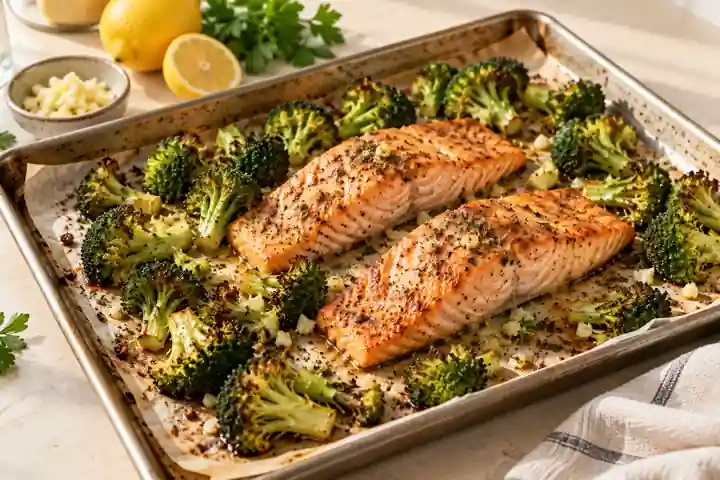
Pat the salmon dry and check for pin bones. Combine the remaining teaspoon of oil with the garlic, one tablespoon of lemon juice, and the remaining salt and pepper. Brush over the fish, place on the tray beside the broccoli, and roast for about 12–15 minutes more. Check the thickest part of each fillet with a food thermometer: it should reach 145°F/63°C. Thicker pieces may need longer.
Remove broccoli separately if it is ready before the fish. Divide the cooked quinoa, salmon and broccoli between two plates. Finish with the remaining lemon juice and parsley. Serve the full plate as written for the nutrition figures below.
Salmon plate substitutions
For anti-inflammatory meals on a smaller budget, frozen salmon can be useful; thaw it safely in the refrigerator before cooking. Brown rice can replace quinoa if you cook it separately according to its label. Cauliflower or green beans can replace the broccoli, but check their tenderness rather than assuming identical roasting times.
If you are looking for other ways to serve pantry fish, our sardine toast recipes and canned mackerel meals offer different lunch and dinner formats.
2. Chickpea-spinach brown rice bowls
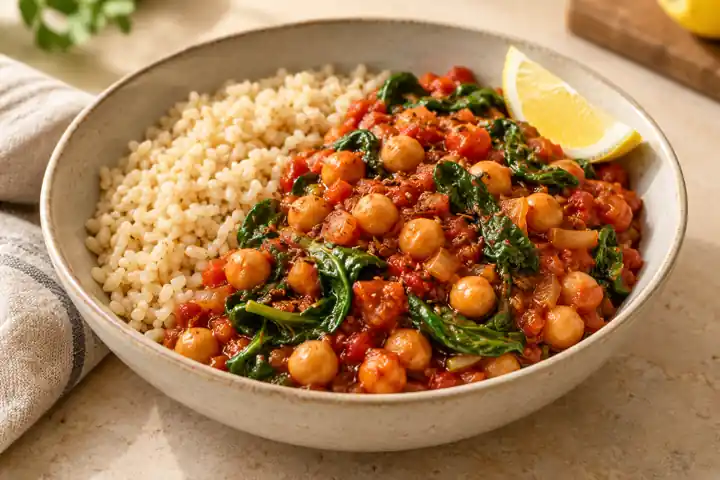
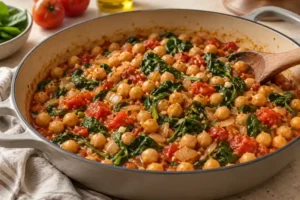
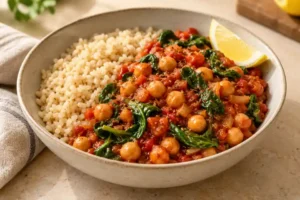
A tomato-and-chickpea skillet makes a satisfying topping for brown rice. Spinach folds into the sauce at the end, and lemon brightens it just before serving. This is one of the easiest anti-inflammatory meals to build mainly from pantry and freezer ingredients.
Ingredients for two servings
- 100 g dry brown rice
- 300 ml water, adjusted to your rice package’s directions
- 240 g cooked chickpeas, drained; use no-added-salt canned chickpeas if convenient
- 1 tablespoon/15 ml olive oil
- 1 small onion, about 100 g, diced
- 2 garlic cloves, minced
- 400 g canned chopped tomatoes, preferably no added salt
- 100 g spinach
- 1 teaspoon ground cumin and ½ teaspoon sweet paprika
- ¼ teaspoon fine salt and ¼ teaspoon black pepper
- 1 tablespoon/15 ml lemon juice
Cook the rice and chickpea sauce
Cook the brown rice with the water according to its package; varieties differ, so use the label’s liquid ratio and cooking time. Keep it covered after cooking while finishing the topping. If using canned chickpeas, rinse and drain them before adding them to the skillet.
Heat the olive oil in a deep skillet over medium heat. Cook the onion for about 5 minutes until softened. Add garlic, cumin and paprika and stir for about 30 seconds, taking care not to scorch the spices. Add tomatoes, chickpeas, salt and pepper, then simmer uncovered for 10–15 minutes, stirring occasionally.
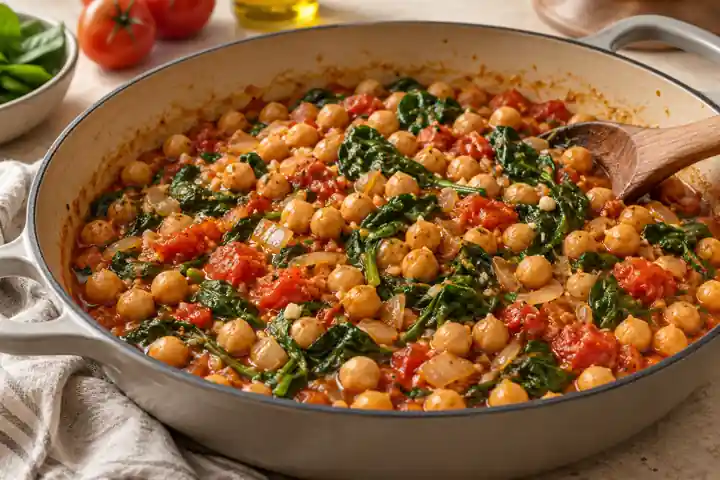
Fold in the spinach and cook until wilted and hot. Stir in the lemon juice, taste the sauce, and divide it over the rice in two bowls. If the sauce gets too thick before the chickpeas are hot, add a splash of water. If it is watery, simmer the sauce a little longer before adding the spinach.
Rice bowl substitutions
Chickpeas are helpful for plant-based anti-inflammatory meals because they can anchor a dish without a meat substitute. White beans or cooked lentils also work in this tomato sauce, although their texture and nutrition differ. Frozen spinach is convenient too: thaw and squeeze out excess liquid before adding enough to suit the sauce.
For more vegetables, serve the bowls with a simple cucumber salad or a portion of our roasted cauliflower. Additional sides are separate from the bowl’s nutrition calculation.
3. Red lentil vegetable soup
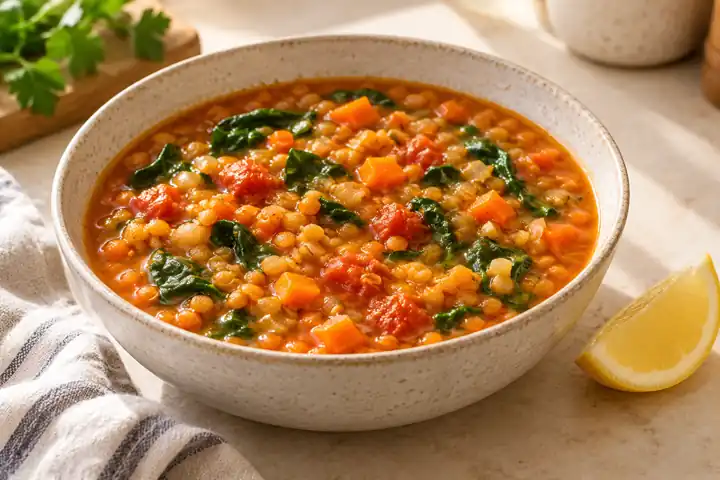
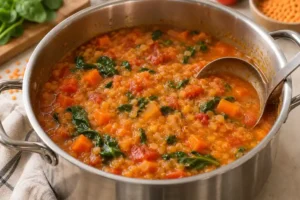
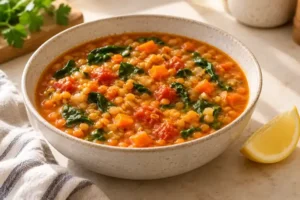
Split red lentils soften into the broth, giving this soup body without cream. Carrot, tomato, garlic, ginger and a small amount of turmeric create a warm, savory base. It is a spoonable option for anti-inflammatory meals when you would rather cook in one pot.
Ingredients for two large meal-size bowls
- 150 g dry split red lentils, picked over and rinsed
- 1 tablespoon/15 ml olive oil
- 1 small onion, about 100 g, diced
- 150 g carrots, cut into small ¼-inch/5 mm dice
- 2 garlic cloves, minced
- 10 g fresh ginger, peeled and finely grated
- 1 teaspoon ground cumin and ½ teaspoon ground turmeric
- 400 g canned chopped tomatoes, preferably no added salt
- 750 ml low-sodium vegetable broth, plus water as needed
- 60 g spinach
- ¼ teaspoon fine salt and ¼ teaspoon black pepper
- 1 tablespoon/15 ml lemon juice
Simmer until the lentils soften
Heat the oil in a large saucepan over medium heat. Add onion and carrot and cook for about 5 minutes, stirring. Add garlic, ginger, cumin and turmeric and cook for about 30 seconds. Stir in lentils, tomatoes, broth, salt and pepper.
Bring to a gentle boil, then reduce the heat and simmer with the lid partly covering the pot for about 20–25 minutes. Stir regularly so the lentils do not stick. They should be very soft and beginning to break down, and the carrot pieces should be tender. Add water a little at a time if the soup thickens before the lentils finish cooking.
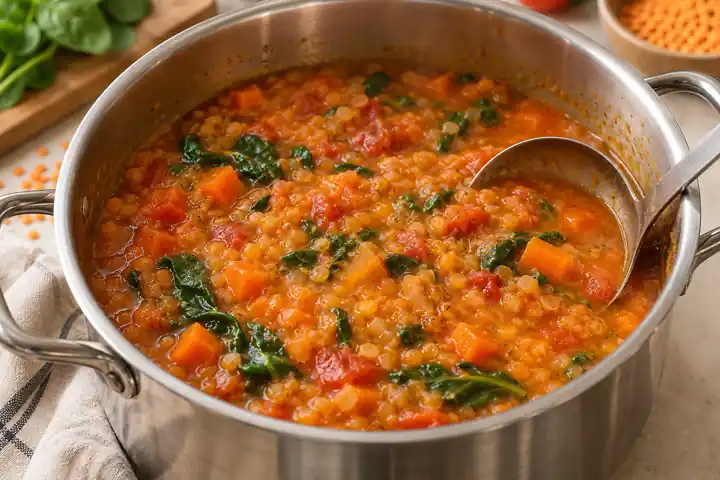
Stir in the spinach until wilted and hot, then add lemon juice. Taste and divide the soup into two generous bowls. It will thicken as it stands; loosen reheated portions with a little water or broth.
Use turmeric for flavor
The turmeric in these anti-inflammatory meals is a culinary seasoning, not a treatment dose. Research on turmeric or concentrated curcumin products does not establish that this soup treats a health condition. The NIH’s National Center for Complementary and Integrative Health explains the uncertainty around turmeric health claims.
Split red lentils are important for this texture. Brown or green lentils usually hold their shape and need a different cooking time and potentially more liquid. If you swap them, use their package guidance and check tenderness throughout.
Shopping for anti-inflammatory meals
Buy ingredients you can use in more than one dinner: one bag of spinach covers both plant-based recipes, while lemon and garlic season all three. Frozen broccoli and frozen fish can reduce waste. Plain canned tomatoes, cooked chickpeas and dry lentils are useful shelf-stable starting points.
Check the sodium in broth, canned beans and tomatoes. The recipes contain a measured amount of salt; a salty broth can change both flavor and nutrition considerably. Use no-added-salt options where available and taste at the end before adding more.
For affordable anti-inflammatory meals, you can rotate the two legume dishes more often and use fish when it fits your budget. Choose certified halal broth if needed, and read seasoning labels for allergens. All three recipes use no pork or wine.
Cooking anti-inflammatory meals efficiently
Choose one of these anti-inflammatory meals for dinner rather than cooking all three at once. For the salmon plate, start the quinoa while the oven heats, then roast the broccoli before adding the fish. For the chickpea bowl, start the brown rice first so the sauce can cook while the grain simmers.
When making soup, cut the carrots small and keep the pot at a gentle simmer. The lentils can settle on the bottom, so stir and check the liquid level. If you double a recipe, use cookware with enough room and check doneness rather than simply doubling the cooking time.
Storing and reheating anti-inflammatory meals
Divide cooked food into shallow containers and refrigerate promptly, within two hours, or within one hour when the surroundings are above 90°F/32°C. Keep the refrigerator at 40°F/4°C or below. Use refrigerated leftovers within 3–4 days and reheat to 165°F/74°C throughout.
Keep salmon, quinoa and broccoli in separate sections if possible so you can warm the fish gently without overcooking the vegetables. Add a little water to rice bowls before reheating, and stir partway through for even heating. Reheat soup in a saucepan or microwave, stirring and adding water as needed.
Cool and freeze portions promptly if you will not eat them within the refrigerator window. Soup and chickpea sauce freeze especially conveniently; use within 2–3 months for best quality. Thaw in the refrigerator before reheating. Rice, fish and vegetables may change texture after freezing.
Calories per serving
Salmon quinoa plate: approximately 600 calories. Chickpea rice bowl: approximately 525 calories. Red lentil vegetable soup: approximately 455 calories. Each figure represents half of its complete recipe, including the grain where listed. Bread, extra oil and additional sides are not included.
Nutrition comparison
| Per serving | Salmon plate | Chickpea bowl | Lentil soup |
|---|---|---|---|
| Calories | 600 kcal | 525 kcal | 455 kcal |
| Protein | 42 g | 18 g | 24 g |
| Carbohydrates | 45 g | 85 g | 72 g |
| Fat | 28 g | 13 g | 8 g |
| Saturated fat | 5 g | 2 g | 1 g |
| Fiber | 7 g | 15 g | 14 g |
| Sugar | 3 g | 10 g | 13 g |
| Sodium | 400 mg | 450 mg | 500 mg |
Nutrition is an ingredient-based estimate, not a laboratory result. Salmon species, canned ingredients, broth and exact serving sizes change the figures. Calculations use dry grain and lentil weights as listed, cooked drained chickpeas, and the measured oil. Use your own ingredient labels when a precise carbohydrate or sodium count matters.
Frequently asked questions
What are easy anti-inflammatory meals for beginners?
Start with a dinner you already enjoy and include vegetables, a protein source and a whole grain or legume. The chickpea bowl is a useful pantry option, while the salmon plate keeps the grain, fish and vegetable easy to portion separately.
Do anti-inflammatory meals cure inflammation?
No recipe can promise that. Research looks at dietary patterns over time, and inflammation has many possible causes. These dinners are food ideas rather than a treatment plan; persistent symptoms or a diagnosed condition deserve individualized care.
Can these dinners be vegan?
The chickpea bowls and lentil soup are vegan when made with appropriate vegetable broth and ingredients. The salmon plate contains fish. If replacing salmon with tofu or beans, adjust the method and nutrition rather than treating it as an identical swap.
Do I need expensive supplements or special powders?
No. These recipes use ordinary ingredients and culinary amounts of herbs and spices. They do not require supplements, detox products or a branded ingredient blend.
Are these low-carb meals?
They are not designed as low-carbohydrate recipes. Brown rice, quinoa, chickpeas and lentils contribute carbohydrate as well as other nutrients. Use the recipe measurements and nutrition panel to decide whether a serving fits your needs.
Recipe development and sources
Tastewiser developed these anti-inflammatory meals as Mediterranean-inspired dinner combinations. Follow the texture and temperature checks in the recipe cards, especially when using a different grain or thicker fish fillet.
Nutrition context comes from the Harvard resources linked above. Cooking and reheating checks follow FoodSafety.gov’s temperature guidance, and leftover handling follows USDA storage guidance.
A practical dinner rotation
Choose the salmon plate when you want fish and roasted vegetables, the chickpea bowls for a pantry-based dinner, or the lentil soup for a hearty one-pot meal. These easy anti-inflammatory meals make a useful starting rotation of whole-grain dinner ideas, vegetable-rich bowls and simple legume recipes that you can adapt to your kitchen.
Follow us on Pinterest and Follow us on Instagram for more dinner ideas.

Lemon Salmon with Quinoa and Broccoli
Ingredients
Equipment
Method
- Heat oven to 400°F / 200°C. Put rinsed quinoa and water in a saucepan, bring to a boil, cover and simmer gently according to the package, usually about 15 minutes. Add a splash of water if needed before tender. Remove from heat, leave covered 5 minutes and fluff.
- Toss broccoli with 2 teaspoons oil and half the salt and pepper. Spread on a lined rimmed baking sheet, leaving space for fish. Roast for 10 minutes.

- Pat salmon dry and check for pin bones. Mix remaining teaspoon oil, garlic, 1 tablespoon lemon juice and remaining salt and pepper. Brush over fish. Put fish beside broccoli and roast another 12–15 minutes, until each fillet reaches 145°F / 63°C at its thickest point. Remove broccoli separately if ready first; thicker fish may need longer.
- Divide quinoa, salmon and broccoli between two plates. Finish with remaining tablespoon lemon juice and parsley.
Notes
Chickpea Spinach Brown Rice Bowls
Ingredients
Equipment
Method
- Cook brown rice in water according to its package, using the package liquid ratio and timing. Keep covered while finishing the topping. Different rice varieties need different cooking times.
- Heat oil in a deep skillet over medium heat. Cook onion about 5 minutes until softened. Add garlic, cumin and paprika and stir for about 30 seconds. Add tomatoes, cooked drained chickpeas, salt and pepper.
- Simmer uncovered 10–15 minutes, stirring. Add a splash of water if sauce becomes too thick. Fold in spinach and cook until wilted and hot. If sauce is thin, reduce it before adding the spinach.
- Stir lemon juice into the chickpea sauce. Taste, then divide sauce and cooked brown rice between two bowls.
Notes
Red Lentil Vegetable Soup
Ingredients
Equipment
Method
- Heat oil in a large saucepan over medium heat. Cook onion and carrot about 5 minutes, stirring. Add garlic, ginger, cumin and turmeric and cook about 30 seconds.
- Add rinsed split red lentils, tomatoes, broth, salt and pepper. Bring to a gentle boil, reduce heat and simmer with lid partly on for about 20–25 minutes, stirring regularly. Add water as needed if soup thickens before lentils and carrots are tender. Lentils should be very soft and beginning to break down.
- Stir in spinach until wilted and hot, then add lemon juice. Taste and divide into two large meal-size bowls. Loosen with water or broth if needed.
Notes
Get easy recipes in your inbox
Join TasteWiser for new recipes, cooking tips and fresh inspiration.
Confirm your email to subscribe. Unsubscribe anytime.