Balsamic Roasted Brussels Sprouts (Crisp Edges, Tender Centers)
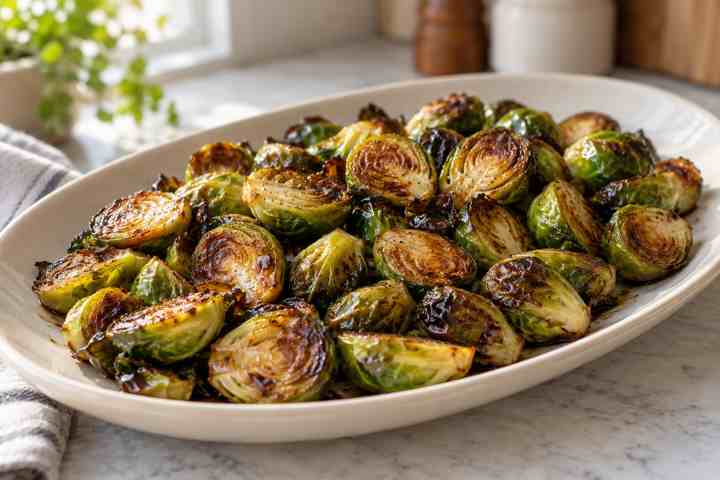
Balsamic roasted Brussels sprouts are a simple way to put a deeply browned vegetable side on the table. The cut sides roast against a hot metal sheet, while the rounded leaves become tender. A small splash of balsamic vinegar and maple syrup goes on afterward, giving the sprouts a tangy finish without a burnt-sugar coating.
This version uses no bacon, cheese or nuts. You can serve it alongside a roast, spoon it next to a simple skillet dinner or add it to a holiday spread. The most useful details are the cutting, drying and spacing: get those right before worrying about extra toppings.
Why roast before adding balsamic?
Brussels sprouts contain moisture that needs room to evaporate. Oil and direct contact with the pan encourage browning. Adding vinegar at the beginning puts extra water on the sheet, while a sugary glaze can darken before the centers are cooked. Tossing the finished sprouts with a measured dressing keeps both parts easier to control.
The finished dish has crisp edges when served promptly, but it is not meant to stay crunchy indefinitely. Any dressing softens roasted vegetables as it sits. For a party, keep the roasted sprouts and dressing separate until you are close to serving, then toss just the amount you need.
Ingredients and choosing your sprouts
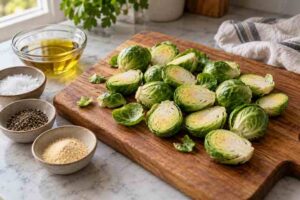
For four side portions, use 1½ pounds (680 g) Brussels sprouts, 2 tablespoons (30 ml) olive oil, ½ teaspoon (3 g) fine salt, ¼ teaspoon black pepper and ½ teaspoon garlic powder. The finish is just 1 tablespoon (15 ml) ordinary balsamic vinegar whisked with 1 teaspoon (7 g) pure maple syrup. Full quantities also appear in the recipe card.
Choose firm sprouts with tightly packed leaves. Small to medium sprouts usually cook more evenly together. If your bag has a few very large ones, quarter those instead of leaving every piece as a half. Try to keep the thickness of the pieces similar, even if their shapes differ.
Trim only the dry end of each stem. Cutting far into the core can make the leaves fall apart. Remove yellowed or damaged outer leaves, rinse if needed and dry thoroughly. A salad spinner followed by a clean towel is useful when the sprouts hold water between their leaves.
Use regular balsamic vinegar rather than a bottled thick glaze for this version. Glaze is more concentrated and often sweeter, so an equal spoonful will not taste the same. The small amount of maple is there to round out the acidity. It should not turn the sprouts into a sticky dessert-like side.
How to make balsamic roasted Brussels sprouts
1. Trim and season
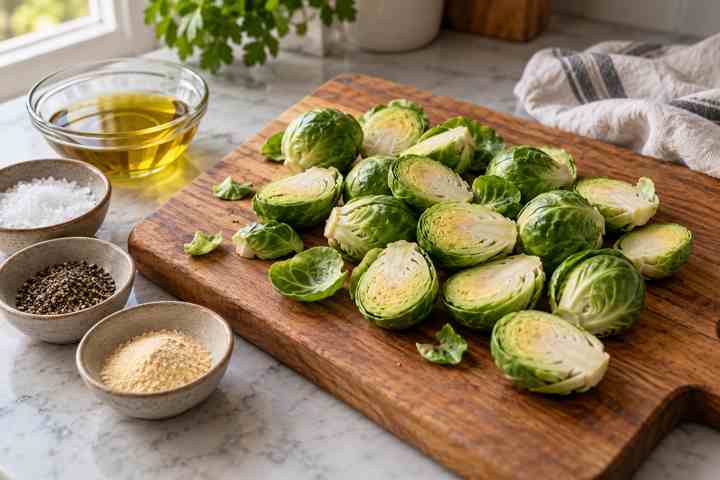
Heat the oven to 425°F (220°C). Trim the dry stem ends without removing the core completely. Halve the sprouts lengthwise; quarter unusually large ones. Dry well, then toss with olive oil, salt, pepper and garlic powder. Spread cut-side down on a large rimmed metal baking sheet with space between pieces.
2. Roast until browned
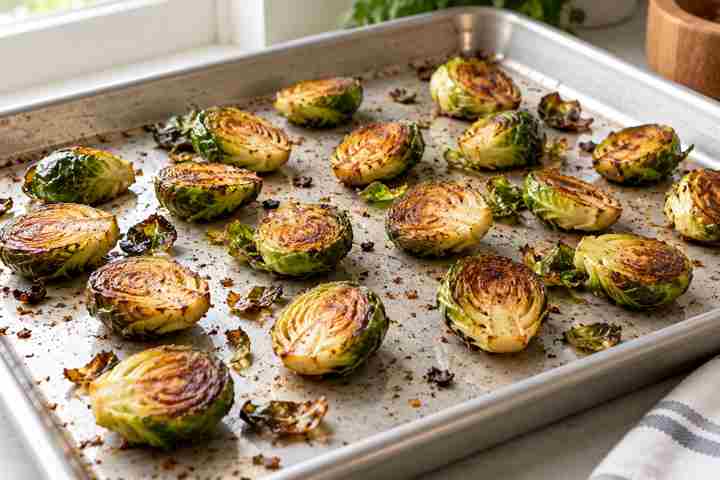
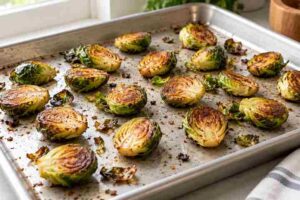
Roast for 20 minutes without moving the sprouts. Check the cut surfaces and turn the pieces with a spatula. Continue for 5–10 minutes, until the centers are fork-tender and the flat sides are golden brown. Remove loose leaves early if they brown faster than the halves.
3. Finish with balsamic
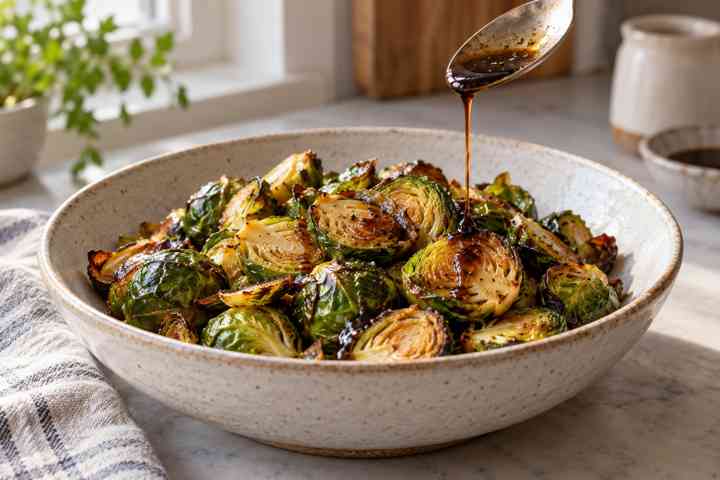
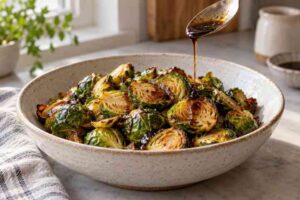
Whisk balsamic vinegar and maple syrup in a small bowl. Toss with the hot roasted sprouts off the heat. Transfer to a serving dish and divide into four portions. Serve promptly for the crispest edges; the vinegar softens the surface as the sprouts stand.
Tips for better browning
Put the flat cut surfaces against the sheet rather than balancing the sprouts on their rounded backs. Leave room around each piece. If they overlap, use two pans; a tightly packed tray produces more steam and paler sprouts. For two trays, rotate their positions and check both because most ovens heat unevenly.
A heavy rimmed metal sheet gives a different result from a deep glass baking dish. A dark pan can brown the undersides faster, so check before the full suggested time. Parchment makes cleanup easier but may soften the direct-pan browning slightly. Avoid turning the sprouts repeatedly during the first part of roasting.
A fork should enter a thick center easily before you remove the pan. Dark edges alone do not tell you whether a large sprout is tender. If the surface is browning too fast, lower the oven slightly and continue until the centers soften. Remove any small loose leaves before they turn black.
Substitutions and serving variations
Leave out the maple syrup if you prefer a sharper balsamic finish. The dressing will taste more acidic, so start with a little less and toss before deciding whether to add the rest. The calorie and sugar estimate changes when you omit the syrup. Do not add extra salt automatically to compensate.
For a little heat, add a pinch of red pepper flakes after roasting. A squeeze of lemon can replace the balsamic for a different, brighter dish, although it will no longer have the same flavor. Keep any optional nuts or cheese separate so people can choose their own toppings; neither is included in the nutrition.
Frozen sprouts work differently. They release more water, and the centers may be softer before the outside browns. This timing is written for fresh trimmed sprouts, so do not expect a direct frozen substitution to give identical results. Use a separate frozen-vegetable method if that is what you have.
What to serve with them
Serve this vegetable side with air fryer chicken breast or slow cooker chicken and potatoes. The tangy vinegar finish helps balance those savory main dishes. Bread, potatoes and other additions are separate from the sprout portion estimate.
For a holiday table, combine balsamic roasted Brussels sprouts with herb stuffing. Our maple roasted carrots offer another vegetable option. If both sides need the oven, plan the tray space in advance and dress the sprouts at the last moment.
Storage and reheating
Transfer leftovers to shallow covered containers and refrigerate within two hours, or one hour above 90°F (32°C). Keep at 40°F (4°C) or below and use within 3–4 days. These limits follow USDA leftover guidance. Do not leave a large serving dish on the counter until completely cold.
Reheat leftovers to 165°F (74°C). A hot oven or an air fryer can dry the surface better than a microwave, but the dressed sprouts will remain softer than a fresh batch. Check the center of the portion with a food thermometer. Add more vinegar only after tasting, because the original dressing is already present.
You can freeze cooled portions for up to two months for quality, although the thawed leaves will be softer. Thaw in the refrigerator, then reheat thoroughly. For a make-ahead meal with the best texture, trim the raw sprouts in advance, keep them refrigerated and roast closer to serving.
Frequently asked questions
Why are my sprouts bitter?
Brussels sprouts have a naturally assertive flavor. Older produce, scorched leaves and too much char can make that flavor harsher. Choose fresh firm sprouts, remove damaged leaves and aim for golden surfaces rather than blackened ones. A little maple balances the finish but cannot fix burnt food.
Can I double this recipe?
Yes. Double every ingredient and divide the sprouts between two large sheets. Keep them in a single layer and allow extra time if the oven loses heat. Toss the dressing through both trays evenly after roasting rather than pouring most of it over one pan.
Can I use fresh garlic?
Minced fresh garlic can burn during a long roast. Garlic powder is easier to distribute here. If you prefer fresh garlic, cook it gently in a little oil separately and add it to the finished sprouts, counting that extra oil separately if you track nutrition.
A reliable roasted vegetable side
For balsamic roasted Brussels sprouts with browned edges and tender centers, use evenly sized pieces, dry them well and give them room on the tray. Add the light balsamic finish after roasting and serve while warm. This easy Brussels sprout side fits both weeknight dinners and holiday menus.
Follow us on Pinterest · Follow us on Instagram

Balsamic Roasted Brussels Sprouts (Crisp Edges, Tender Centers)
Ingredients
Method
- Heat the oven to 425°F (220°C). Trim the dry stem ends without removing the core completely. Halve the sprouts lengthwise; quarter unusually large ones. Dry well, then toss with olive oil, salt, pepper and garlic powder. Spread cut-side down on a large rimmed metal baking sheet with space between pieces.

- Roast for 20 minutes without moving the sprouts. Check the cut surfaces and turn the pieces with a spatula. Continue for 5–10 minutes, until the centers are fork-tender and the flat sides are golden brown. Remove loose leaves early if they brown faster than the halves.
- Whisk balsamic vinegar and maple syrup in a small bowl. Toss with the hot roasted sprouts off the heat. Transfer to a serving dish and divide into four portions. Serve promptly for the crispest edges; the vinegar softens the surface as the sprouts stand.
Notes
Get easy recipes in your inbox
Join TasteWiser for new recipes, cooking tips and fresh inspiration.
Confirm your email to subscribe. Unsubscribe anytime.