Homemade Sauerkraut (Small-Batch Fermented Cabbage)
Homemade sauerkraut turns finely shredded cabbage and pickling salt into a crisp, tangy condiment. Once fermented, a spoonful adds brightness to sandwiches, potato bowls and simple dinners without needing a separate sauce.
This small batch uses 2½ pounds of cabbage and the salt quantity published in Oregon State University Extension’s small-batch guide. A fermentation weight keeps the cabbage submerged, while an airlock lid allows gas to escape. Keep a room thermometer nearby and monitor the ferment rather than relying on a calendar alone.
Jump to the recipe card for quantities and the complete method.
What Is Homemade Sauerkraut?
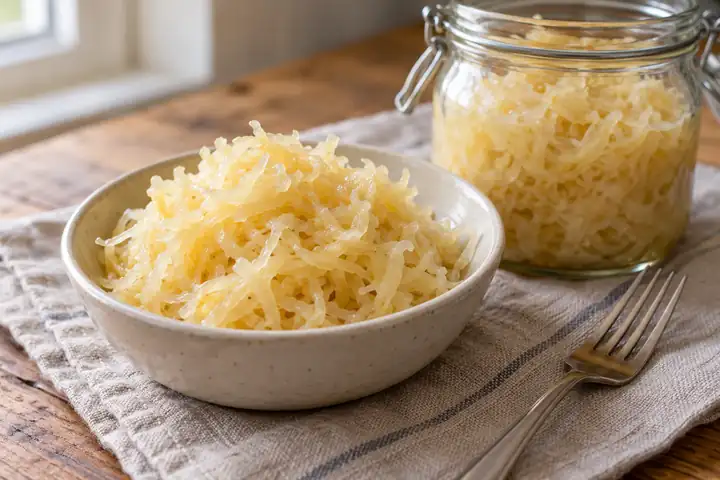
Sauerkraut is cabbage preserved through lactic acid fermentation. Salt draws liquid from the shredded leaves; bacteria naturally present on the cabbage use its sugars and produce acid. The flavor gradually changes from salty raw cabbage to pleasantly sour kraut.
This recipe adds neither vinegar nor a starter culture. Its main ingredients are cabbage and salt, with prepared brine used only if the cabbage does not release enough liquid. The finished batch belongs in the refrigerator; this article covers fermentation and refrigerated storage.
Ingredients for Homemade Sauerkraut
- Green cabbage: Weigh 2½ pounds (1,134 grams) after removing damaged outer leaves and the core. Choose a firm, fresh head.
- Canning or pickling salt: Use 4½ level teaspoons. The measured quantity is important; do not reduce it or substitute a low-sodium salt blend.
- Optional topping-up brine: If needed, dissolve 1⅛ teaspoons of pickling salt in 1 cup (240 ml) hot water, then cool completely before adding. Use only enough to maintain submersion.
Keep this first batch plain. You can add pepper, herbs or a little olive oil to an individual serving later, without changing the fermentation formula. Use the specified fine pickling salt rather than assuming that coarse or flaky salt measures the same by volume.
Equipment for Homemade Sauerkraut
Use a clean, undamaged half-gallon (2-quart) wide-mouth glass jar, a food-safe fermentation weight that fits inside it, and a compatible airlock lid. Wash the jar, tools and weight thoroughly in hot soapy water, rinse well and follow the equipment maker’s cleaning directions. Let hot equipment cool before filling.
Have a kitchen scale, a large bowl and a clean tamper or sturdy spoon ready. A calibrated food pH meter helps track acidification. Follow its instructions for calibration, sampling and cleaning.
The National Center for Home Food Preservation recommends keeping cabbage 1–2 inches below brine. Leave 3–4 inches of space between the packed cabbage and the jar rim, allowing room for brine, the weight and expansion. Use a larger suitable vessel if your equipment will not fit comfortably.
How to Make Homemade Sauerkraut
1. Shred the cabbage
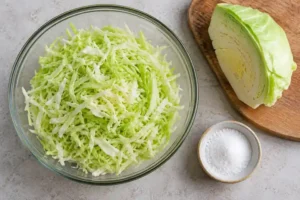
Remove damaged outer leaves, rinse the cabbage under cool running water and drain. Quarter it, remove the core and weigh the usable cabbage. Slice into thin, even shreds, about the thickness of a coin. Put the measured cabbage in your large bowl.
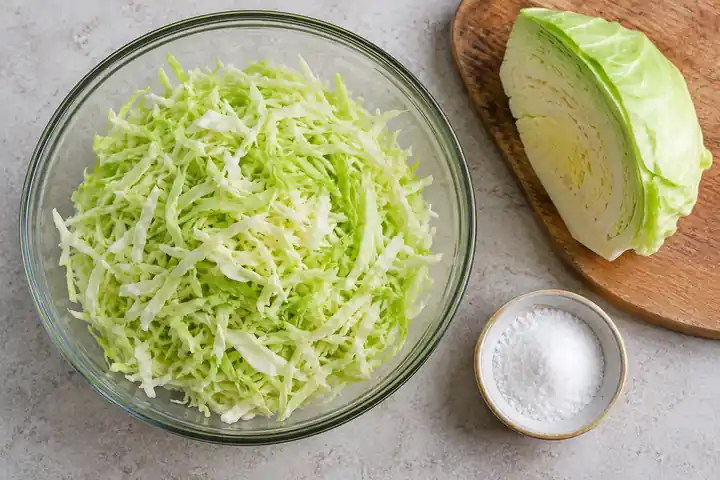
2. Mix in the salt
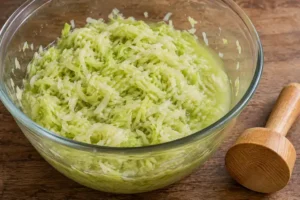
Sprinkle the pickling salt evenly over the shreds. With clean hands, mix and squeeze until the cabbage wilts and releases juice. If it feels dry, let it stand briefly and continue working it. Keep all the liquid.
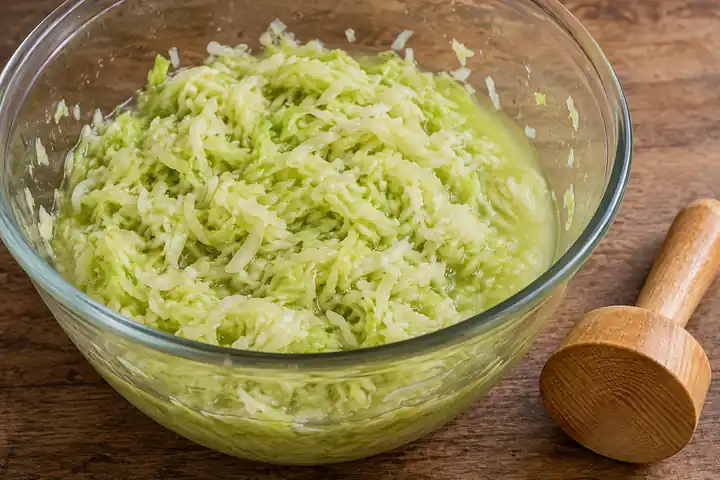
3. Pack and submerge
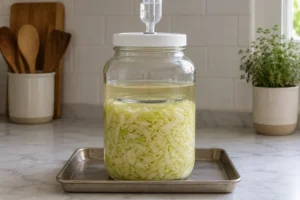
Press the cabbage firmly into the jar in layers, adding its juice and pushing out trapped air pockets. Stop with the required headspace. Set the fermentation weight over the cabbage so every shred stays below the brine.
If there is not enough liquid, add cooled topping-up brine in small amounts. Plain water would dilute the salt mixture. Wipe the rim, fit the airlock lid according to its instructions and put the jar on a tray to catch overflow.
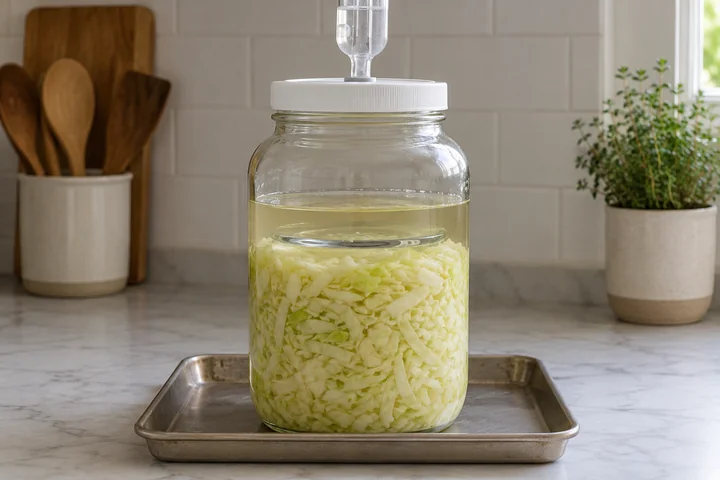
4. Ferment and monitor
Keep the jar away from direct sunlight at 70–75°F (21–24°C). Check it daily for submersion, temperature and changes in appearance; maintain the airlock as directed. A small batch may ferment in about 1–2 weeks at this temperature, while cooler conditions can take longer. Avoid repeatedly opening the jar.
Follow the University of Minnesota Extension’s monitoring guidance: fermentation is ready when bubbling has stopped and the pH is 4.6 or lower. If bubbling stops above pH 4.6, continue fermenting and check again every 1–2 days. Do not use smell or elapsed time as the only check.
5. Refrigerate the finished kraut
Once fermentation is complete and there are no signs of spoilage, replace the fermentation lid with a storage lid and refrigerate at 40°F (4°C) or colder. Keep the cabbage under its brine and use clean utensils to serve it.
Homemade Sauerkraut Fermentation Checks
Bubbles can appear as fermentation releases gas, and the liquid may move up the jar. That is why a tray and generous headspace are useful. Do not pour overflow from the tray back into the jar.
The cabbage should retain a firm texture and develop a clean, sour aroma. Discard a batch with visible mold, slime or a rotten odor, and do not taste it to check. Penn State Extension’s sauerkraut guidance also advises against tasting when these spoilage signs are present.
If a new film appears and you cannot confidently identify it, do not assume that it is harmless. Ask a food-preservation Extension service for advice or discard the batch. A low pH reading does not rescue visibly spoiled food.
Why Is My Homemade Sauerkraut Not Working?
The cabbage stays dry: Older cabbage may release less juice. Mix thoroughly, pack firmly and use the specified cooled brine if necessary.
Shreds float above the liquid: Reposition the clean weight and remove stray pieces from the jar walls. Check that the weight fits properly before leaving the ferment unattended.
The room is too warm: Move the jar to a cooler location within the recommended range. A warm kitchen windowsill is a poor choice, especially when direct sun heats the glass.
The finished kraut is too salty: Rinse only the portion you are about to eat. Do not fix the next batch by reducing the fermentation salt. The University of Alaska Fairbanks Extension explains the importance of maintaining the salt proportion.
How to Serve Homemade Sauerkraut
Start with a small forkful alongside something mild. Potatoes, rice, eggs and beans give its sharpness room to stand out. Try a spoonful over a baked potato with plain yogurt, or add it to a toasted cheese sandwich after cooking.
For dinner, serve it beside roast chicken or stir a little into a warm lentil bowl just before eating. It also adds acidity to a fish sandwich; our canned mackerel recipes offer more pantry-fish ideas.
If you prefer a cooked cabbage side, try roasted cabbage steaks with garlic and lemon or sauteed bok choy with garlic and ginger. For a broader look at fermented ingredients, see our recipes with live-culture foods.
Storing Homemade Sauerkraut
Fully fermented kraut can keep tightly covered in the refrigerator for several months under Extension guidance. Label the container with the completion date, keep it cold and check its condition each time you open it. Discard it if mold, slime or an objectionable odor develops.
Keep the cabbage submerged during storage. Take out what you need with a clean utensil and return the jar to the refrigerator. For pantry storage, follow a complete, current canning procedure with the correct altitude adjustment; a fermentation lid alone does not make a jar shelf-stable.
Frequently Asked Questions
Can I use red cabbage for homemade sauerkraut?
Yes. Keep the same cabbage weight and pickling-salt quantity. The color will differ from this green-cabbage version and can shift as acidity develops.
Can I use less salt?
Keep the specified fermentation amount. If you need less salt in the serving, rinse a small portion after fermentation and drain it. Its flavor will become milder too.
Do I need to tightly seal a regular jar lid?
Use the airlock system specified here and follow its instructions. Gas needs a controlled way out. Do not replace it with a tightly sealed ordinary lid during active fermentation.
Is homemade sauerkraut the same as vinegar-pickled cabbage?
No. In this method, fermentation produces the acid. Quick-pickled cabbage gets its acidity from added vinegar and follows a different recipe.
A Small Batch of Tangy Fermented Cabbage
For homemade sauerkraut with a crisp bite, begin with fresh cabbage, measure the pickling salt carefully and keep every shred submerged. This small-batch fermented cabbage recipe gives you a versatile condiment for sandwiches, potato bowls and everyday dinners.
Nutrition: About 20 calories per small condiment portion (one-sixteenth of the batch), with 1 g protein, 4 g carbohydrate, 0 g fat, 0 g saturated fat, 2 g fiber, 2 g sugar and 670 mg sodium. Values are approximate, based on the cabbage and salt before fermentation; draining, rinsing and topping-up brine change the values.
Find more recipe ideas: Follow us on Pinterest and Follow us on Instagram.

Homemade Sauerkraut (Small-Batch Fermented Cabbage)
Ingredients
Equipment
Method
- Wash and rinse jar, weight and tools thoroughly; follow equipment cleaning directions and cool before use. Remove damaged cabbage leaves, rinse, quarter and core. Weigh 2½ lb (1,134 g) usable cabbage and shred thinly and evenly.

- Mix the cabbage with 4½ level teaspoons pickling salt using clean hands. Squeeze until wilted and juicy, resting briefly and mixing again if needed. Keep the released liquid.
- Pack cabbage and juice firmly into the jar, removing air pockets. Leave 3–4 inches between packed cabbage and rim. Add the weight and keep all cabbage 1–2 inches below brine. If needed, add cooled topping-up brine made with 1⅛ teaspoons pickling salt per 1 cup hot water. Use a larger vessel if needed; do not add plain water.
- Fit the airlock according to its instructions and set the jar on a tray away from sun at 70–75°F (21–24°C). Check daily for submersion, temperature and spoilage; maintain the airlock. Small batches may take 1–2 weeks here; cooler conditions take longer. Monitor with a calibrated food pH meter.
- Finish when bubbling has stopped and pH is 4.6 or lower, with no spoilage signs. If bubbling stops above pH 4.6, continue and recheck every 1–2 days. Discard moldy, slimy or rotten-smelling batches without tasting. Once complete, replace the airlock with a storage lid and refrigerate at 40°F (4°C) or colder, keeping cabbage submerged.
Notes
Get easy recipes in your inbox
Join TasteWiser for new recipes, cooking tips and fresh inspiration.
Confirm your email to subscribe. Unsubscribe anytime.