
Tomato Paste Sauce (Easy Garlic Pasta Sauce)
This tomato paste sauce turns a small amount of concentrated tomato into a rich garlic sauce for pasta. Olive oil softens the garlic, a short cook deepens the paste, and water loosens everything into a smooth red sauce. It is a useful pantry recipe for evenings when you have pasta but no jar of sauce or tin of chopped tomatoes.
The flavor is bold and tomato-forward, with oregano and fresh basil to round it out. Make the sauce on its own, then toss it with your favorite cooked pasta. The recipe card includes nutrition for the sauce, so you can pair it with the pasta or vegetables you prefer.
Why Make Pasta Sauce from Tomato Paste?
Tomato paste is concentrated, so a small package carries plenty of flavor. Cooking it in oil before adding liquid brings out a deeper savory character. Water then gives it a spoonable consistency without introducing another dominant ingredient.
This tomato paste sauce needs no cream, butter, or added sugar in its base version. It is also easy to portion and freeze. Keep the texture a little loose if you plan to toss it with pasta, since the pasta absorbs some liquid as it sits.
Ingredients for Tomato Paste Sauce
- 140 g double-concentrated tomato paste: About 5 ounces. Choose plain paste rather than a seasoned tomato spread.
- 2 tablespoons olive oil: Helps cook the garlic and paste and gives the sauce a smooth finish.
- 3 garlic cloves, finely chopped: Chop evenly so large pieces do not remain sharp while smaller pieces burn.
- 1 teaspoon dried oregano: Adds a familiar savory herb flavor.
- 400 ml water: About 1⅔ US cups, plus a little extra if needed.
- ½ teaspoon fine salt: Start with less if your tomato paste contains added salt.
- ¼ teaspoon black pepper: Freshly ground if available.
- 8 fresh basil leaves, torn: Stir in at the end.
If serving with pasta, this batch suits about 300–350 g dried pasta, depending on how saucy you like it. Pasta is a serving suggestion and is separate from the sauce ingredients and nutrition.
Tomato Paste, Passata and Tomato Sauce Are Different
For this recipe, use concentrated tomato paste. Passata is much thinner, while canned tomato sauce is already diluted and may contain seasoning. Swapping either one for paste by weight produces a different result because the concentration and water content change.
Double-concentrated paste gives this recipe its intended balance. Triple-concentrated paste is stronger, so it needs its own adjustment rather than an automatic one-for-one swap. Check the wording on the package before you start.
A tube makes it easy to measure small amounts, while a can works equally well when it contains plain paste. Follow the package instructions for storing any unused portion; do not leave an opened can on the counter.
How to Make Tomato Paste Sauce
1. Gently Cook the Garlic
Warm the olive oil in a medium skillet over medium-low heat. Add the chopped garlic and stir for 30–60 seconds, just until fragrant. The garlic should remain pale rather than turning dark brown.
If the oil is sizzling hard, lower the heat. Burnt garlic carries a bitterness that extra water or seasoning cannot remove, so it is worth starting this stage gently.
2. Cook the Paste in the Oil
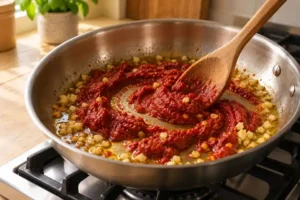
Add the tomato paste and oregano. Stir and spread the paste across the skillet for 2–3 minutes. It should deepen toward brick red and smell more rounded. Keep moving it so the bottom does not scorch.
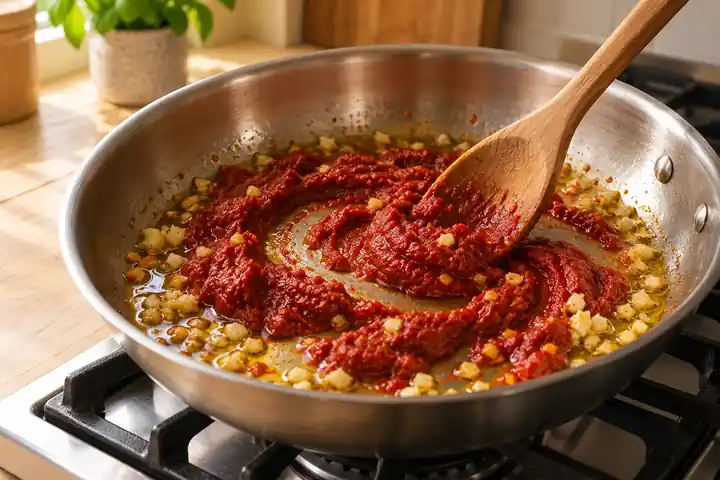
A little sticking is normal, but black patches are not. If the pan becomes too hot, briefly lift it off the heat and reduce the burner. You are developing flavor, not trying to create a dark crust.
3. Add Water and Simmer
Add a small splash of the measured water first and stir to loosen the paste. Gradually pour in the remaining water while stirring until smooth. Add the salt and pepper.
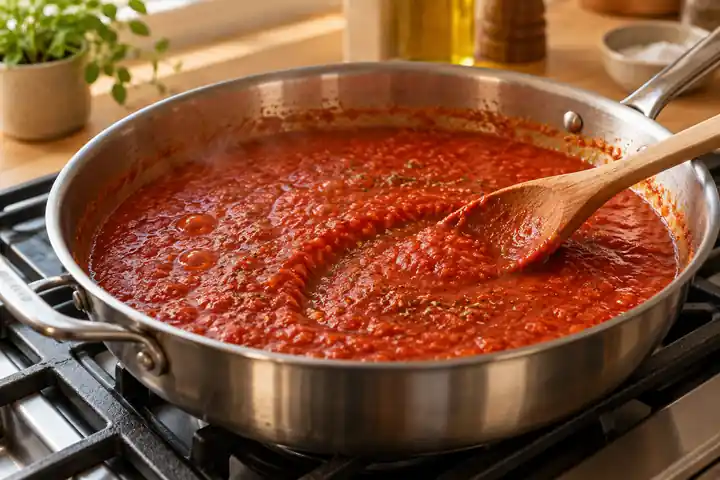
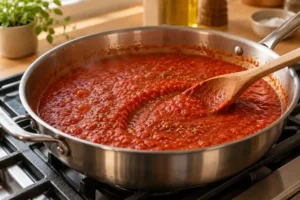
Bring to a gentle simmer and cook uncovered for 10–12 minutes, stirring occasionally. The tomato paste sauce should coat the back of a spoon while still flowing easily. If it becomes too thick, add water a tablespoon at a time.
4. Finish with Basil
Turn off the heat and stir in the torn basil. Taste before adding more salt, especially if you will use salted pasta water or cheese at the table. The finished sauce should taste savory and bright, with no burnt garlic flavor.
5. Toss with Cooked Pasta
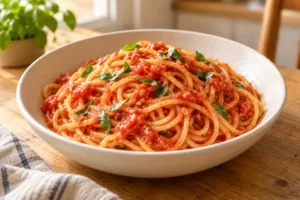
Cook pasta separately according to its package instructions. Before draining, save a mug of the cooking water. Add the drained pasta to the sauce and toss over low heat for 1–2 minutes. Add a little reserved water as needed so the sauce coats the strands without becoming stiff.
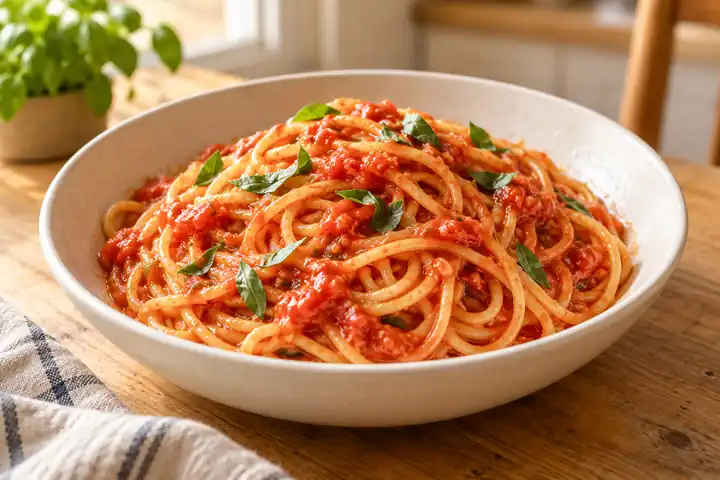
The starchy water helps the sauce cling to the pasta. Add it gradually: a few spoonfuls can make the difference between a glossy coating and a watery pool. Serve promptly, since the pasta continues absorbing moisture.
Tomato Paste Sauce Tips for Better Flavor and Texture
- Measure the paste by weight. Spoonful sizes vary, and concentration matters in a short ingredient list.
- Keep the garlic pale. Let the paste deepen in color without burning the garlic underneath it.
- Stir in the water gradually. Loosening the thick paste first makes it easier to create a smooth sauce.
- Use a gentle simmer. A hard boil makes thick sauce splatter and can reduce it too quickly.
- Adjust consistency at the end. The right thickness for spooning over vegetables may be thicker than you want for tossing spaghetti.
How to Adjust Tomato Paste Sauce
If it tastes too sharp: Check that you used the right amount of paste and allowed it to simmer. Tomato brands vary. If needed, add a small pinch of sugar, stir, and taste again. Sugar balances the perception of acidity; it does not remove the acid.
If it tastes bitter: Burnt garlic or scorched paste may be the cause. Extra sugar will not reliably fix a burnt flavor. Start again with lower heat if the pan contents have blackened.
If it is too thick: Stir in plain water or reserved pasta water in small additions. Warm it through after each addition before deciding whether it needs more.
If it is too thin: Simmer uncovered a little longer and stir often. Remember that it will thicken slightly as it cools and when mixed with pasta.
Easy Variations and Serving Ideas
Spicy version: Add a small pinch of red pepper flakes with the oregano. Start lightly; you can add more when serving.
Creamy version: Stir in a splash of cream at the end over low heat. This changes the flavor, allergens, and nutrition. For a separate creamy dinner, try our creamy garlic pasta.
Vegetable version: Fold in separately cooked mushrooms, spinach, or roasted vegetables. Cooking watery vegetables first keeps them from diluting the sauce unexpectedly.
Serve this pantry sauce with spaghetti, penne, or rigatoni. Add broiler garlic bread on the side, or pair the meal with breaded broccoli from the air fryer. If cooked spaghetti is already in the fridge, our leftover spaghetti ideas offer more ways to use it.
How to Store and Reheat Tomato Paste Sauce
Divide leftover sauce into shallow containers and refrigerate within two hours of cooking, or within one hour when the temperature is above 90°F. Keep the refrigerator at 40°F or below and use the sauce within three to four days. This follows USDA guidance for leftovers.
For longer storage, freeze in small portions for up to three months for best quality. Leave expansion space in a freezer-safe container and label it with the date. Thaw in the refrigerator.
Reheat the sauce in a saucepan, stirring and adding a splash of water if needed. Bring it to a rolling boil and check that it reaches at least 165°F throughout. Reheat only the portion you need. This is a refrigerator or freezer recipe; it is not a shelf-stable canning recipe.
Frequently Asked Questions
Can tomato paste be turned into pasta sauce?
Yes. Cooking it with olive oil and garlic, then adding water and simmering, turns concentrated paste into a smooth sauce. Seasoning and the amount of liquid determine the final flavor and consistency.
Can I use broth instead of water?
You can use vegetable broth for a different flavor. Choose a lower-sodium version and reduce the added salt until you taste the finished sauce. Water keeps the tomato flavor more direct.
Do I need to add sugar?
No. Make the base recipe and taste it first. Some brands or batches of tomatoes taste sharper than others; a small pinch is an optional adjustment rather than a required ingredient.
Is this tomato paste sauce vegan?
The base sauce uses plant-based ingredients. Serve it with suitable pasta and skip dairy cheese or cream to keep the complete dish vegan.
Can I double the batch?
Yes. Use a wider pan with enough room to stir comfortably. The time needed to reduce the sauce may change, so watch the consistency rather than relying only on the clock.
A Useful Pantry Sauce for Pasta Night
This tomato paste sauce gives you a simple way to make a garlic pasta sauce without canned tomatoes or a ready-made jar. Cook the paste gently, stir in the water until smooth, and finish with basil. Keep a portion in the freezer for an easy homemade red sauce whenever pasta night comes around.
Follow us on Pinterest for more recipes, and follow us on Instagram for more from Tastewiser.

Tomato Paste Sauce
Ingredients
Equipment
Method
- Warm the olive oil in a medium skillet over medium-low heat. Add the garlic and stir for 30–60 seconds until fragrant but still pale.
- Add the tomato paste and oregano. Cook for 2–3 minutes, stirring and spreading the paste across the pan, until it deepens toward brick red. Reduce the heat if it starts to scorch.

- Stir in a splash of the measured water to loosen the paste, then gradually add the rest. Add salt and pepper. Simmer gently, uncovered, for 10–12 minutes, stirring occasionally, until the sauce coats a spoon. Add extra water a tablespoon at a time if needed.
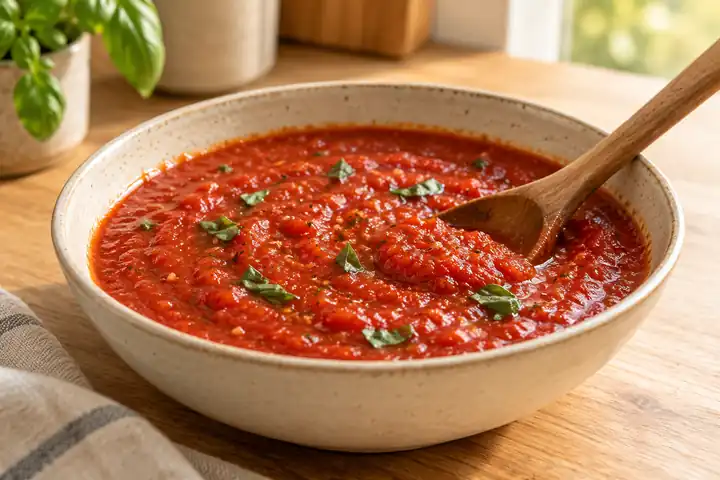
- Turn off the heat and stir in the torn basil. Taste and adjust seasoning. Serve with separately cooked pasta or vegetables. For pasta, toss over low heat for 1–2 minutes with a little reserved pasta water as needed. Pasta is not included in the sauce nutrition.
Notes
Get easy recipes in your inbox
Join TasteWiser for new recipes, cooking tips and fresh inspiration.
Confirm your email to subscribe. Unsubscribe anytime.