Easy Homemade Pickles (Refrigerator Dill Pickle Chips)
These homemade pickles turn a few firm cucumbers into crisp, tangy dill pickle chips for sandwiches, burgers, and snack plates. A warm vinegar brine brings the salt, a little sugar, garlic, and herbs together, then the refrigerator does the rest.
This is a small batch refrigerator recipe that fits a pint-sized jar. You do not need a canner or a large harvest of cucumbers. Keep the finished jar refrigerated throughout storage; these pickles are not for a pantry shelf.
Why Make Homemade Pickles in the Refrigerator?
A small jar lets you enjoy the sharpness and crunch of pickles without committing to a big batch. Thin rounds are easy to tuck into sandwiches or scatter over a bowl, and the garlic and dill give them a familiar savory flavor.
The brine proportions follow Oregon State University Extension’s refrigerator cucumber recipe. This version uses its lower sugar amount and a garlic-dill seasoning combination. We use a shorter, two-week refrigerator storage window.
Ingredients for Homemade Pickles
- 1½ cups cucumber slices: About 150 g, cut into even ¼-inch rounds. Small, firm pickling cucumbers work well.
- ⅔ US cup distilled white vinegar: About 160 ml, labeled 5% acidity.
- ⅓ US cup water: About 80 ml. Measure it rather than adding water to fill the jar.
- 1 teaspoon fine pickling salt: About 6 g. Pickling salt dissolves readily without anti-caking additives.
- 2 teaspoons granulated sugar: About 8 g, enough to soften the sharp edge without making sweet pickles.
- 1 tablespoon fresh dill fronds: Rinsed and gently dried.
- 1 small garlic clove: Peeled and thinly sliced.
- ½ teaspoon mustard seeds and ½ teaspoon whole black peppercorns: For a little savory spice.
Use US measuring cups for these amounts. A 240 ml cup is the practical metric reference here; do not substitute a larger mug. There may be a little brine left over, depending on how closely the cucumber rounds pack into the jar.
Best Cucumbers and Jars for Homemade Pickles
Look for small cucumbers with firm flesh, thin unwaxed skins, and no soft or damaged spots. Pickling types tend to have smaller seed cavities than large slicing cucumbers. Older, soft cucumbers will not become crisp again in brine.
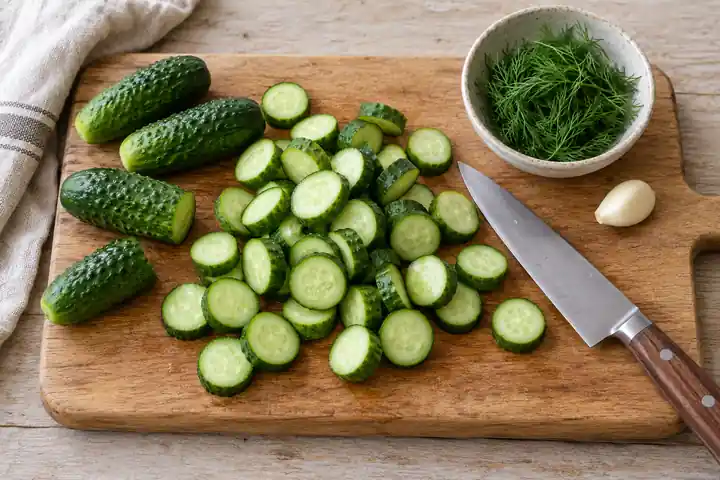
Wash the cucumbers under cool running water and gently scrub away dirt. Trim the ends, including a thin slice from the blossom end, then slice evenly. Keep the skins on for texture.
Use one clean, intact, heat-safe pint canning jar with a clean lid. A US pint holds about 473 ml; a similar 500 ml heat-safe jar also works. Inspect the glass for chips or cracks, wash it well, rinse, and keep it warm before filling so warm brine does not meet a very cold jar.
How to Make Homemade Pickles
1. Prepare the Cucumbers
Wash your hands, clean the work surface, and prepare the jar and lid. Measure the cucumber rounds after slicing. Keeping them close to ¼ inch thick helps the pieces develop a similar texture.
2. Warm the Vinegar Brine
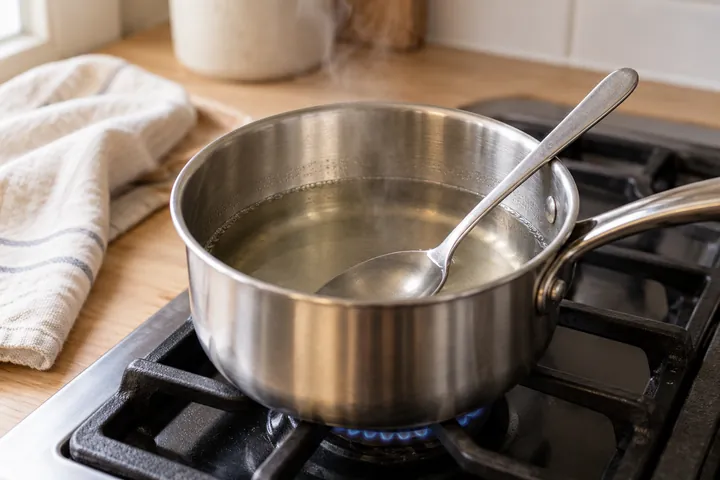
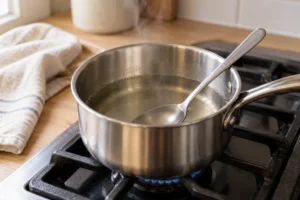
Combine the measured vinegar, water, pickling salt, and sugar in a small nonreactive saucepan. Heat until the liquid simmers, stirring until the salt and sugar dissolve. Take the pan off the heat.
The brine should look clear rather than grainy. Avoid boiling it down for a long time, since evaporation changes the amount available to cover the cucumbers.
3. Pack the Jar
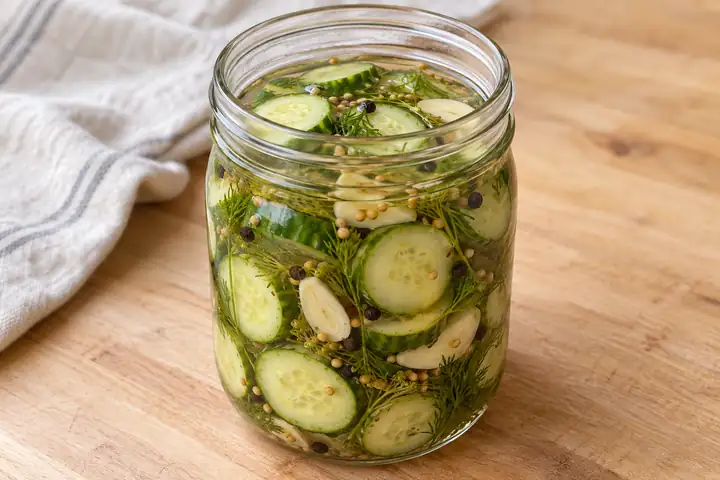
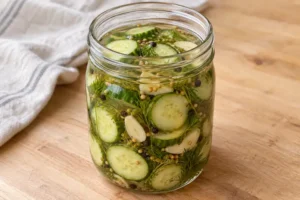
Put the dill, sliced garlic, mustard seeds, and peppercorns in the bottom of the prepared jar. Add the cucumber rounds snugly, leaving about ½ inch of space below the rim. Do not crush the slices to force more in.
Pour the warm brine over the cucumbers until they are covered, keeping the headspace. Gently release trapped air with a clean nonmetal utensil. If the slices cannot fit beneath the brine while leaving space at the top, remove a few slices. Do not top up with plain water.
4. Cover and Refrigerate
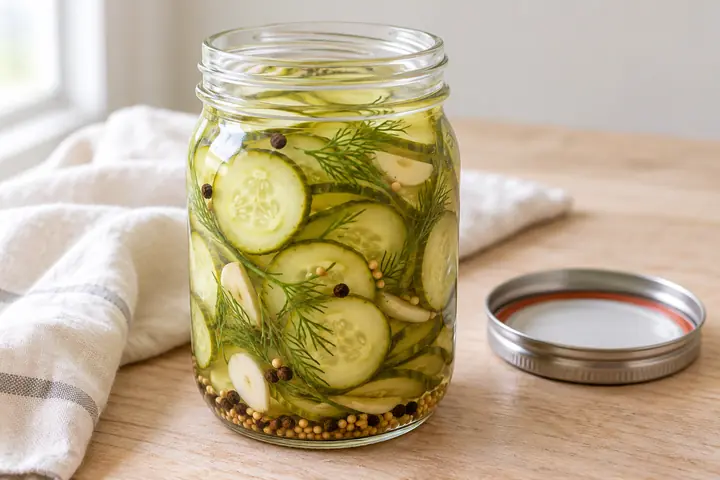
Close with the clean lid and refrigerate promptly. Let the flavors develop for at least 24 hours; the pickles become more seasoned over the next day or two. Keep the jar at 40°F (4°C) or below.
Label the jar with the date you made it. Open it when ready to serve and use a clean fork to lift out the cucumber chips.
Tips for Crunchy Homemade Pickles
- Start with fresh cucumbers. Firm vegetables give you the best starting texture.
- Slice evenly. Very thin rounds soften more quickly, while thick pieces need longer for flavor to reach the center.
- Measure the brine ingredients. Keep the vinegar, water, salt, and sugar amounts consistent.
- Leave space at the rim. An overfilled jar is difficult to close cleanly and leaves little room for the brine.
- Keep the chips covered. If cucumber pieces float above the liquid, rearrange them with a clean utensil and remove excess pieces as needed.
Refrigerator Pickles, Fermented Pickles, and Canned Pickles
These refrigerator pickles get their tart flavor from vinegar. They go into the fridge after the warm brine is added. They do not need a period of room-temperature fermentation, and this method should not be described as a probiotic recipe.
Fermented vegetables use a different process. For a separate project with salt-based fermentation, see our homemade sauerkraut guide.
Shelf-stable canned pickles require a suitable tested canning recipe and its complete processing method. A lid that pulls inward as it cools does not turn this refrigerator recipe into a canned product. Store this jar in the fridge even if the lid seems sealed.
How to Serve Homemade Pickles
Add a few drained chips to a sandwich, grilled cheese, or burger just before serving. Their tangy bite also works alongside roasted potatoes or a simple lunch plate. Drain them well when serving with bread so the brine does not soak into it.
For a small entertaining spread, pair them with our tinned fish charcuterie board. Chopped drained pickles also bring crunch to quick and easy tartar sauce. Browse our delicious afternoon snacks recipes for more ideas to serve beside them.
How to Store Homemade Pickles
Keep homemade pickles continuously refrigerated at 40°F or below and use within two weeks. This shorter storage window follows the general refrigerator-pickle guidance from NC State Extension.
Use clean utensils each time, close the jar after serving, and return it to the refrigerator promptly. Make fresh brine for the next batch rather than adding new cucumbers to old liquid.
Discard the entire jar if you notice mold, a slimy texture, an unusual odor, unexpected gas, or other signs of spoilage. Do not taste questionable pickles to decide whether they are safe.
Homemade Pickles: Frequently Asked Questions
How long before I can eat the pickles?
Give the jar at least 24 hours in the refrigerator. Taste with a clean fork after that. The garlic, dill, and vinegar flavor continue developing over the following day or two.
Can I reduce the vinegar because it tastes sharp?
Keep the measured brine ratio for this recipe. Serve a few well-drained chips with other food to balance the tang. If you prefer a genuinely sweeter style, choose a separate refrigerator bread-and-butter pickle recipe with its own proportions.
Can I use apple cider vinegar?
Apple cider vinegar labeled 5% acidity is an option for a fruitier flavor and a darker brine. Avoid homemade vinegar or products without a stated acidity for this recipe.
Can I use large slicing cucumbers?
Fresh, firm, unwaxed slicing cucumbers can work, though their larger seeds and wetter centers may give a softer result. Measure the sliced amount and do not overpack the jar.
Can I store this jar in the cupboard?
No. These are refrigerator pickles and must stay chilled. The recipe does not include a shelf-stable canning process.
What does the nutrition include?
The card divides all ingredients, including the full prepared brine, across six portions. A portion is about ¼ cup of cucumber chips. Actual intake from drained pickles varies because some salt, sugar, and vinegar stay in the jar.
A Small Jar of Tangy Crunch
These homemade pickles are an easy refrigerator dill pickle recipe for adding crunch to everyday meals. Start with firm cucumbers, measure the vinegar brine, and keep the finished jar cold. A few well-drained cucumber pickle chips can brighten a sandwich or complete a simple snack plate.
Follow us on Pinterest for more recipes, and follow us on Instagram for more from Tastewiser.

Easy Homemade Pickles (Refrigerator Dill Pickle Chips)
Ingredients
Equipment
Method
- Wash hands and clean the work surface. Wash and rinse one intact heat-safe pint canning jar and lid; keep the jar warm. Rinse and gently scrub the cucumbers, trim the ends including the blossom end, then cut into even ¼-inch rounds. Measure 1½ cups.

- Combine the measured vinegar, water, salt and sugar in a small nonreactive saucepan. Heat to a simmer, stirring until the salt and sugar dissolve, then remove from the heat.
- Place the dill, garlic, mustard seeds and peppercorns in the jar. Add cucumber slices snugly, leaving about ½ inch headspace. Add warm brine to cover the cucumbers while retaining the headspace. Release trapped air with a clean nonmetal utensil. Remove a few slices if needed; do not dilute with plain water.
- Cover with the clean lid and refrigerate promptly at 40°F (4°C) or below. Wait at least 24 hours before serving; flavor develops further over 1–3 days. Label with the preparation date and use within 2 weeks. Use a clean fork to remove pickles.
Notes
Get easy recipes in your inbox
Join TasteWiser for new recipes, cooking tips and fresh inspiration.
Confirm your email to subscribe. Unsubscribe anytime.