Probiotic Food Recipes: 3 Easy Ideas with Live-Culture Foods
Probiotic food recipes are a practical way to explore yogurt, kefir and other cultured ingredients in everyday cooking. These three ideas use them cold: a cucumber-dill yogurt dip, a blueberry-banana kefir smoothie, and a crunchy chickpea-sauerkraut salad.
One distinction matters before you shop: fermented foods, live cultures and scientifically established probiotics are related terms, but they are not interchangeable. The recipes below use fermented ingredients that may contain live cultures when the label confirms it. They do not guarantee a particular probiotic strain, dose or health effect.
Jump to the three recipe cards for complete quantities and timings, or read on for ingredient checks, substitutions and serving ideas.
What to know before making probiotic food recipes
Probiotics are live microorganisms shown to provide a health benefit when consumed in adequate amounts. A fermented food can contain living microbes without meeting that definition. The International Scientific Association for Probiotics and Prebiotics explains that many fermented-food microbes have not been specifically identified and tested as probiotics.
For these probiotic food recipes, start by checking whether your chosen ingredient contains live cultures at the time you eat it. If you want a product with a specific probiotic claim, look for information about the named strain and supporting evidence rather than assuming every yogurt or fermented vegetable has the same effect.
Keep the focus on food you enjoy. These recipes offer flavor, protein or fiber according to their ingredients; they are not a treatment plan for digestive symptoms. A homemade recipe also cannot tell you how many live organisms remain in the finished serving without testing.
How to choose your cultured ingredients
| Ingredient | What to check | Used in |
|---|---|---|
| Plain Greek yogurt | Live-culture information; no heat treatment after culturing unless suitable cultures were added later | Cucumber-dill dip |
| Plain kefir | Live-culture labeling, ingredients, storage directions and added sugar | Blueberry-banana smoothie |
| Refrigerated sauerkraut | Fermented cabbage with live cultures; not simply vinegar-pickled or heat-treated cabbage | Chickpea salad |
Choose commercial dairy products made from pasteurized milk and cultured afterward. Pasteurizing the milk before cultures are added is different from heat-treating the finished fermented food. Stanford’s fermented-food guide describes how processing and labeling affect whether products contain live microbes.
Refrigeration is a useful shopping clue, not proof by itself. Read the actual product information, keep it as directed and use clean utensils. There is no home fermentation step in these probiotic food recipes: all cultured ingredients are purchased ready to eat.
1. Cucumber-dill yogurt dip
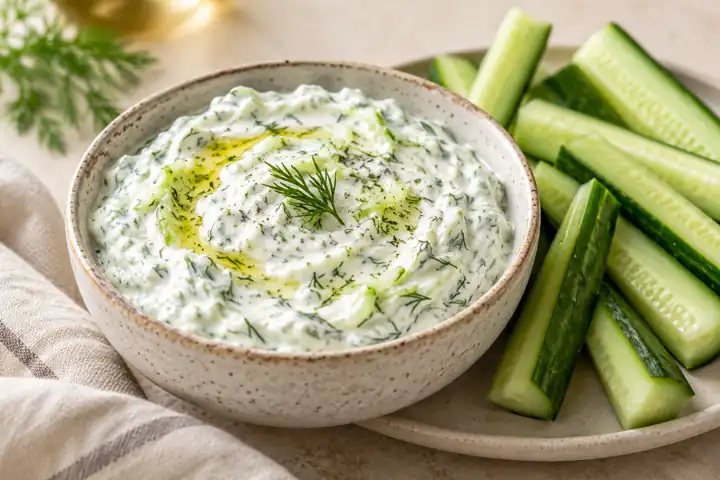
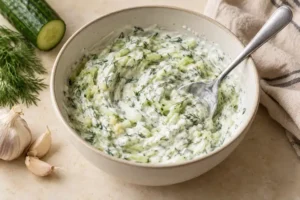
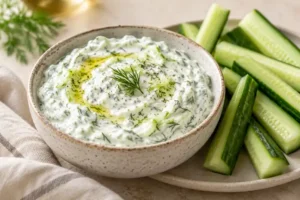
This savory dip is a simple starting point for probiotic food recipes because the yogurt stays cold from mixing to serving. Grated cucumber adds freshness, dill supplies the herbal flavor, and a small amount of olive oil rounds out the lemon and garlic.
Ingredients for four dip portions
- 200 g plain 2% Greek yogurt with live cultures
- 100 g cucumber, grated, then squeezed well
- 1 teaspoon/5 ml olive oil
- 1 tablespoon/15 ml lemon juice
- 1 small garlic clove, finely minced
- 1 tablespoon finely chopped fresh dill
- ⅛ teaspoon fine salt and a pinch of black pepper
Mix the dip
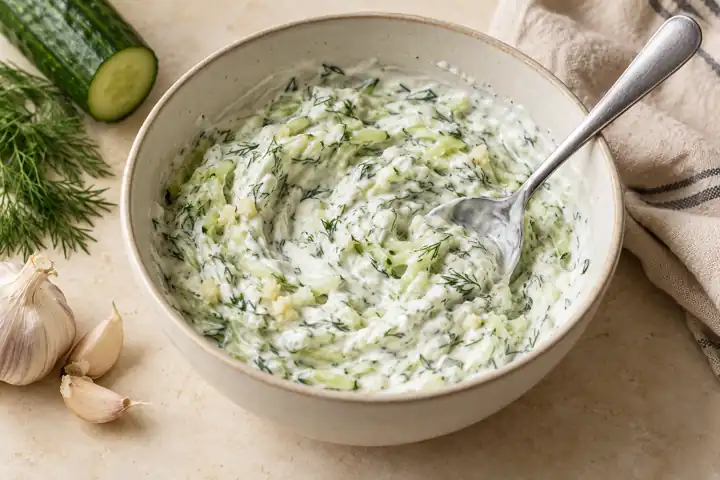
Grate the cucumber and squeeze it in a clean cloth or press it firmly in a fine sieve. Measure the cucumber before squeezing; removing its extra liquid keeps the dip thick. Stir the yogurt, squeezed cucumber, olive oil, lemon juice, garlic, dill, salt and pepper together in a bowl.
Taste and adjust the lemon or herbs if needed. Divide into four portions and serve cold, or cover and refrigerate until needed. Raw garlic can become more pronounced as the dip stands, so begin with the small clove rather than adding several.
How to serve it
Pair the dip with cucumber sticks, carrot sticks or whole-grain crackers. You can also spoon it onto a cooled grain bowl. If serving beside a hot meal, keep the dip in a separate bowl rather than simmering it into a sauce. Extra vegetables, bread and crackers are separate from the nutrition figures.
For dairy-free probiotic food recipes, a thick unsweetened plant-based yogurt with appropriate live-culture labeling can replace the dairy yogurt. Check for allergens, texture and protein differences; the original nutrition calculation will change.
2. Blueberry-banana kefir smoothie
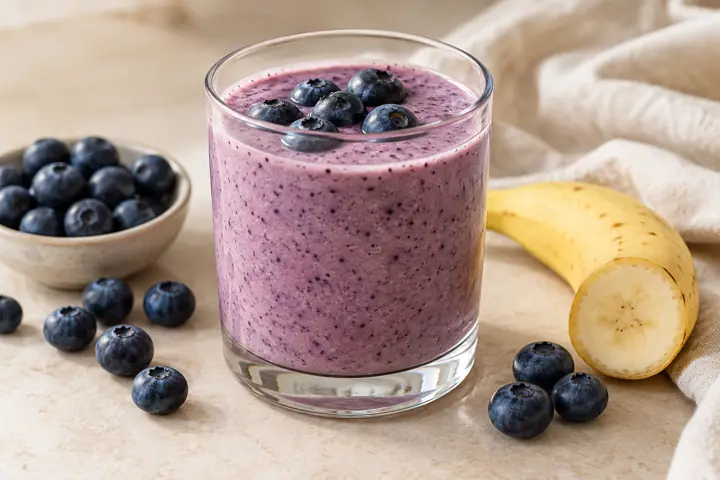
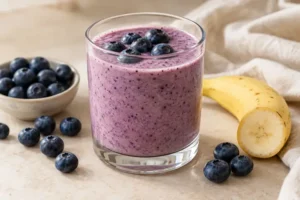
Kefir gives this smoothie a tangy base, while banana softens the flavor and blueberries add color. Oats give it a little body without turning it into an overnight-oat recipe. It is a drink option in this collection of probiotic food recipes.
Ingredients for two small smoothies
- 240 ml plain low-fat milk kefir with live cultures
- 100 g blueberries, fresh or frozen
- 100 g peeled banana
- 20 g rolled oats
- 60 ml cold water, plus a little more if needed
Blend and serve
Put the kefir, blueberries, banana, oats and water into a clean blender. Blend until smooth, scraping the sides if needed. If it is too thick for your blender or your preference, add a small splash of cold water and blend briefly again.
Divide between two glasses and serve immediately. A frozen banana or frozen berries make a colder, thicker drink; fresh fruit makes it looser. Follow any package instructions requiring frozen fruit to be cooked before eating, then cool it safely before using. Do not use hot fruit with the kefir.
Smoothie substitutions
For probiotic food recipes with a milder tang, use ripe banana and plain kefir you already enjoy drinking. There is no added sweetener in the base recipe. If you add maple syrup or use sweetened kefir, include it in your nutrition calculation.
A plant-based kefir-style drink can work if its ingredients and live-culture information suit your needs, though consistency and protein vary widely. For another fruit combination, see our strawberry mango smoothie; this version uses a different cultured base and fruit blend.
3. Chickpea-sauerkraut salad
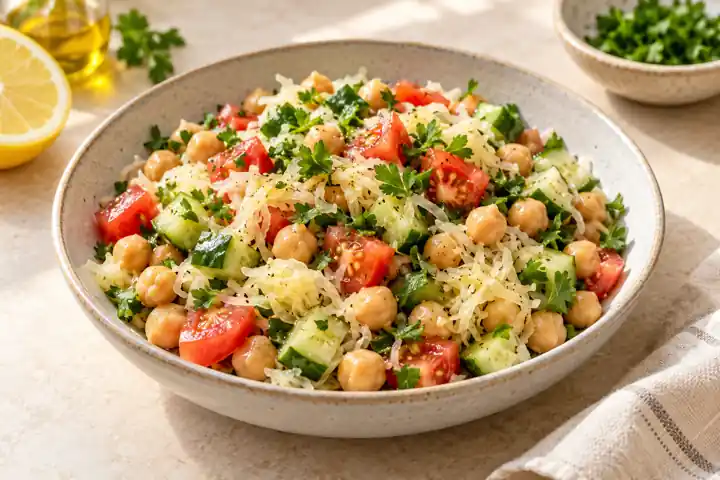
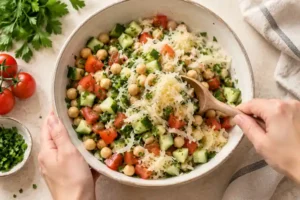
This chilled salad brings together cooked chickpeas, crisp cucumber, juicy tomato and a small amount of tangy fermented cabbage. Sauerkraut adds a salty-sour accent rather than taking over the whole bowl. It adds a savory choice to these probiotic food recipes, with the same caveat that live-culture sauerkraut is not automatically a clinically proven probiotic.
Ingredients for two servings
- 240 g cooked chickpeas, drained and cooled; no-added-salt canned chickpeas work well
- 80 g refrigerated live-culture sauerkraut, lightly drained
- 100 g cucumber, diced
- 150 g tomato, chopped
- 2 tablespoons chopped parsley
- 1 tablespoon/15 ml olive oil
- 1 tablespoon/15 ml lemon juice
- ¼ teaspoon black pepper
Toss the salad
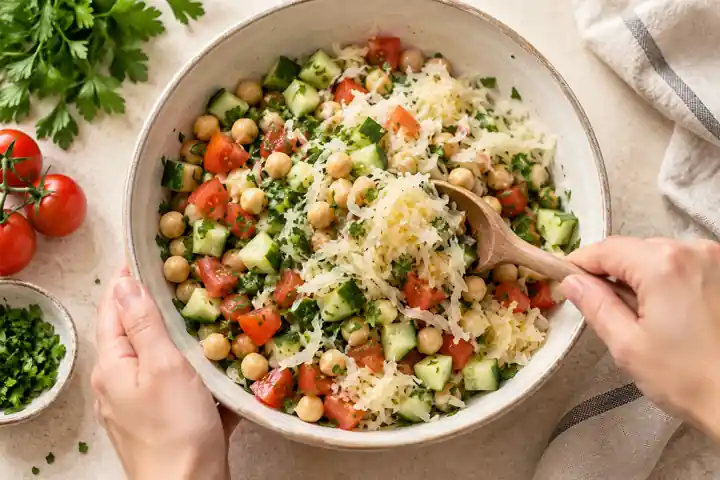
Whisk the olive oil, lemon juice and pepper in a bowl. Add the cooled chickpeas, cucumber, tomato and parsley and toss. Gently fold in the lightly drained sauerkraut last so the cabbage stays crisp.
Taste before adding any salt; the sauerkraut may provide enough. Divide between two bowls and serve cold. If using freshly cooked chickpeas, cool them safely in the refrigerator before mixing them with the cultured cabbage. Use cooked chickpeas, not dry or merely soaked beans.
Salad substitutions
For flexible probiotic food recipes, cooked white beans can replace the chickpeas. Choose a sauerkraut you enjoy and begin with a smaller amount if its flavor is strong. A vinegar-pickled cabbage can make a tasty salad too, but it is not an equivalent live-culture substitution.
You can serve the salad with whole-grain toast for a larger meal or pair it with roasted cauliflower served separately. Additional sides change the serving’s nutrition.
Keeping probiotic food recipes cold
These recipes keep the cultured ingredients unheated. That avoids intentionally cooking the live cultures, but it does not guarantee a specific survival count. Ingredient processing, storage and the particular organisms all matter.
Keep yogurt, kefir and sauerkraut in the refrigerator according to their labels. Use clean spoons instead of dipping a used utensil back into the container. When a recipe contains a cooked ingredient, such as chickpeas, cool it safely before combining it with the refrigerated cultured food.
For related fermented-drink ideas, see our vegan kombucha drinks. Check that article’s ingredient and alcohol-label guidance; kombucha is not a direct substitute for yogurt or kefir here.
Storing and serving probiotic food recipes
Store these foods at 40°F/4°C or below and follow the shortest applicable ingredient use-by or after-opening instruction. The smoothie tastes best immediately. For the dip and salad, use within 1–2 days for best texture, provided the ingredients’ labels allow that storage window.
Refrigerate promptly and avoid leaving perishable food out for more than two hours, or one hour when the surroundings are above 90°F/32°C. If you want to serve a dip over a longer gathering, set out a small portion and keep the rest refrigerated. Do not return a shared serving bowl’s leftovers to the original yogurt container.
These probiotic food recipes are not preservation methods. Mixing yogurt with lemon, or sauerkraut with other ingredients, does not make the finished dish shelf-stable. Avoid freezing these recipes if your goal is the best fresh texture; the dip and vegetables can separate or soften.
Calories per serving
Cucumber yogurt dip: approximately 55 calories per dip portion. Blueberry kefir smoothie: approximately 170 calories per small glass. Chickpea-sauerkraut salad: approximately 290 calories per bowl. Figures exclude crackers, toast, extra vegetables and added sweeteners.
Nutrition comparison
| Per serving | Yogurt dip | Kefir smoothie | Chickpea salad |
|---|---|---|---|
| Calories | 55 kcal | 170 kcal | 290 kcal |
| Protein | 5 g | 7 g | 12 g |
| Carbohydrates | 4 g | 32 g | 41 g |
| Fat | 2 g | 2 g | 10 g |
| Fiber | 0.2 g | 4 g | 11 g |
| Sugar | 2 g | 17 g | 6 g |
| Sodium | 100 mg | 60 mg | 300 mg |
Nutrition is an ingredient-based estimate using plain 2% Greek yogurt, plain low-fat milk kefir and cooked drained chickpeas. Sauerkraut and kefir labels vary, especially for sodium and sugar. Live microorganism counts are not calculated in this table. Check your own labels for precise nutrition and product-specific culture information.
Frequently asked questions
Are all fermented foods probiotics?
No. Fermentation describes how the food was made. Probiotic status requires evidence for particular living microorganisms in an adequate amount. A food may have live cultures without meeting that standard.
Can I heat probiotic food recipes?
You can cook yogurt or other fermented ingredients for flavor, but heating can reduce or eliminate live microbes. These recipes keep the cultured ingredients cold.
Is Greek yogurt better than kefir?
They serve different purposes in these recipes: thick yogurt suits a dip, while pourable kefir blends easily into a drink. Choose by ingredients, texture, nutrition and culture information rather than assuming one product is universally better.
Can I make these dairy-free?
The chickpea salad is dairy-free as written. For the other recipes, use appropriate unsweetened plant-based cultured alternatives and check allergens and live-culture labeling. Their nutrition will differ from dairy versions.
How many probiotic servings do I need?
These recipes do not establish a therapeutic dose. The relevant strain, amount and evidence depend on the product and the purpose. If you are seeking help for a health condition, get individualized advice instead of using a recipe serving as a medical dose.
Recipe development and sources
Tastewiser developed these probiotic food recipes as simple ways to use commercially prepared cultured ingredients. Ingredient choice determines whether live cultures are present; no specific health benefit is claimed for these dishes.
The distinction between fermented foods and probiotics follows the ISAPP resource linked above. Label and processing guidance draws on Stanford’s fermented-food education materials. Cold storage and time limits follow USDA food handling guidance.
Pick a recipe for your table
Start with the cucumber yogurt dip for a savory snack, blend the blueberry kefir smoothie for a small fruit drink, or toss the chickpea-sauerkraut salad for a chilled lunch bowl. These easy probiotic food recipes put live-culture ingredient checks alongside clear measurements, so you can choose the foods and flavors that suit your kitchen. For another cultured-dairy idea, try cottage cheese jello salad.
Follow us on Pinterest and Follow us on Instagram for more recipe ideas.
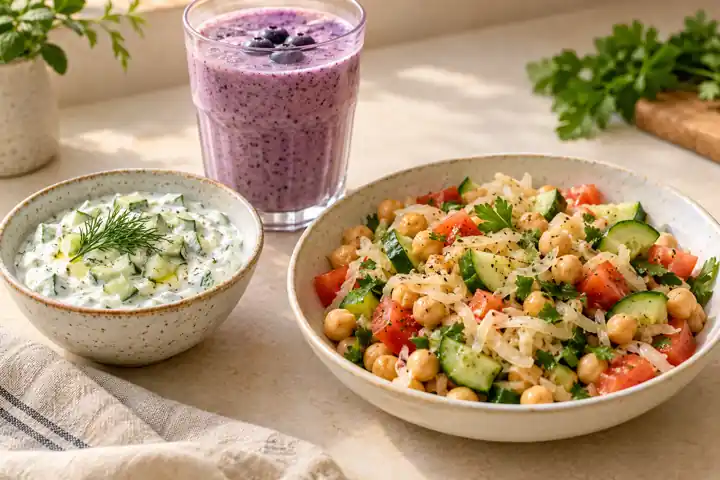

Cucumber Dill Yogurt Dip
Ingredients
Equipment
Method
- Grate the cucumber and squeeze firmly in a clean cloth or press in a fine sieve to remove extra liquid. The listed 100 g is the weight before squeezing.
- Stir the cold yogurt, squeezed cucumber, olive oil, lemon juice, garlic, dill, salt and pepper in a clean bowl.

- Taste and divide into four dip portions. Serve cold or cover and refrigerate. Keep the dip separate from hot dishes; do not simmer it. Extra vegetables or crackers are not included in nutrition.
Notes
Blueberry Banana Kefir Smoothie
Ingredients
Equipment
Method
- Use washed fresh fruit or frozen fruit according to its package directions. If the package requires cooking, cook and cool the fruit safely before using. Do not combine hot fruit with kefir.
- Put cold kefir, blueberries, peeled banana, oats and water into a clean blender. Blend until smooth, adding a small splash of cold water if needed.
- Divide into two small glasses and serve immediately. Nutrition is for half the recipe without sweetener; changing the kefir or adding syrup changes the figures.
Notes
Chickpea Sauerkraut Salad
Ingredients
Equipment
Method
- Whisk olive oil, lemon juice and pepper in a clean mixing bowl.
- Add fully cooked, drained, chilled chickpeas, cucumber, tomato and parsley. Toss gently. Freshly cooked chickpeas must be cooled safely before combining with the cultured cabbage.
- Fold in the sauerkraut last. Taste before adding any salt; sauerkraut may supply enough. Divide between two bowls and serve cold.
Notes
Get easy recipes in your inbox
Join TasteWiser for new recipes, cooking tips and fresh inspiration.
Confirm your email to subscribe. Unsubscribe anytime.