Brown Sugar Chocolate Chip Cookies (No White Sugar)
Brown sugar chocolate chip cookies bring a deeper, caramel-like flavor to a familiar bake. This version uses light brown sugar throughout, with no granulated white sugar, and pairs it with softened butter and semisweet chocolate chips. The aim is a golden edge and a chewy, fully baked center.
If your last batch spread into one giant cookie or came out dry, the details below explain where to look first: butter temperature, flour measurement, dough temperature and tray spacing. The recipe card at the end includes the exact quantities and a complete method for 16 cookies.
Why use only brown sugar?
Brown sugar contains molasses, which gives these cookies their warm flavor and contributes moisture. It also changes the balance of a cookie dough compared with white sugar. That does not mean any chocolate chip cookie recipe will behave the same after a simple one-for-one sugar swap; the flour, fat, egg and leavening still matter.
These brown sugar chocolate chip cookies are designed around an all-brown-sugar dough. They use one whole egg, baking soda and enough flour to make a scoopable dough after chilling. Skip extra cornstarch and additional egg yolks for this version so you can work from one straightforward ingredient list.
Ingredients and useful substitutions
Unsalted butter: Use 113 g, softened enough to take a gentle finger impression but still holding its shape. A shiny, oily or partly melted block is too warm for the creaming method. Melted butter would change the dough and is not a direct substitution here.
Light brown sugar: Use 150 g. The cup equivalent is approximate because packing changes how much sugar fits in the cup. A scale removes that variable. Break up hard lumps before mixing so they do not stay as gritty pockets in the dough.
Egg and vanilla: One large egg binds the dough, and a teaspoon of vanilla rounds out the flavor. A smaller egg changes the moisture balance, so use the stated size. There is no need for a separate yolk.
All-purpose flour: Use 180 g. If measuring by volume, spoon the flour into the cup and level the top instead of scooping the cup through the bag. Packed flour can make brown sugar chocolate chip cookies thick, dry and reluctant to spread.
Baking soda and fine salt: Measure both carefully. Baking powder is a different ingredient and is not interchangeable teaspoon for teaspoon. Fine salt distributes more evenly than large crystals in this dough.
Semisweet chocolate chips: Use 150 g. Chips help keep the chocolate distribution consistent. You can replace them with the same weight of chopped chocolate, although the pieces may melt into broader pockets and change the appearance.
Light brown sugar or dark brown sugar?
Light brown sugar is the starting point for a milder molasses flavor. Dark brown sugar can replace it at the same weight if you prefer a stronger flavor and darker dough. Brands differ, so expect some variation in color and texture. Neither version needs white sugar.
For your first batch of brown sugar chocolate chip cookies, keep the remaining ingredients unchanged. Changing the sugar, butter method and flour amount at the same time makes it harder to understand why the cookies turned out differently.
How to make brown sugar chocolate chip cookies
1. Mix the dry ingredients
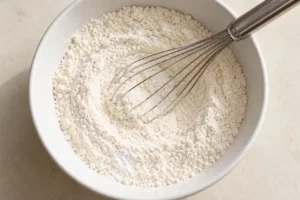
Preheat the oven to 350°F (177°C), conventional setting. Line two large baking sheets with parchment. Whisk 180 g all-purpose flour, ½ teaspoon baking soda and ½ teaspoon fine salt together in a bowl.
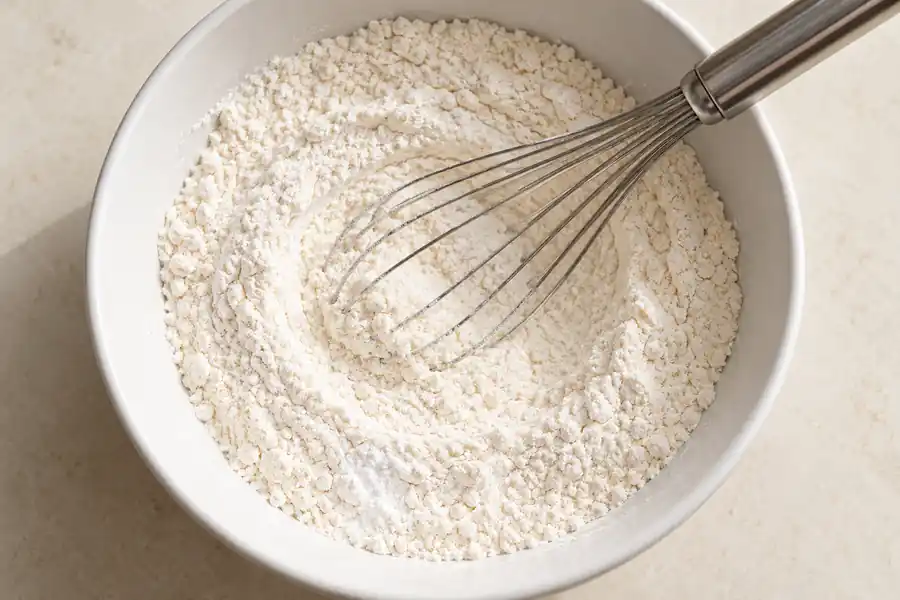
Whisking the dry ingredients first spreads the small amounts of soda and salt through the flour. Line both trays before handling the dough. Parchment gives the cookies a consistent surface without adding extra grease.
2. Cream the butter and sugar
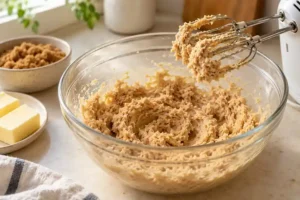
Beat 113 g softened unsalted butter and 150 g packed light brown sugar for about 2 minutes until evenly combined and lighter in texture. Scrape the bowl. Beat in 1 large egg and 1 teaspoon vanilla just until smooth.
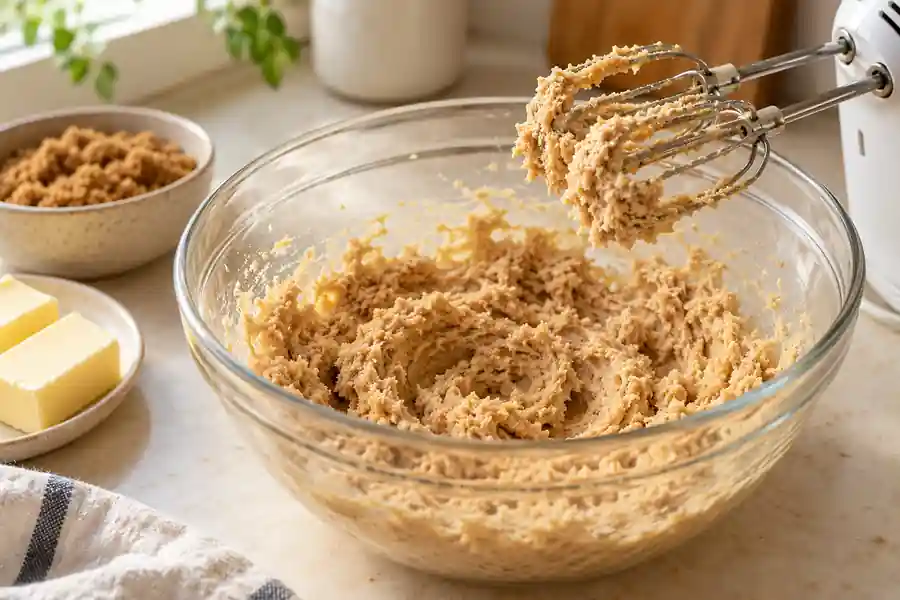
Stop and scrape the bottom and sides of the bowl before adding the egg. The mixture should be cohesive, not full of visible butter chunks. Once the egg is incorporated, there is no benefit to continuing to beat it for several more minutes.
3. Fold in the flour and chocolate
Add the dry mixture to the wet ingredients. Mix on low or fold with a spatula just until the flour disappears. Fold in 150 g semisweet chocolate chips. Do not taste the raw dough.
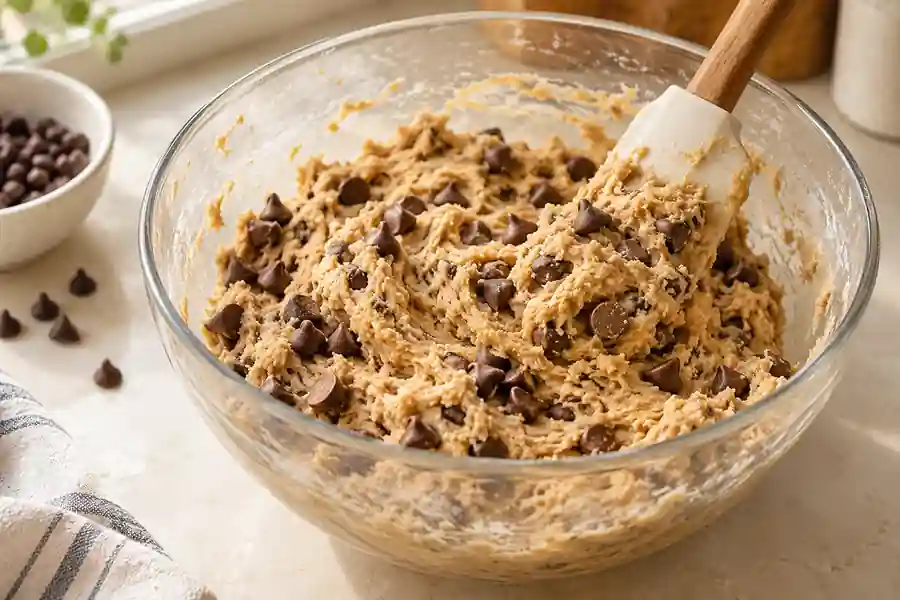
Use a spatula to reach the flour at the bottom of the bowl. Stop when there are no dry streaks and the chips are distributed. The dough should look thick and slightly tacky; avoid adding extra flour just because it is softer before chilling.
4. Chill and portion
Cover and refrigerate the dough for 30 minutes, or until firm enough to scoop. Divide into 16 portions, about 40 g each, and roll lightly into balls. Place 8 on each lined tray, at least 2–3 inches apart. Keep the second tray refrigerated while the first bakes.
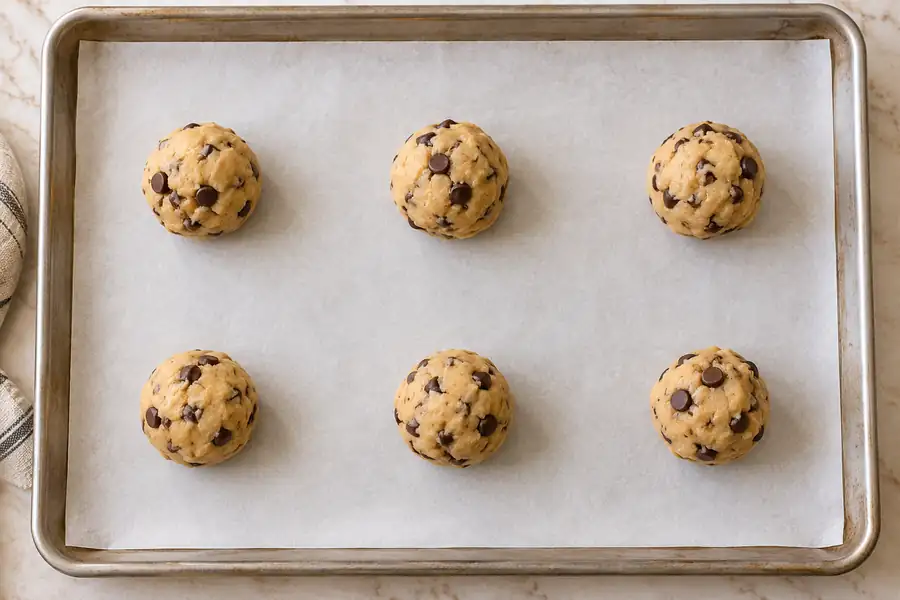
The dough needs to be cool enough to hold a rounded scoop. If your kitchen is warm and it remains very soft after the stated chill, leave it refrigerated a little longer. Arrange the portions according to your tray size; use fewer per tray if you cannot keep the required spacing.
5. Bake and cool
Bake one tray at a time on the middle rack for 12–14 minutes, until the edges are golden and the centers look set rather than wet or raw. The card allows 26 minutes for two trays; ovens and cookie sizes vary. Cool on the tray for 10 minutes, then transfer to a rack to cool completely. Let a reused tray cool before loading more dough.
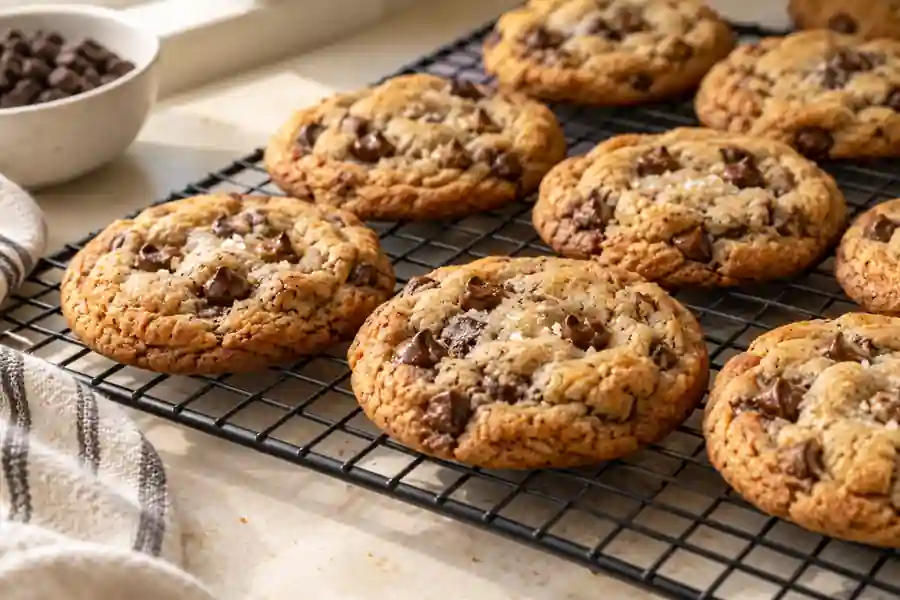
The listed cook time accounts for two trays baked one after another. Watch the first tray near the end of its baking window. Chocolate can remain soft while the surrounding cookie is baked; assess the dough surface and edges rather than judging melted chocolate alone.
Troubleshooting: spreading, dryness and uneven baking
Why did the cookies spread too much?
Warm butter, warm dough or a hot baking sheet can encourage excessive spreading. Check that the butter was softened rather than melted, chill the dough until it holds its shape, and keep unbaked portions refrigerated between trays. Confirm the oven is fully preheated before loading the first sheet.
A dark or thin tray can bake differently from a sturdy light-colored one. Bake a single test cookie if you are unsure about your oven and pan combination. Use what you observe to adjust the remaining tray rather than adding several spoonfuls of flour to the whole batch immediately.
Why are my cookies dry or cakey?
Too much flour and baking longer than needed are common causes. Weigh the flour and keep the portions equal so smaller cookies do not overbake while larger ones finish. A cooled cookie will feel firmer than one straight from the oven, but that is not a reason to remove dough while it is still visibly raw.
Why did one side brown faster?
Oven hot spots and crowded trays can cause uneven results. Bake on the middle rack with space around the sheet. If your oven browns one side quickly, rotate the sheet carefully once the cookies have begun to set. Do not switch to a higher temperature to finish the pale side.
Serving ideas and more chocolate bakes
Serve brown sugar chocolate chip cookies once the centers have cooled enough to hold together. They pair well with milk, tea or coffee. For a coffee-shop-style combination, try Tastewiser’s Biscoff latte recipe.
If you prefer a tray bake that you can cut into portions, try our banana chocolate chip bars. Keep the cookie portions consistent when serving so the nutrition estimate remains useful.
Storage and make-ahead options
Cool the cookies completely before sealing them in an airtight container. For best texture, plan to enjoy them over 3–4 days at room temperature in a cool, dry place. Packing warm cookies traps steam and can leave the surface damp. This is a quality guideline, not a guarantee for every storage condition.
To make the dough ahead, cover it well and refrigerate at 40°F (4°C) or below; plan to bake it within two days. Keep it separate from ready-to-eat foods. Longer refrigeration makes the dough firmer, so allow only enough time on the counter to scoop it comfortably.
For longer storage, freeze individual dough portions on a lined tray, then transfer them to a labeled freezer container. Use within about two months for best quality. Thaw covered in the refrigerator before following the baking method, and judge doneness rather than relying on an exact minute count.
Raw dough safety
Do not taste the raw dough. Raw flour and raw egg can carry harmful germs, and baking is the step that makes this type of dough suitable to eat. Wash your hands and clean bowls, beaters and work surfaces after handling it. Read the FDA’s flour safety guidance for more detail.
Frequently asked questions
Can I make these cookies without white sugar?
Yes. These brown sugar chocolate chip cookies already use only brown sugar. You do not need to add granulated sugar or adjust the flour to remove it.
Can I skip chilling?
Chilling is part of this method. It firms the softened-butter dough so you can portion it and helps limit spreading. For consistent results, keep that step and wait until the dough is scoopable.
Can I use salted butter?
Unsalted butter makes the salt level easier to control. If you use salted butter, reduce the added fine salt to ¼ teaspoon as a starting point. The final salt level depends on the butter brand.
Can I make larger cookies?
Larger portions need a different baking time and yield fewer cookies. The card is written for 16 portions of about 40 g each. Follow that size for the first batch instead of using the same bake window for oversized scoops.
Are these healthier than regular chocolate chip cookies?
Brown sugar gives a different flavor; it does not turn cookies into a low-sugar food. The card lists an estimated 180 calories per cookie when the batch is divided into 16. Ingredient brands and changes to portion size will affect that estimate.
A note from Tastewiser
This recipe has not yet been kitchen-tested by Tastewiser. The photographs are AI-generated illustrations of the method. The ingredient quantities and instructions are provided as a baking guide, with oven-dependent timing explained rather than presented as a guaranteed result.
Make your next batch
For brown sugar chocolate chip cookies with a clear starting point, weigh the ingredients, use softened butter, chill the dough and leave plenty of tray space. Keep those basics consistent before changing the chocolate or choosing dark brown sugar. The full recipe card below keeps the ingredients and steps together for your bake.
Follow us on Instagram for more recipe ideas, and Follow us on Pinterest to save your next bake.
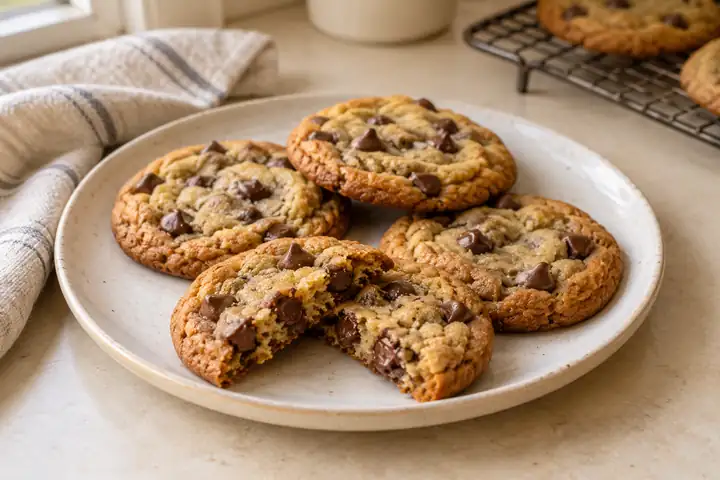

Brown Sugar Chocolate Chip Cookies
Ingredients
Equipment
Method
- Preheat the oven to 350°F (177°C), conventional setting. Line two large baking sheets with parchment. Whisk 180 g all-purpose flour, ½ teaspoon baking soda and ½ teaspoon fine salt together in a bowl.
- Beat 113 g softened unsalted butter and 150 g packed light brown sugar for about 2 minutes until evenly combined and lighter in texture. Scrape the bowl. Beat in 1 large egg and 1 teaspoon vanilla just until smooth.
- Add the dry mixture to the wet ingredients. Mix on low or fold with a spatula just until the flour disappears. Fold in 150 g semisweet chocolate chips. Do not taste the raw dough.
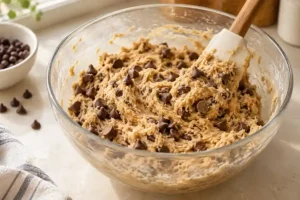
- Cover and refrigerate the dough for 30 minutes, or until firm enough to scoop. Divide into 16 portions, about 40 g each, and roll lightly into balls. Place 8 on each lined tray, at least 2–3 inches apart. Keep the second tray refrigerated while the first bakes.
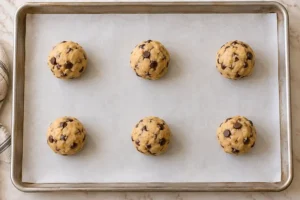
- Bake one tray at a time on the middle rack for 12–14 minutes, until the edges are golden and the centers look set rather than wet or raw. The card allows 26 minutes for two trays; ovens and cookie sizes vary. Cool on the tray for 10 minutes, then transfer to a rack to cool completely. Let a reused tray cool before loading more dough.
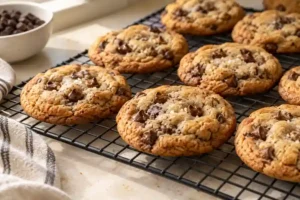
Notes
Get easy recipes in your inbox
Join TasteWiser for new recipes, cooking tips and fresh inspiration.
Confirm your email to subscribe. Unsubscribe anytime.