Honey Garlic Salmon with Lemon (Easy Oven-Baked Fillets)
Honey garlic salmon pairs tender oven-baked fish with a glossy sauce made from honey, garlic, lemon and soy sauce. The glaze is sweet enough to soften the savory edges without hiding the salmon, and baking the fillets together keeps the method straightforward. This recipe makes four portions using similarly sized pieces so they finish at roughly the same time.
The most useful tool here is a food thermometer. Fillet thickness, starting temperature and oven accuracy all affect cooking, so the time is a guide rather than a guarantee. Keep the sauce in a thin layer around the fish, check the thickest portion early, and serve while the salmon is moist and warm.
Why This Oven Method Works
A moderately hot oven cooks the salmon without requiring you to turn delicate fillets. Honey encourages surface browning, while lemon adds acidity and garlic gives the glaze its savory character. A little olive oil helps the sauce spread across the fish. Parchment makes cleanup easier and keeps the sweet glaze from sticking firmly to the pan.
Use a shallow rimmed metal tray rather than a deep casserole dish. Deep dishes trap more moisture around the fish, which can leave the sauce thin. Give each portion a little space, but do not spread the glaze across a large empty tray where it may burn before the fish is done.
Ingredients and Quantities
- 4 salmon fillets, 170 g each, about 680 g total
- 60 g honey
- 30 ml reduced-sodium, alcohol-free soy sauce
- 20 ml fresh lemon juice
- 15 ml olive oil
- 12 g garlic, finely minced, about 4 cloves
- 1 g ground black pepper
- Optional: lemon wedges and chopped parsley for serving
Skin-on or skinless salmon both work. Skin-on fillets are easier to lift from the tray, though the skin will not become crisp with this method. Look for pieces about 2.5 cm thick. If the tail pieces are much thinner, fold the narrow end underneath or remove them from the oven before the thicker portions.
Ingredient Notes and Practical Substitutions
Choose mild, pourable honey. If it has crystallized, stand the closed jar in warm water until it loosens before measuring. Honey varies in sweetness and flavor, so a dark, strongly flavored honey makes a more noticeable glaze. Pure maple syrup can replace honey by weight, although the sauce will taste different and may stay a little thinner.
Reduced-sodium soy sauce supplies enough salt for the fish without extra seasoning. Check the label for an alcohol-free product if required. A gluten-free, alcohol-free tamari can be substituted in the same quantity. Coconut aminos are sweeter and less salty; taste the sauce before it touches raw fish and adjust to your preference.
Fresh garlic gives the clearest flavor. Mince it finely so large pieces do not sit on top and scorch. If using garlic powder, start with 2 g instead of the fresh garlic. Bottled lemon juice is practical, but fresh juice and wedges give a brighter finish. Avoid adding extra honey before tasting the finished sauce with the fish.
How to Make Honey Garlic Salmon
1. Prepare the Fish and Tray
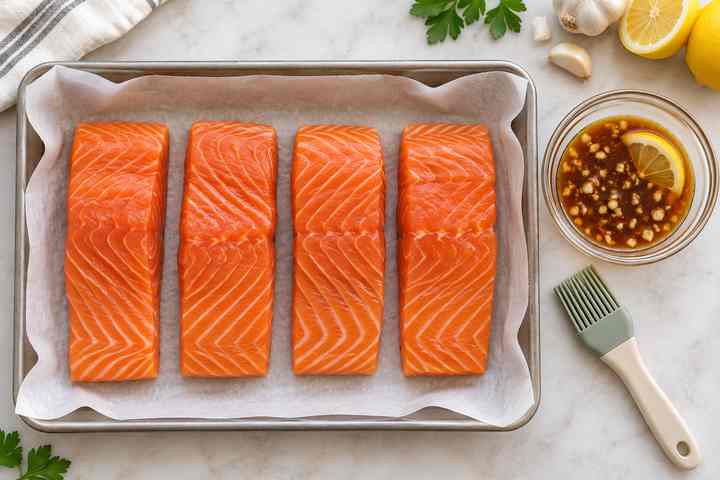
Heat the oven to 200°C (400°F). Line a rimmed baking tray with oven-safe parchment rated for that temperature. Pat the salmon dry with paper towels, check for pin bones, and arrange it skin-side down. Keep the pieces in one layer with a small gap between them.
2. Mix and Brush on the Glaze
Whisk honey, soy sauce, lemon juice, olive oil, garlic and black pepper until evenly combined. Spoon the glaze over the salmon and brush it across the tops and sides. Use all of the measured glaze, keeping most of it close to the fish rather than spreading it over the empty tray. Wash utensils that have contacted raw fish before using them for serving.
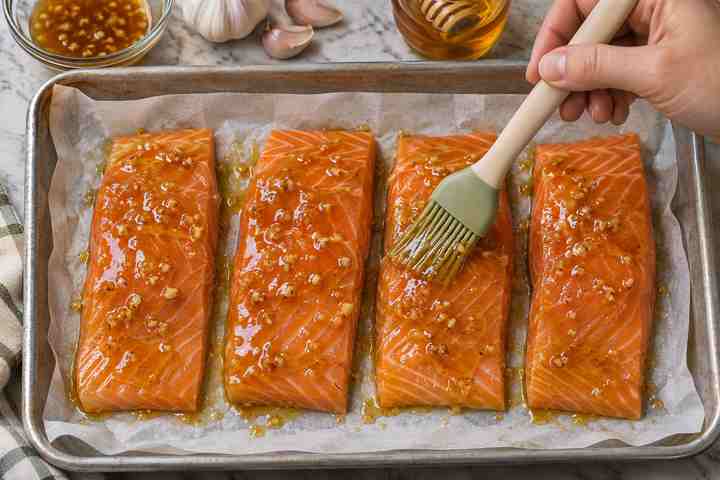
3. Bake and Check the Center
Bake for 12–16 minutes, checking sooner for thin pieces. Insert a thermometer into the thickest part from the side. Cook fish to 63°C (145°F), following the official safe minimum temperature guidance. The flesh should separate easily into flakes. Return any underdone portions to the oven and check again shortly.
4. Serve with the Pan Glaze
Lift the fillets carefully with a wide spatula. Spoon the hot pan juices over them and add optional lemon or parsley. Do not use uncooked sauce that has contacted raw salmon as a finishing drizzle. If the glaze is very dark at the tray edges, leave those scorched areas behind rather than scraping them onto the fish.
Troubleshooting
The salmon is dry: It likely stayed in the oven too long, or the pieces were thinner than expected. Begin checking at 10–12 minutes and remove each fillet when it reaches the safe temperature. A thinner portion should not wait for a thicker one.
The glaze is watery: Thawed fish can release extra moisture. Pat it dry thoroughly and avoid crowding the pan. Spoon the juices over the fish at serving rather than extending the bake just to reduce the sauce, which can overcook the salmon.
The garlic or honey is burning: Check the oven temperature and keep the tray on the middle rack. A blackened patch at the outer edge is a signal to move the glaze closer to the fish next time. Do not use a broiler with parchment.
The flavor is too sweet: Add a squeeze of lemon at the table. For a future batch, reduce the honey to 45 g; the glaze will be less glossy but still coat the fish. Do not add more soy sauce automatically, because that also increases salt.
Serving Suggestions
Honey garlic salmon works with plain rice, couscous or noodles that can catch the sauce. Add a vegetable with a contrasting texture, such as garlic and ginger bok choy or roasted cabbage steaks. For a fuller oven dinner, serve baked sweet potato fries separately so their seasoning and cooking time remain easy to control. Balsamic roasted Brussels sprouts offer another useful vegetable option.
Storage and Reheating
Refrigerate cooked fish in shallow covered containers within 2 hours, or within 1 hour when the surrounding temperature is above 32°C (90°F). Keep the refrigerator at 4°C (40°F) or below and use the salmon within 3–4 days. These limits follow USDA cooked-fish storage guidance. Freeze portions promptly for up to 3 months for best quality.
Reheat a portion in a covered dish in a 165°C (325°F) oven with a small splash of water until the center reaches 74°C (165°F). The cover helps retain moisture, but reheating still firms the fish. In a microwave, use a covered microwave-safe dish, rotate for even heating and check several spots. Do not repeatedly warm the entire batch when only one serving is needed.
Frequently Asked Questions
Can I use frozen salmon?
Yes, thaw it safely in the refrigerator first, then pat it dry. This recipe’s timing is for thawed fish. Partially frozen fillets may cook unevenly and release more liquid into the glaze.
Can the sauce be mixed ahead?
Mix it a day ahead and refrigerate in a covered container. Stir before using. Keep it separate from the fish until you are ready to cook, and treat any portion that touches raw salmon as raw-fish marinade.
Should I remove the skin?
It is optional. Bake skin-side down if keeping it on, then slide the spatula between the skin and flesh if you prefer to serve the fish without skin. This method does not aim for crisp skin.
Can I double the recipe?
Use two trays if necessary and keep the fillets in one layer. Swap tray positions if your oven heats unevenly. Start checking the fish at the same point; doubling the quantity does not mean doubling the cooking time.
A Simple Glazed Salmon Dinner
For tender oven-baked honey garlic salmon, focus on evenly sized portions, a thin coating of glaze and a thermometer check before serving. The lemon and garlic keep this easy baked salmon with honey glaze balanced, while plain grains and a crisp vegetable make it a complete dinner without a complicated sauce.
Follow us on Pinterest · Follow us on Instagram
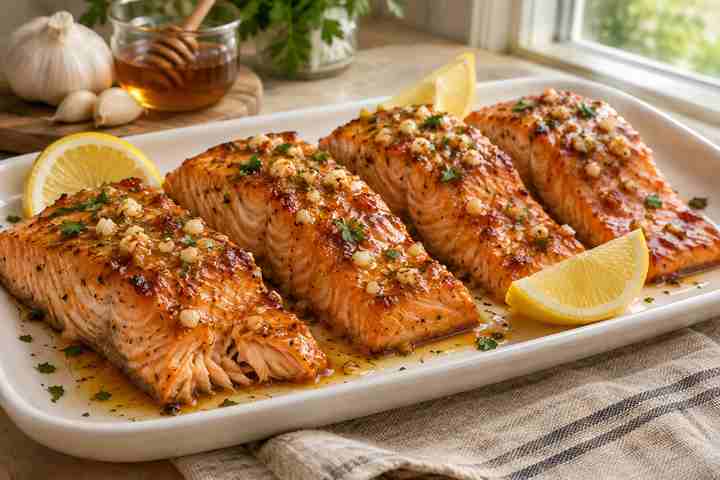

Honey Garlic Salmon
Ingredients
Method
- Heat oven to 200°C (400°F). Line a rimmed tray with oven-safe parchment. Pat salmon dry, check for bones and arrange in one layer, skin-side down.

- Whisk honey, soy sauce, lemon juice, olive oil, garlic and pepper. Spoon and brush all glaze over the fish, keeping it close to the fillets.
- Bake 12–16 minutes, checking earlier for thin pieces, until the thickest center reaches 63°C (145°F). Remove each portion as it finishes.
- Lift with a wide spatula, spoon hot pan juices over the fish and serve with optional lemon and parsley. Discard scorched glaze at the tray edges.
Notes
Get easy recipes in your inbox
Join TasteWiser for new recipes, cooking tips and fresh inspiration.
Confirm your email to subscribe. Unsubscribe anytime.