Wheat-Free Chickpea Flatbread (No Yeast)
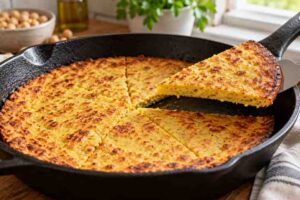
Wheat-free chickpea flatbread is a thin, savory bread with golden edges and a tender middle. It starts with chickpea flour, water, olive oil and salt, so there is no kneading, yeast or flour blend to assemble. A hot skillet helps the underside set while the oven cooks the batter through.
Think of this as bread for tearing, dipping and serving beside a meal. It does not rise into a sandwich loaf, and its texture is closer to a firm, tender pancake than a stretchy wheat bread. One skillet makes four side servings, cut into wedges while still warm.
What kind of bread is this?
This wheat-free chickpea flatbread uses a batter rather than a kneadable dough. Chickpea flour supplies both the structure and a distinctive savory flavor. Resting the batter lets the flour absorb water before it reaches the pan; the oven then sets the thin layer into a sliceable round.
It belongs to the same broad family as chickpea-flour flatbreads such as socca, although this version is written around an ordinary home oven and a measured ten-inch skillet. Expect lightly crisp edges when fresh. As the bread cools, steam softens them, which makes reheating useful for leftovers.
Ingredients and measuring notes
Use 150 g fine chickpea flour, 240 ml water, 30 ml olive oil and 1/2 teaspoon fine salt, about 3 g. Divide the oil: 15 ml goes into the batter and 15 ml coats the skillet. A little chopped parsley and freshly ground pepper are optional finishes, rather than ingredients needed for the bread to hold together.
Choose flour made entirely from chickpeas. Some products sold as gram flour or besan use a different chickpea variety and can be finer or more absorbent; look at the ingredient list and begin with the measured water. A coarse chickpea meal is not interchangeable with fine flour because it can leave the center gritty.
Weigh the flour instead of firmly packing a measuring cup. Its approximate cup volume varies with the grind, so the gram measurement is the dependable starting point. Whisk before deciding that the batter needs more water; dry pockets can make the mixture seem thicker than it is.
Plain water keeps the flavor simple. Olive oil adds richness and helps the edge release from the pan. There is no egg, milk, baking powder or yeast in the base recipe. Adding any of those would change the texture, so they are not necessary substitutes for the short ingredient list.
Wheat-free and gluten-free are different claims
The ingredients in this recipe contain no intentional wheat. That does not make every chickpea flour or every shared kitchen suitable for every dietary need. Check ingredient and allergen labels, and use utensils, bowls and a skillet free from wheat flour residue when avoiding wheat.
Wheat-free is not a synonym for gluten-free: barley and rye also contain gluten. If gluten avoidance is required, choose appropriately labeled ingredients and prevent cross-contact during preparation. The FDA explanation of gluten and food labeling explains that distinction. Avoid assuming a homemade loaf has been certified simply because its main flour is made from chickpeas.
Equipment and oven setup
A ten-inch (25 cm) oven-safe cast-iron skillet gives this amount of batter enough room to spread into a thin layer. Check that the handle and any coating are rated for 450°F (230°C). Do not put a nonstick pan with a low oven limit, or a skillet with a plastic handle, into that oven.
You also need a whisk, a mixing bowl, a flexible spatula and dry oven mitts. Place the oven rack in the middle position. Preheat the empty skillet only during the final five minutes of the batter rest; a pan that is hot enough to sizzle gently is useful, but smoking oil is not the goal.
How to make wheat-free chickpea flatbread
1. Whisk and rest the batter
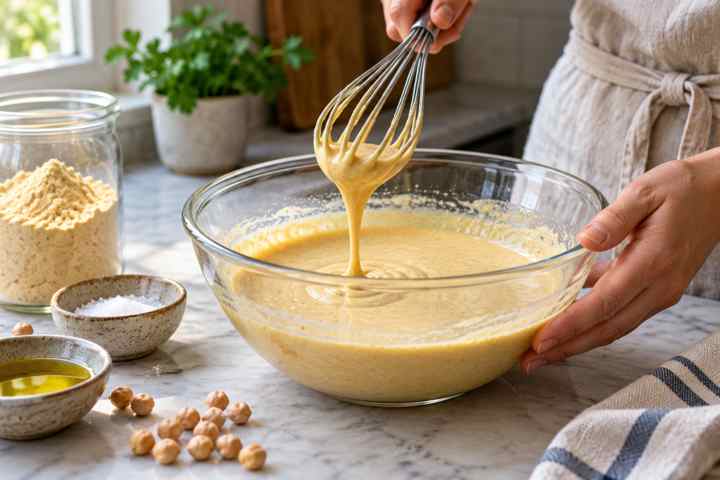
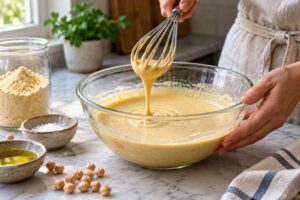
Whisk the flour and salt in a bowl. Gradually add the water while whisking, then mix in 15 ml olive oil. Scrape the bottom and sides so no dry flour remains. The mixture should pour readily from the whisk, rather than hold its shape like dough.
Let the batter stand for 20 minutes. Meanwhile, heat the oven to 450°F (230°C). Put the empty oven-safe skillet in the oven for the final five minutes of the rest. Do not taste uncooked batter; flour needs cooking even when a recipe has no raw egg.
2. Oil the hot skillet and pour
Whisk the rested batter again. If the particular flour has made it too thick to pour, add water one teaspoon at a time, using no more than 15 ml extra. A small adjustment is enough; a very watery mixture will need longer to set.
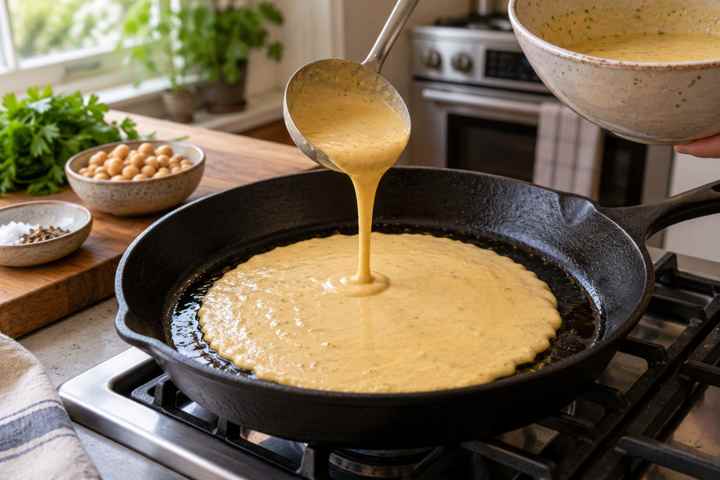
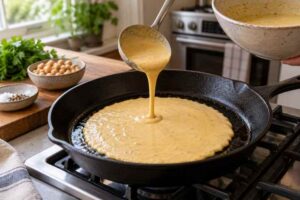
Use dry mitts to remove the skillet and place it on a heatproof surface. Add the remaining 15 ml oil and tilt the pan carefully to coat the base. Pour in the batter in one even layer. Keep the hot handle away from the counter edge and return the skillet to the oven.
3. Bake, release and cut
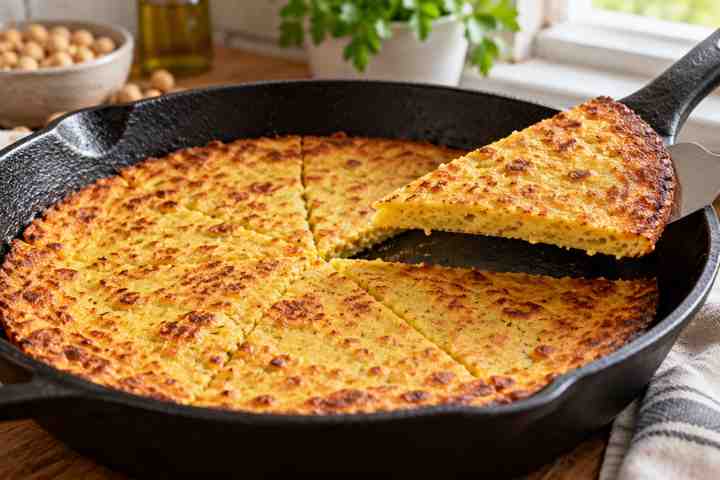
Bake for 18–22 minutes, until the surface is set, the edges are golden and the center is firm rather than shiny or wet. A thin spatula should slide under the edge without pulling up raw batter. If the center remains wet, continue baking in short intervals and check again.
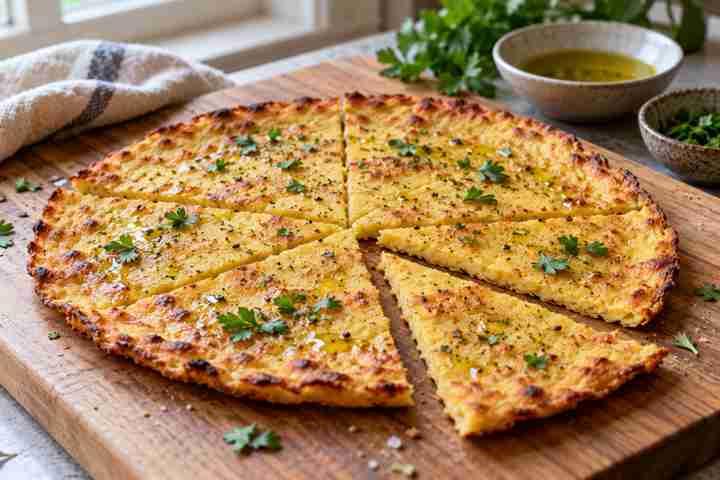
Rest in the skillet for five minutes, then loosen the edges and slide onto a board. Cut into eight wedges and serve two wedges per side portion. Add optional parsley or pepper after baking. The bread is best warm, when the outside has the clearest contrast with the soft center.
Troubleshooting the texture
If the bread sticks, the skillet may have been insufficiently oiled or the center may need more baking. Loosen the perimeter first and work inward with a thin spatula. Trying to lift the whole round from one edge while it is still soft can tear it.
A gummy middle can come from a smaller pan, excess water or slicing before the bread sets. Keep the stated pan diameter and judge the center as well as the brown edge. Conversely, a dry or brittle round may have baked too long or been spread across a much larger pan.
Small surface cracks are normal. They do not need extra oil poured over them. If the batter forms large dry lumps, whisk a little of the liquid into the flour first to make a smooth paste, then gradually incorporate the remaining water.
Substitutions and simple variations
Another neutral cooking oil can replace olive oil in the same measured quantity. For a more aromatic version, fold a small pinch of dried rosemary or cumin into the batter. Keep additions light so the base recipe remains easy to cook evenly.
Almond flour, coconut flour and ordinary gluten-free baking blends are not direct replacements for chickpea flour here. They absorb liquid differently and need different binders. Canned chickpeas blended with water are also a different recipe, not a shortcut to the same measured batter.
Serving ideas
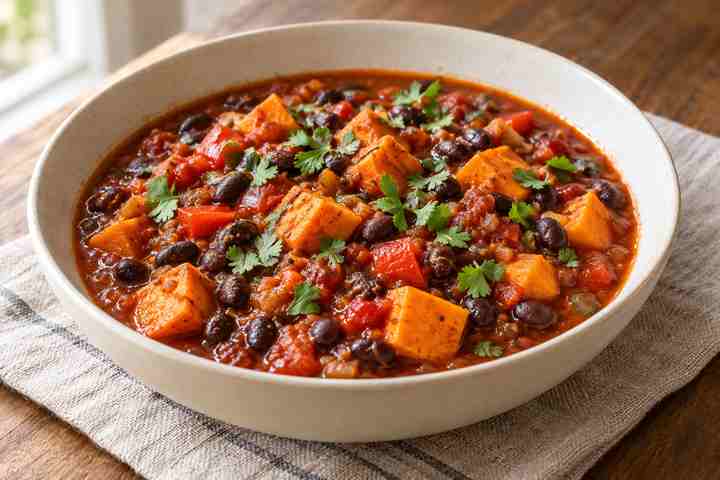
Serve wheat-free chickpea flatbread with sweet potato black bean chili for dipping, or alongside lemon garlic chicken meatballs as a savory side. Check the complete meal’s ingredients separately if you are avoiding an allergen.
For a vegetable plate, add balsamic roasted Brussels sprouts or maple roasted carrots. Keep wet toppings separate until serving so the bread does not soak up their moisture and lose its edge.
Storage and reheating
Let leftovers cool promptly, then refrigerate in a covered container within two hours. Use within three days. Separate stacked wedges with parchment so they can be lifted out without breaking. This is a moist homemade bread, so refrigeration is a more practical choice than leaving it on the counter for several days.
Reheat wedges in a 350°F (175°C) oven for about 8–10 minutes, until hot throughout. A skillet over medium-low heat can also warm small portions; turn carefully and lower the heat if the outside darkens too quickly. Microwaving makes the edges softer.
For longer storage, freeze cooled wedges for up to one month for best quality and reheat from frozen, allowing a little extra time. Freezing does not make a bread that has been left out too long safe again. As with other flour recipes, follow FDA flour-handling guidance and clean surfaces after mixing raw batter.
Frequently asked questions
Can I use this for sandwiches?
It is written as a thin side bread. Small open-faced portions work, but it does not have the flexible crumb or height of a sandwich loaf. Avoid stacking heavy fillings between two delicate wedges.
Can I double the recipe?
Yes, but bake two separate rounds rather than putting twice the batter into one ten-inch skillet. A thicker layer changes the cooking time and makes the middle more difficult to set before the edge browns.
Why does the batter need a rest if there is no yeast?
The rest hydrates the flour; it is not a proofing stage. The batter will not double in size, and there is no need to wait for visible bubbles before baking.
A simple savory bread without wheat
Wheat-free chickpea flatbread is most useful when you want a warm, tearable side without kneading or waiting for yeast. Weigh the flour, keep the batter layer thin and bake until the middle is properly set. This no-yeast chickpea flour bread pairs easily with soups, vegetables and a small dish of olive oil.
Follow us on Pinterest · Follow us on Instagram

Wheat-Free Chickpea Flatbread (No Yeast)
Ingredients
Method
- Whisk flour and salt with water, then 15 ml olive oil. Rest 20 minutes. Heat oven to 450°F (230 °C). Preheat a 10-inch(25 cm) oven-safe cast-iron skillet for the final 5 minutes of rest.

- Whisk again; add water by teaspoon up to 15 ml only if too thick to pour. Using dry mitts, carefully oil the hot skillet with remaining 15 ml oil. Pour in batter in a thin even layer and return to oven.
- Bake 18–22 minutes until edges are golden and center fully set, not wet. Rest 5 minutes, loosen and cut into 8 wedges. Serve 2 wedges per portion with optional parsley.
Notes
Get easy recipes in your inbox
Join TasteWiser for new recipes, cooking tips and fresh inspiration.
Confirm your email to subscribe. Unsubscribe anytime.