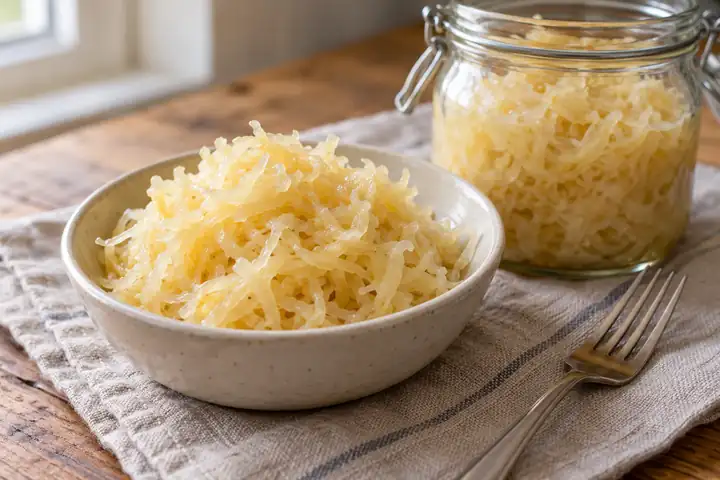

Ingredients
Equipment
Method
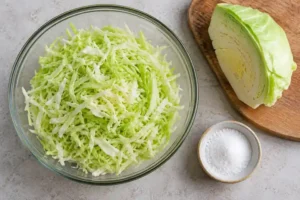
- Wash and rinse jar, weight and tools thoroughly; follow equipment cleaning directions and cool before use. Remove damaged cabbage leaves, rinse, quarter and core. Weigh 2½ lb (1,134 g) usable cabbage and shred thinly and evenly.
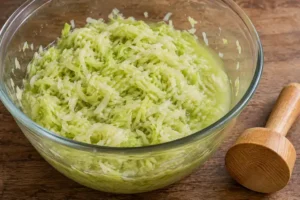
- Mix the cabbage with 4½ level teaspoons pickling salt using clean hands. Squeeze until wilted and juicy, resting briefly and mixing again if needed. Keep the released liquid.
- Pack cabbage and juice firmly into the jar, removing air pockets. Leave 3–4 inches between packed cabbage and rim. Add the weight and keep all cabbage 1–2 inches below brine. If needed, add cooled topping-up brine made with 1⅛ teaspoons pickling salt per 1 cup hot water. Use a larger vessel if needed; do not add plain water.
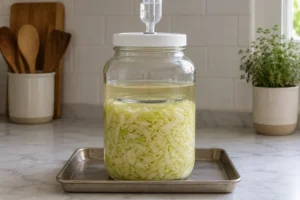
- Fit the airlock according to its instructions and set the jar on a tray away from sun at 70–75°F (21–24°C). Check daily for submersion, temperature and spoilage; maintain the airlock. Small batches may take 1–2 weeks here; cooler conditions take longer. Monitor with a calibrated food pH meter.
- Finish when bubbling has stopped and pH is 4.6 or lower, with no spoilage signs. If bubbling stops above pH 4.6, continue and recheck every 1–2 days. Discard moldy, slimy or rotten-smelling batches without tasting. Once complete, replace the airlock with a storage lid and refrigerate at 40°F (4°C) or colder, keeping cabbage submerged.
Notes
Small-batch cabbage and salt amounts follow Oregon State University Extension. Small batches may take about 1–2 weeks at 70–75°F (21–24°C); completion depends on measured fermentation progress. Use pH and stopped bubbling together, not time alone. Do not lower the fermentation salt or add vinegar to this formula.
Store fully fermented kraut tightly covered and submerged in brine in the refrigerator; Extension guidance allows several months. Discard if mold, slime or objectionable odors develop. This recipe covers refrigerated storage; use a complete published canning process for shelf-stable storage.
Nutrition is per one-sixteenth batch, calculated from the cabbage and base salt before fermentation. Optional topping-up brine is excluded; rinsing and draining change the values.