Strawberry Mango Smoothie with Yogurt
This strawberry mango smoothie blends sweet mango, bright strawberries, plain Greek yogurt and milk into a creamy fruit drink. Frozen fruit supplies the chill and body, so the base recipe needs neither banana nor ice. Start with the measured milk, then adjust the texture to suit your blender and glass.
The result is a single, peach-pink blend rather than separate fruit layers. Ripe mango balances the strawberries, while yogurt adds a gentle tang. Taste before adding any sweetener: the fruit may already provide enough sweetness.
Why this fruit combination works
- Mango gives body: its soft flesh blends into a smooth base and rounds out tart strawberries.
- Strawberries keep it bright: their flavor remains noticeable alongside the mango and yogurt.
- Frozen fruit replaces ice: it thickens the drink without adding water as it melts.
- No banana required: the mango and yogurt provide creaminess while keeping the two main fruit flavors clear.
Ingredients for strawberry mango smoothie
These amounts make two small servings. Use US measuring cups; the approximate fruit weights help when frozen pieces leave gaps in the cup.
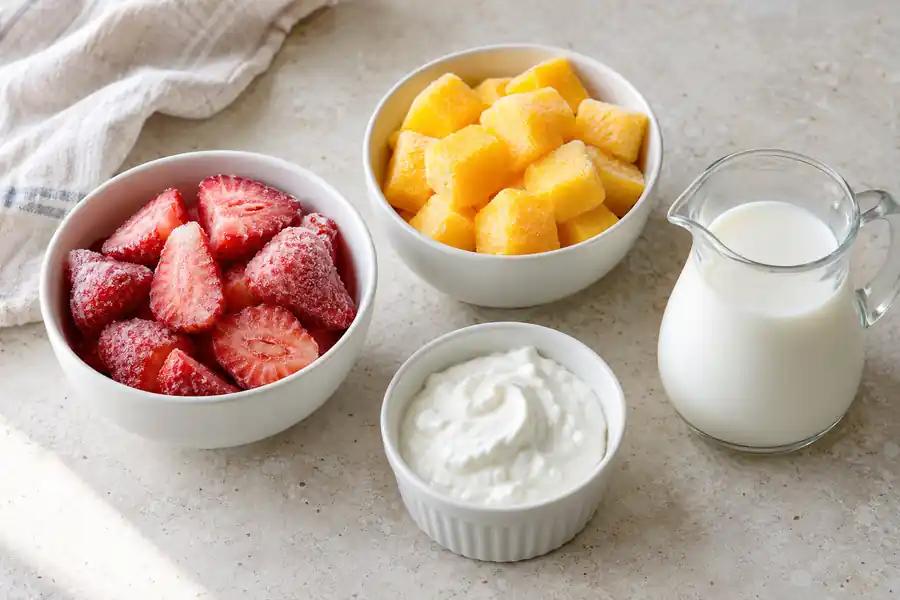
- 1 cup frozen strawberries, about 150 g: hulled and sliced. Choose unsweetened fruit.
- 1 cup frozen mango chunks, about 165 g: choose ripe, sweet mango without added syrup.
- 1/2 cup plain nonfat Greek yogurt, about 120 g: thick yogurt gives body; flavored yogurt changes sweetness.
- 3/4 cup 2% milk, about 180 ml: plus a little extra only if needed to blend.
- Optional honey or maple syrup: start with 1 teaspoon for the whole batch, only after tasting. This is excluded from the nutrition estimate.
Need help with measuring? Our cups-to-grams guide explains why the ingredient matters when converting volume to weight. The weights listed here apply to these fruits, rather than to every ingredient measured in a cup.
How to make strawberry mango smoothie
1. Measure the fruit and dairy
Measure the frozen strawberries and mango, breaking up any large clumps so the blender can move them freely. Measure the milk and yogurt separately. If using fresh strawberries, rinse them before removing the green tops. Peel and dice fresh mango before measuring.
2. Load the blender
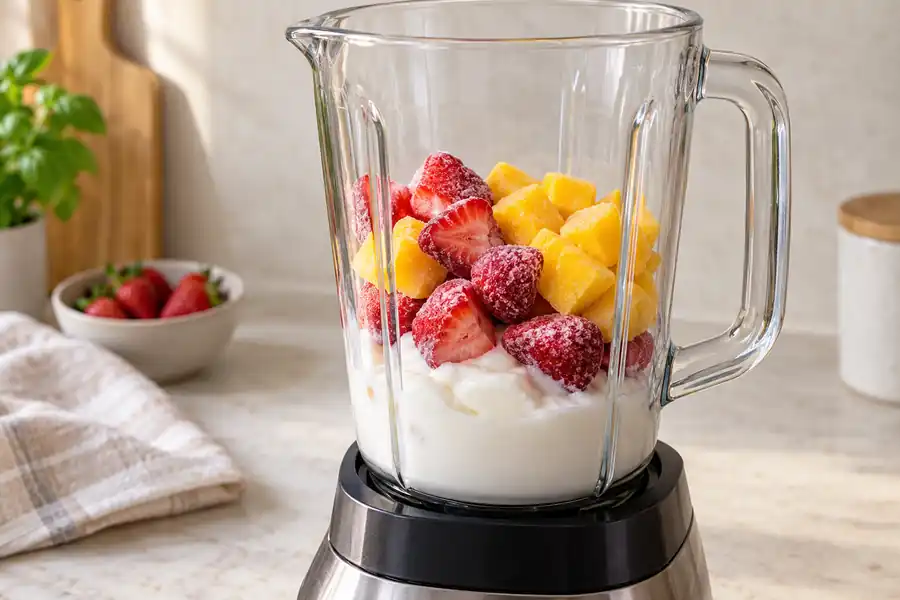
Add the milk and yogurt to the pitcher first, followed by the frozen strawberries and mango. Liquids near the blades help the mixture circulate. Follow your blender manufacturer’s loading instructions if they differ, and keep the batch below its maximum fill line.
3. Blend and adjust
Secure the lid and blend, starting on a lower setting before increasing the speed. Stop when the mixture looks smooth and no large fruit pieces remain. If the blades stall, stop the blender and add milk a tablespoon at a time. Unplug it before scraping down the sides; never place a spoon inside while it is running.
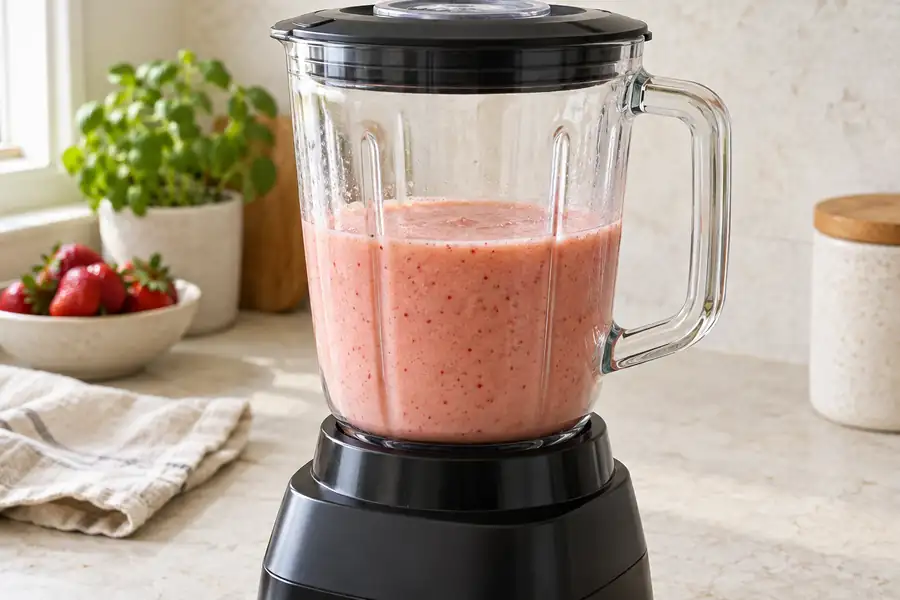
4. Taste and pour
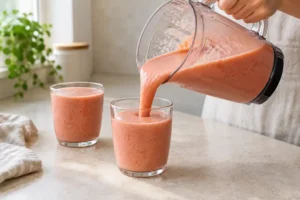
Taste the strawberry mango smoothie before changing its sweetness. If the strawberries are particularly tart, blend in a small amount of honey or maple syrup. Divide between two glasses and serve immediately. A strawberry slice on the rim is optional and does not affect the method.
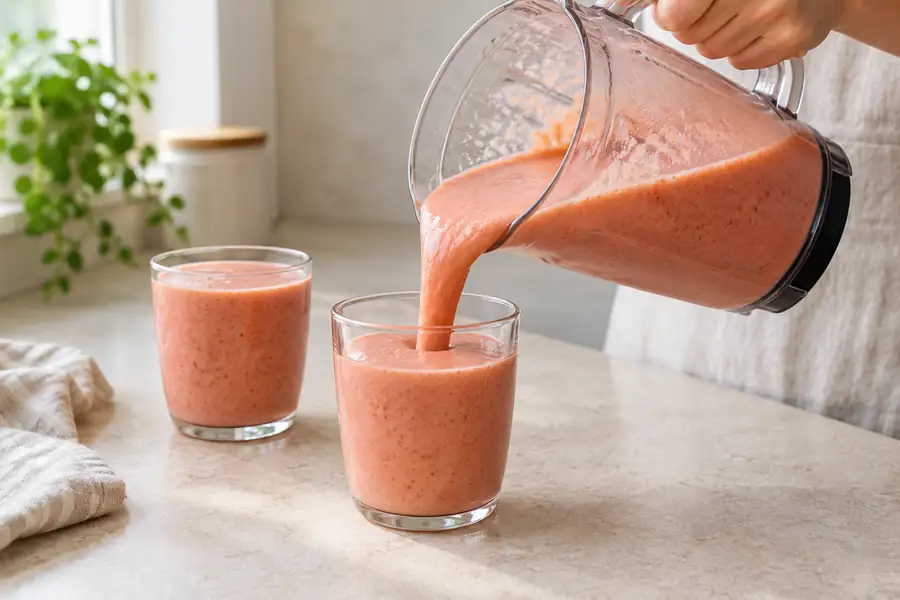
Fresh and frozen fruit for strawberry mango smoothie
Using both fruits frozen gives the thickest version of this base recipe. With a less powerful blender, allow the fruit to soften slightly before loading rather than forcing the motor through a solid block. Break up clumps and add liquid gradually.
For a strawberry mango smoothie with fresh fruit, keep at least one fruit frozen if you want a cold, thick drink. If both are fresh, start with less milk and add it as needed. A few ice cubes can chill the blend, but they also dilute the fruit flavor as they melt.
Too thick? Add milk by the tablespoon. Too thin? Blend in a few extra frozen mango pieces. Too tart? Try a little more ripe mango before adding sweetener. Extra fruit, milk or sweetener changes the yield and nutrition.
Simple variations
- Dairy-free: use an unsweetened plant milk and plain dairy-free yogurt. Their thickness and protein content vary; check the labels.
- Without yogurt: omit it, begin with less milk and adjust slowly. The drink will have less tang and a different body.
- A thicker bowl: reduce the milk and use a blender suited to thick mixtures. Add only enough liquid to keep the blades moving.
Keep the first batch simple before adding seeds, protein powder or other fruit. Those additions can change the flavor, thickness and serving size enough that the base nutrition figures no longer apply.
What to serve alongside it
A strawberry mango smoothie works as a fruit drink beside breakfast or as a small afternoon snack. For something baked, pair a smaller glass with soft banana chocolate chip bars. For another way to use mango in a drink, explore our iced mango coffee recipe; it has a different flavor and method.
Storing strawberry mango smoothie and making ahead
This blend has its best texture immediately after making it. If needed, refrigerate it promptly in a clean, sealed container at 40°F (4°C) or colder and drink within 24 hours for quality. It can separate; shake or stir before serving.
Do not leave a dairy smoothie at room temperature for more than 2 hours, or more than 1 hour above 90°F (32°C). Follow the USDA guidance on keeping perishable food cold. For an easier make-ahead option, portion the frozen fruit into freezer bags and add the milk and yogurt when blending.
Calories per serving
Approximately 155 calories per small serving, based on two equal portions made with nonfat Greek yogurt and 2% milk, without optional sweetener or extra milk. Divide the entire batch evenly rather than relying on an exact glass volume.
Estimated nutrition
| Nutrient | Per serving, approximately |
|---|---|
| Calories | 155 kcal |
| Protein | 10 g |
| Carbohydrates | 25 g |
| Total sugars | 22 g |
| Fiber | 3 g |
| Fat | 3 g |
| Saturated fat | 1 g |
| Sodium | 65 mg |
These rounded estimates include sugars naturally present in the fruit and dairy. Fruit ripeness, brands, substitutions and extra ingredients change the values. Use the labels on your milk and yogurt for a more precise calculation.
Frequently asked questions
Can I make strawberry mango smoothie without banana?
Yes. This recipe uses mango and Greek yogurt for body, so banana is not required. Leave the ingredient amounts as listed for the base version.
Can I use fresh strawberries and frozen mango?
Yes. Frozen mango supplies some chill and thickness. Begin with slightly less milk because fresh strawberries bring a softer texture, then add liquid only as needed.
Do I need to add ice?
Not when both fruits are frozen. Ice is optional when using fresh fruit, but it can weaken the fruit flavor and make the drink thinner as it melts.
Why is my smoothie not blending?
The mixture may be too thick, the fruit may be clumped, or the batch may not suit the blender’s capacity. Stop the machine, break up clumps safely and add a little milk. Consult the appliance instructions rather than continuing to strain the motor.
Is sweetener necessary?
No. Taste the blended fruit first. Sweet ripe mango may balance tart berries on its own; optional honey or maple syrup is a flavor adjustment, not a required ingredient.
Recipe notes and ingredient checks
Plain yogurt and unsweetened fruit keep the base flavor predictable. Check milk and yogurt labels for dairy allergens and inspect alternative products for other allergens. The useful texture cue is a smooth, thick but pourable blend with no large frozen pieces. Sweetness varies with the fruit, so the final taste check matters more than adding a fixed amount of honey.
Conclusion
Keep frozen fruit on hand and adjust the milkgradually for a creamy strawberry mango smoothie without banana. With ripe mango, plain yogurt and a final taste check, this simple fruit blend is easy to fit around your own breakfast or snack.
Smoothie recipe card
Follow us on Pinterest for more recipes and cooking ideas. · Follow us on Instagram
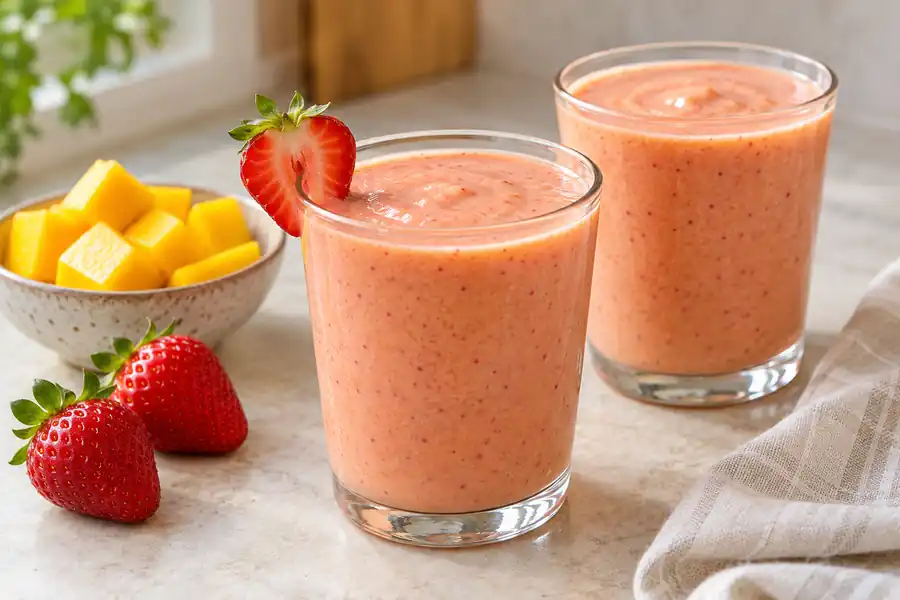

Strawberry Mango Smoothie
Ingredients
Method
- Measure the frozen strawberries and mango, breaking up large clumps. Measure the milk and yogurt separately.
- Add milk and yogurt to the blender, then the frozen fruit, following your blender manufacturer’s loading instructions and maximum fill line.
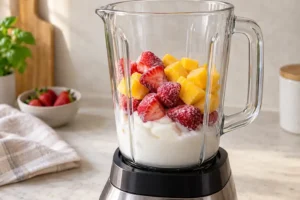
- Secure the lid. Blend on a lower setting, then increase the speed until smooth. If the blades stall, stop and add milk a tablespoon at a time. Unplug before scraping down the sides.
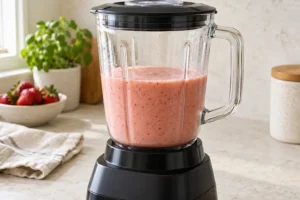
- Taste before adding optional sweetener. If needed, blend in a little honey or maple syrup. Divide evenly between two glasses and serve immediately.
Notes
Get easy recipes in your inbox
Join TasteWiser for new recipes, cooking tips and fresh inspiration.
Confirm your email to subscribe. Unsubscribe anytime.