Maple Roasted Acorn Squash with Cinnamon
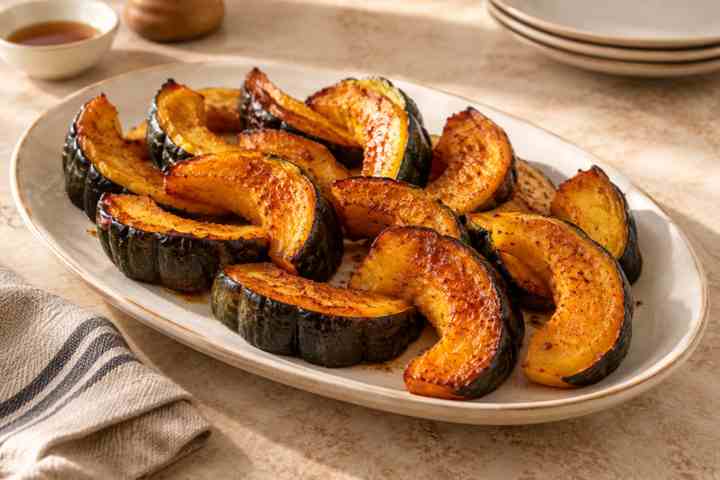
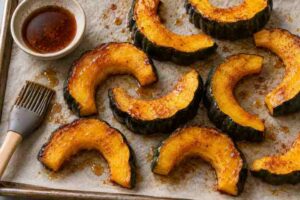
Maple roasted acorn squash has tender golden flesh, browned cut surfaces and a light cinnamon glaze. Cutting the squash into crescents gives you more roasted edges than cooking two large halves. Each piece is easy to portion beside a main dish, and the dark green ridged skin makes a natural border around the orange flesh.
The syrup goes on near the end. That gives the squash time to soften before the sugars spend too long against a hot baking sheet. You need only six ingredients, one rimmed pan and a sturdy knife. This batch makes four side-dish portions rather than a stuffed-squash main course.
Choose a squash that is easy to work with
Look for a firm acorn squash with a hard rind and no soft, wet or deeply damaged areas. A patch of orange on an otherwise green shell can be normal. A large squash around 1.2 kg gives roughly 800 g of seeded wedges, though the cavity size varies. Weight is a more useful guide than simply buying “one squash.”
Two smaller squash can replace one large squash if their combined seeded weight is similar. Smaller pieces may cook faster, so start checking early. Do not double the oil and syrup just because you used two squash; use the measured amounts for the same total prepared weight.
Ingredients and flavor balance
For maple roasted acorn squash, gather one large acorn squash, 1 tablespoon (15 ml) olive oil, ½ teaspoon fine salt, ¼ teaspoon black pepper, 2 tablespoons (30 ml, about 40 g) pure maple syrup and ½ teaspoon (1.3 g) ground cinnamon. The oil and seasoning go on first; maple and cinnamon are mixed separately for the final roasting stage.
Use pure maple syrup for its flavor and pourable texture. Pancake syrup has different sweeteners and flavorings and is not an exact match. The recipe is lightly coated rather than swimming in syrup. If you want more sweetness at the table, keep that addition separate from the measured recipe.
Cinnamon should support the squash, not cover it. The small amount blends into the maple syrup and spreads more evenly than a heavy dusting on the pan. Black pepper provides a little contrast. Keep the salt measured, then taste one cooked wedge before adding more to the entire batch.
How to make maple roasted acorn squash
1. Cut and season the squash
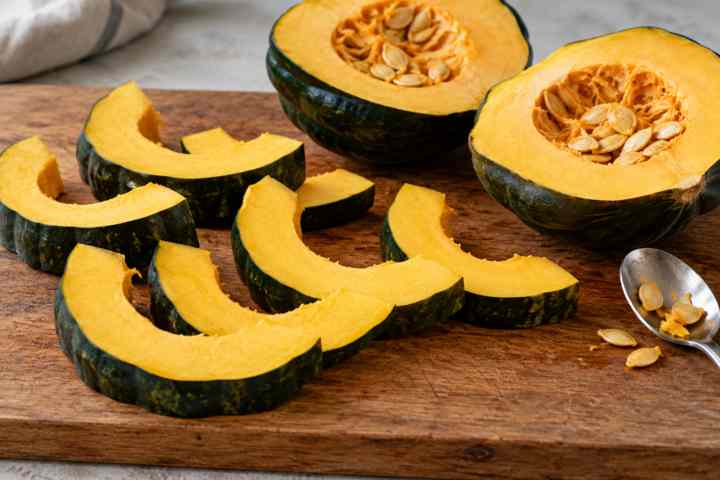
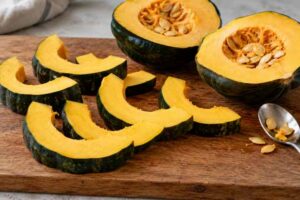
Heat oven to 400°F (200°C). Wash and dry the squash. On a stable cutting board, carefully split it lengthwise beside the stem; avoid forcing the knife through the hard stem. Scoop out seeds and stringy flesh. Place halves cut-side down and cut crosswise into ¾-inch (2 cm) crescents. Toss with olive oil, salt and pepper.
2. Roast the crescents
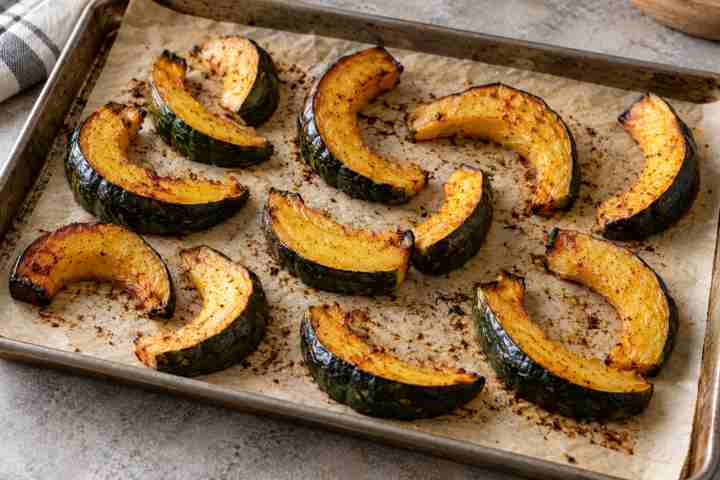
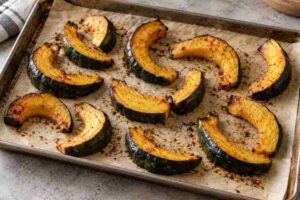
Arrange wedges in one layer on a parchment-lined rimmed baking sheet, with a broad cut face against the pan and space between pieces. Roast 20 minutes, turn carefully, then roast 10 more minutes. The thickest flesh should be almost fork-tender before glazing. If still firm, roast a few more minutes first.
3. Add maple and cinnamon near the end
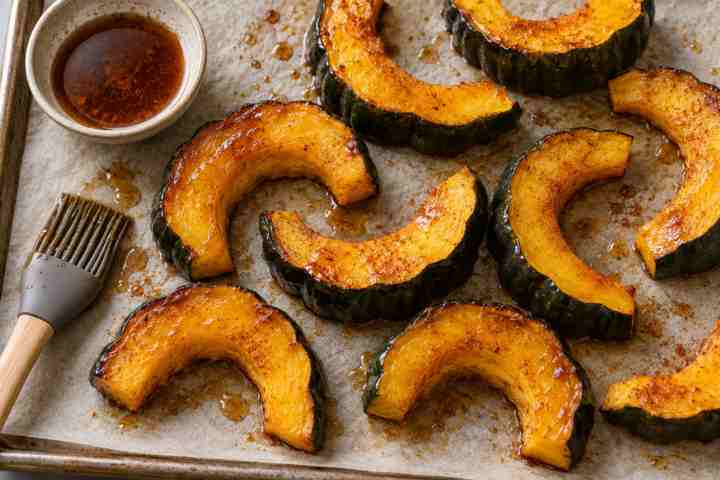
Mix maple syrup and cinnamon in a small bowl. Brush over the hot wedges, turn gently to coat, and roast 5–10 minutes more until tender and lightly glazed. Check early so the syrup does not burn. Total roasting is about 35–40 minutes for ¾-inch wedges. Divide into four side portions and serve warm.
Cutting safely and evenly
A round, ridged squash can rock while you cut. Set your board on a damp towel to keep it from sliding, dry your hands and use a sharp, sturdy knife. Work slowly and keep your fingers away from the blade path. If the knife sticks, stop and reposition; do not strike it or push harder on an unstable squash.
Once halved and seeded, place each half flat-side down. That gives the knife a more stable starting surface for the crescents. Aim for ¾-inch (2 cm) thickness so the pieces finish together. Very thin tips can darken before thick centers soften. If a squash is too hard to cut comfortably, choose pre-cut squash rather than forcing it.
Why space and timing matter
Roasting browns exposed surfaces as moisture evaporates. If the pieces overlap, trapped steam softens them without producing much color. Use a large rimmed baking sheet, or two sheets if necessary. Keep the oven at 400°F (200°C) and rotate pans if one side of your oven browns much faster.
Turn maple roasted acorn squash gently with a thin spatula so the flesh stays attached to the skin. Before glazing, test the thickest piece with a fork: it should be nearly tender. Add the maple only then, and keep an eye on the final minutes. Dark sticky patches on the parchment are a signal to check the wedges, not to leave them longer for extra color.
Substitutions and variations
Honey can replace the maple syrup by volume, but the flavor changes and the dish will no longer be vegan. Melted butter can replace olive oil, although it browns differently; check the pan closely. Keep both quantities the same rather than adding butter on top of the full oil amount.
For a more savory direction, omit the cinnamon and use a small pinch of dried thyme. Chopped toasted pecans or crumbled feta are optional serving additions, not part of the base nutrition. Add crunchy toppings after roasting. Do not use an unmeasured nut coating on the pan, where it may burn before the squash is ready.
Delicata squash has a smaller diameter and thinner flesh, so it needs earlier checking and should not be assigned the same roasting time automatically. Butternut squash cubes also cook differently. For another measured roasted vegetable option, try maple roasted carrots rather than applying these wedge timings to every vegetable.
Common problems and easy fixes
Firm flesh with dark edges usually means the wedges are too thick or the oven is running hot. Lower the heat slightly and keep cooking until a fork enters the thickest area easily. If maple has already been added, loosely cover the tray with foil to limit further surface darkening. Handle the hot tray carefully.
Pale, watery wedges are often crowded or not fully dried after washing. Use more space next time and avoid adding extra liquid to the pan. A sticky burnt glaze can come from adding syrup too early. The two-stage approach in this maple roasted acorn squash recipe lets you separate tenderness from the final glazed finish.
Serving ideas
Serve the crescents warm beside air fryer chicken breast or a bowl of beans. For a holiday-style table, pair them with bread and herb stuffing. Add a green vegetable such as balsamic roasted Brussels sprouts for a different texture and flavor.
The cooked skin may be eaten if tender and pleasant to you, but some squash have a tougher rind. Leave it on the plate if you prefer. It helps hold the crescents together during roasting even when you choose to eat only the flesh. Divide the complete batch evenly into four portions rather than relying on a fixed number of wedges.
Storage and reheating
Refrigerate leftovers in shallow covered containers within two hours, or one hour above 90°F (32°C), following USDA leftover guidance. Keep them at 40°F (4°C) or below and use within 3–4 days. Store separate from any uncooked ingredients or toppings you plan to add later.
Reheat at 350°F (175°C) on a covered baking tray until the centers reach 165°F (74°C), then uncover briefly if you want drier surfaces. Use a thermometer and follow USDA reheating guidance. The microwave is convenient for one portion, though the edges soften. Freeze for best quality up to two months, thaw in the refrigerator and expect a softer texture.
Frequently asked questions
Do I have to peel acorn squash?
No. Leave the rind on for this method. Peeling a deeply ridged raw squash is awkward, and the skin helps the wedges hold together. After cooking, eat the skin only if you enjoy its texture.
Can I cut it ahead?
Yes. Refrigerate the seeded, cut wedges in a covered container and roast the next day. Pat dry before seasoning. Keep the maple mixture separate until the final roasting stage so the sugar does not sit on the pan for the whole cook.
Can I make a bigger batch?
Scale all ingredients by prepared squash weight and use extra baking sheets. Keep a single layer with space between pieces. More squash in the same crowded pan needs a different cooking time and often produces less browning.
A simple fall side with a light glaze
Maple roasted acorn squash works well when the crescents are even, the tray has breathing room and the glaze is added after the flesh softens. Use the fork test as well as the clock. These cinnamon maple acorn squash wedges bring a practical warm side to weeknight dinners and holiday menus without a complicated topping.
Follow us on Pinterest · Follow us on Instagram

Maple Roasted Acorn Squash with Cinnamon
Ingredients
Method
- Heat oven to 400°F (200°C). Wash and dry the squash. On a stable cutting board, carefully split it lengthwise beside the stem; avoid forcing the knife through the hard stem. Scoop out seeds and stringy flesh. Place halves cut-side down and cut crosswise into ¾-inch (2 cm) crescents. Toss with olive oil, salt and pepper.

- Arrange wedges in one layer on a parchment-lined rimmed baking sheet, with a broad cut face against the pan and space between pieces. Roast 20 minutes, turn carefully, then roast 10 more minutes. The thickest flesh should be almost fork-tender before glazing. If still firm, roast a few more minutes first.
- Mix maple syrup and cinnamon in a small bowl. Brush over the hot wedges, turn gently to coat, and roast 5–10 minutes more until tender and lightly glazed. Check early so the syrup does not burn. Total roasting is about 35–40 minutes for ¾-inch wedges. Divide into four side portions and serve warm.
Notes
Get easy recipes in your inbox
Join TasteWiser for new recipes, cooking tips and fresh inspiration.
Confirm your email to subscribe. Unsubscribe anytime.