Pumpkin Baked Oatmeal with Maple and Cinnamon
Pumpkin baked oatmeal combines rolled oats, plain pumpkin puree and maple syrup in a small baking dish. Cinnamon, ginger and nutmeg give the breakfast a warm flavor, while eggs help it hold together in soft portions. You do not need a blender or individual muffin liners.
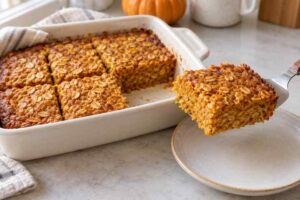
The finished oatmeal is moist and spoonable when hot, then becomes easier to cut as it rests. It is not a fluffy cake or a dry oat bar. Serve a piece on its own, or add a little milk or yogurt at the table. Those optional additions are separate from the nutrition estimate.
Why bake oatmeal with pumpkin?
Pumpkin puree brings moisture and color without requiring grated fruit or a separate cooked topping. The oat flakes remain visible rather than being blended into flour. This gives the dish a familiar oatmeal texture with enough structure to portion for several breakfasts.
The recipe makes six pieces in an 8-inch square dish. Keeping the pan size consistent helps the center bake at the expected rate. A much smaller dish makes a deeper layer that needs longer; a wider dish makes thinner pieces that can dry out sooner. Use the center’s texture and temperature to judge doneness.
Ingredients and useful notes
You will need 2 cups (160 g) rolled oats, 1 cup (244 g) plain pumpkin puree, 1 cup (240 ml) 2% milk, 2 large eggs, ⅓ cup (80 ml, about 107 g) maple syrup, 1 tablespoon (15 ml) neutral oil and 1 teaspoon (5 ml) vanilla. The dry seasonings are 1 teaspoon (4 g) baking powder, 2 teaspoons cinnamon, ½ teaspoon ginger, ¼ teaspoon nutmeg and ¼ teaspoon fine salt.
Use plain canned pumpkin, not pumpkin pie filling. Pie filling already contains sweeteners and spices, so it changes the flavor and moisture balance. If your puree has separated slightly, stir it before measuring. A homemade puree should be thick rather than watery; very wet squash puree can leave the center loose.
Old-fashioned rolled oats suit this method best. Quick oats make a softer, more uniform result. Steel-cut oats need a different amount of liquid and a different cooking method, so they are not a direct replacement. If you need to avoid gluten, choose certified gluten-free oats and check the other ingredient labels too.
The maple syrup sweetens the whole pan, not each individual serving. It also contributes liquid. Replacing it with a dry sweetener changes that balance. Start with the written amount before experimenting with reductions, and remember that syrup poured over a finished piece adds extra sugar and calories.
Use pasteurized milk and fresh eggs. Whisk the eggs completely into the wet mixture so you do not get separate streaks in the finished oatmeal. Keep cold ingredients refrigerated until needed, and wash utensils and surfaces that touch raw egg. Do not taste the unbaked mixture.
How to make pumpkin baked oatmeal
1. Whisk the wet ingredients
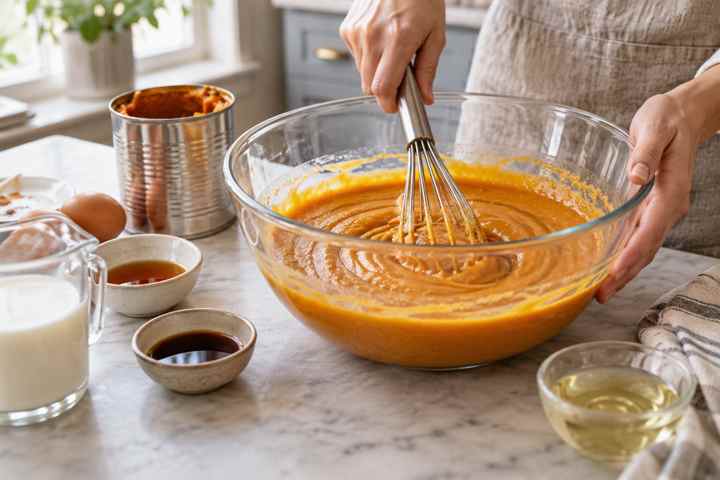
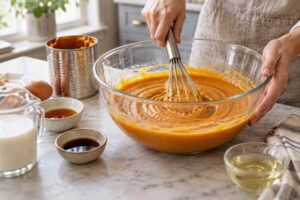
Heat the oven to 350°F (180°C). Lightly grease an 8-inch (20 cm) square baking dish. In a large bowl whisk pumpkin puree, milk, eggs, maple syrup, oil and vanilla until smooth and no streaks of egg remain.
2. Combine with the oats
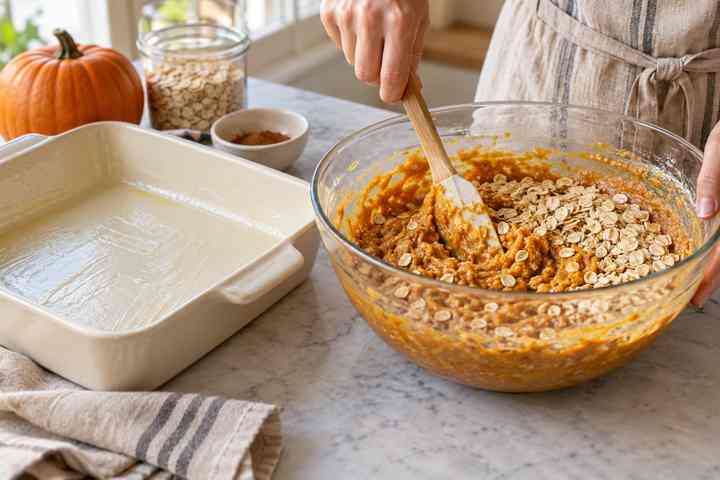
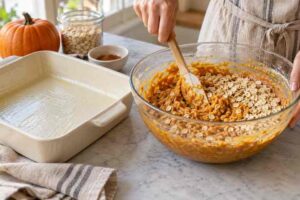
In another bowl stir the rolled oats, baking powder, cinnamon, ginger, nutmeg and salt. Add to the pumpkin mixture and stir until evenly moistened. Pour into the greased dish and spread to an even thickness. Bake promptly rather than leaving the egg mixture at room temperature.
3. Bake, rest and portion
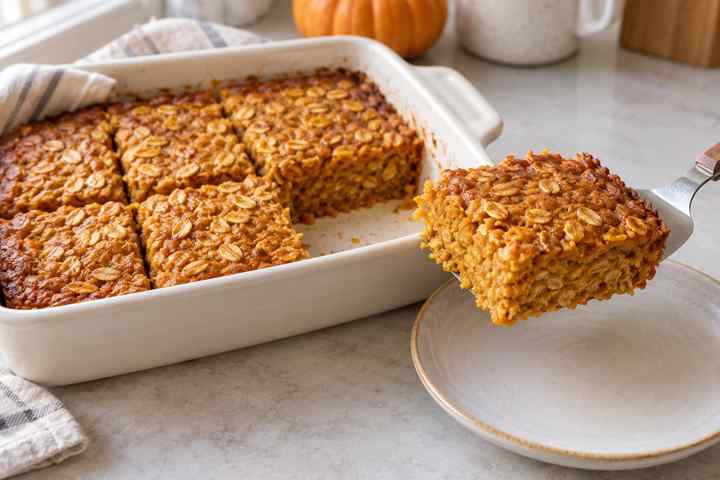
Bake for 35–40 minutes, or until the center is set rather than sloshing and a food thermometer in the center reads at least 160°F (71°C). If it is not set, continue baking and check again. Rest for 10 minutes, then cut into six equal pieces. Serve warm with optional toppings added separately. Refrigerate leftovers promptly.
Texture and doneness tips
Stir the baking powder and spices through the dry oats before combining the bowls. This spreads small quantities more evenly than sprinkling them over a wet pan. Scrape the bottom of the mixing bowl so the final spoonful is not a pocket of dry oat flakes.
The center should hold its shape when you gently move the dish. A little moisture is normal, but a pool of liquid or flowing egg mixture means it needs more baking. Use a thermometer to confirm at least 160°F (71°C) in the center, following the USDA safe temperature chart for egg dishes.
Let the pan rest before cutting. Steam escapes and the oats settle, making the pieces easier to lift with a broad spatula. A portion taken straight from the oven may break apart even when fully cooked. That is a serving-texture issue; it does not mean you need to bake the whole pan until dry.
Substitutions and flavor variations
For a dairy-free variation, use an unsweetened soy or oat beverage in the same measured volume. Nutrition and flavor will change. The eggs still remain in that version, so it is not vegan. An egg-free recipe needs a different binding approach rather than simply leaving both eggs out.
A ready-made pumpkin spice blend can replace the individual spices if its ingredient list suits your preferences. Start with a modest amount because blends vary. Keep the measured baking powder and salt separate; a spice blend does not replace either one. Check for added sugar if you use a sweetened blend.
You can add a small handful of chopped nuts or chocolate chips, but the plain version needs neither. Fold optional mix-ins in at the end and expect the nutrition to change. Large amounts of fruit or extra pumpkin add moisture and can prevent the center from setting at the same time.
Serving ideas
A warm piece pairs nicely with a honey latte. For a chilled breakfast option on another day, try our cranberry orange overnight oats. Both can fit into a breakfast plan, but their portions and textures are different.
If you have pumpkin left in the can, use a suitable measured amount in our pumpkin pie recipe rather than adding it all to this pan. Our homemade spice blends guide offers another way to organize the flavors you use for baking.
Optional toppings work best at serving time. A spoonful of plain yogurt adds a cool contrast, while sliced banana or berries bring fresh fruit. If you pour milk around the oatmeal, add only what you plan to eat immediately; stored portions keep more evenly when left plain.
Make-ahead storage and reheating
For the most predictable texture, bake the mixture after combining it rather than soaking the raw-egg batter overnight. Once baked, divide leftovers into shallow containers and refrigerate promptly. Do not leave the whole dish on the counter until it feels completely cold.
Keep at 40°F (4°C) or below and use within 3–4 days. Refrigerate within two hours, or one hour above 90°F (32°C), following USDA leftover guidance. The ten-minute serving rest still counts toward that time outside refrigeration.
Reheat a portion to 165°F (74°C), checking the center. In a microwave, cover loosely, pause to reposition the portion and allow heat to spread before checking. A little added milk can loosen the texture, but it does not replace thorough heating. In an oven, cover the portion so the surface does not dry excessively.
Freeze individually wrapped, promptly cooled portions for up to two months for quality. Thaw in the refrigerator before reheating and keep toppings separate. Label the container with the date. If you pack a chilled portion for later, use an insulated bag with cold packs until it can go back in a refrigerator.
Frequently asked questions
Why is the middle still wet?
The dish may be too small, the puree too watery or the oven not fully heated. Continue baking until the center sets and reaches the stated temperature. If the edges are browning too much, cover loosely with foil while the middle finishes.
Can I double the batch?
Use two 8-inch square dishes for a similar depth, or a suitably sized larger dish and check doneness carefully. Double every ingredient. A larger batch can take longer to heat through, so do not rely on the original time alone.
Can I make pumpkin baked oatmeal less sweet?
You can experiment with a modest reduction in maple syrup, but the finished texture may be slightly firmer because syrup also adds liquid. Try the written recipe first if you want the most predictable result. Do not replace the missing syrup with extra puree automatically.
A warm breakfast to portion ahead
Pumpkin baked oatmeal with maple and cinnamon is a practical way to use a measured cup of pumpkin in a six-portion breakfast pan. Keep the oats whole, bake until the center is safely set and let it rest before cutting. Store the remaining pieces promptly for warm pumpkin oatmeal breakfasts later in the week.
Follow us on Pinterest · Follow us on Instagram
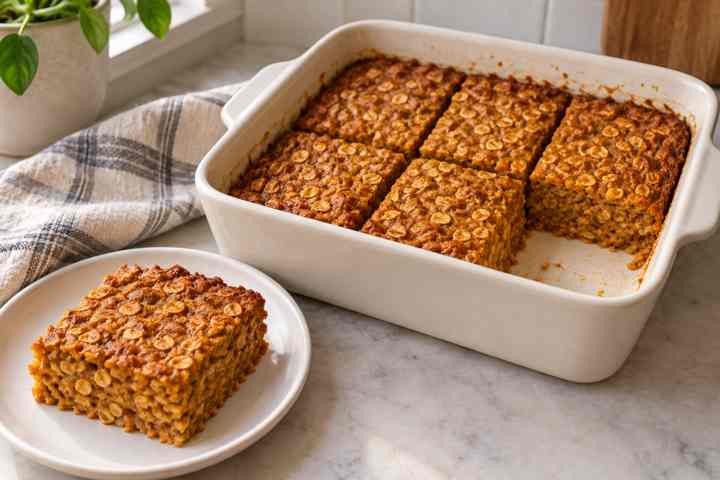

Pumpkin Baked Oatmeal with Maple and Cinnamon
Ingredients
Method
- Heat the oven to 350°F (180°C). Lightly grease an 8-inch (20 cm) square baking dish. In a large bowl whisk pumpkin puree, milk, eggs, maple syrup, oil and vanilla until smooth and no streaks of egg remain.

- In another bowl stir the rolled oats, baking powder, cinnamon, ginger, nutmeg and salt. Add to the pumpkin mixture and stir until evenly moistened. Pour into the greased dish and spread to an even thickness. Bake promptly rather than leaving the egg mixture at room temperature.
- Bake for 35–40 minutes, or until the center is set rather than sloshing and a food thermometer in the center reads at least 160°F (71°C). If it is not set, continue baking and check again. Rest for 10 minutes, then cut into six equal pieces. Serve warm with optional toppings added separately. Refrigerate leftovers promptly.
Notes
Get easy recipes in your inbox
Join TasteWiser for new recipes, cooking tips and fresh inspiration.
Confirm your email to subscribe. Unsubscribe anytime.