Butter Pecan Cookies with Toasted Pecans
Butter pecan cookies bring toasted nuts, brown sugar and a buttery vanilla dough together in a small, scoopable cookie. The edges turn golden while the middle stays gently chewy. There is no frosting to mix or glaze to dry, making this a useful bake for Thanksgiving dessert plates, Christmas cookie boxes or an afternoon coffee break.
The two details that make the biggest difference are cooling the pecans before mixing and giving the dough its full chill. Warm nuts can soften the butter too much; warm dough spreads before the edges have a chance to set. Weigh the flour and portion the dough evenly, then follow the color and texture cues rather than relying on the timer alone.
What to expect from these butter pecan cookies
This recipe makes 20 modest cookies with visible pecan pieces throughout. Softened butter is creamed with two sugars, so the dough holds its shape without a separate brown-butter stage. The white sugar helps the edges crisp; light brown sugar gives the center a caramel note. The result is a round drop cookie with a little height, not a powdery shortbread or a coated snowball.
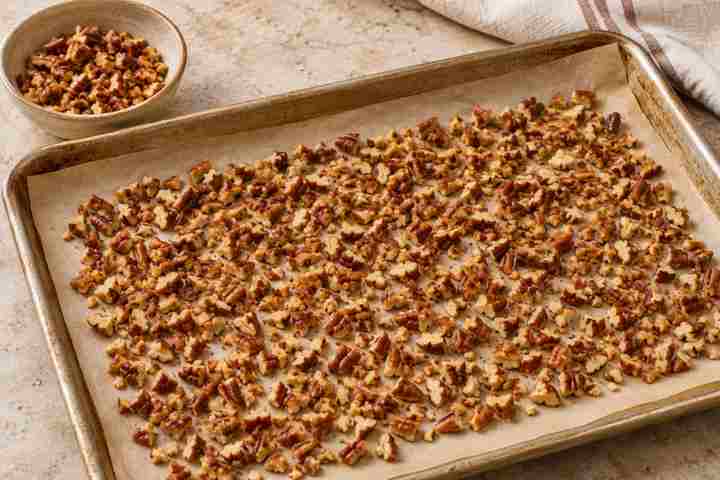
Keep the nuts in small, uneven pieces. Chunks roughly 5–8 mm across give you a recognizable pecan bite without making the dough difficult to scoop. A few finer pieces are welcome, but do not grind the entire quantity into nut meal.
Ingredients and measurements
- 90 g raw pecan pieces or halves, chopped
- 113 g unsalted butter, softened but still cool
- 100 g light brown sugar
- 40 g granulated sugar
- 1 large egg, about 50 g without the shell
- 5 ml alcohol-free vanilla flavoring, 1 teaspoon
- 170 g all-purpose flour
- 2.3 g baking soda, ½ teaspoon
- 2 g fine salt, about ⅓ teaspoon
Ingredient notes and practical swaps
Pecans: Start with raw, unsalted nuts so you can control their color and salt level. If yours are already roasted, skip the oven-toasting stage and let them come to room temperature. Taste one before using the bag: nuts that smell paint-like or taste bitter should be replaced. Walnuts can be used at the same weight, though the cookies will have a different flavor and should be described as walnut cookies.
Butter: A finger should leave a shallow dent in the butter without sinking straight through it. Butter that is shiny, greasy or partly melted is too warm for this method. Cool it briefly before creaming. Oil and spreadable tub margarine are not direct substitutes because they change both water content and dough structure.
Sugar: Light brown sugar keeps the pecan flavor clear. Dark brown sugar is an equal-weight alternative for a deeper molasses taste. Do not replace the sugars with maple syrup; the added liquid changes how much the cookies spread.
Flour and egg: Weigh the flour rather than pressing a cup into the bag. One large egg supplies moisture and structure; an extra-large egg can loosen a small batch noticeably. This dough contains wheat, egg, dairy and tree nuts. For an egg-free option, choose a formula specifically developed for that need rather than assuming a one-for-one replacement will behave the same way.
How to make butter pecan cookies
1. Toast and cool the pecans
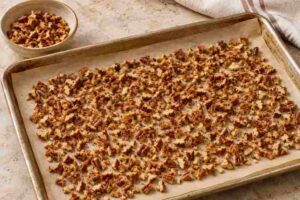
Heat the oven to 350°F (175°C). Spread the chopped pecans over a light-colored rimmed baking sheet in one layer. Toast for 6–8 minutes, stirring once, until fragrant and slightly darker. Transfer to a plate and cool for about 10 minutes. They should feel cool before they touch the dough; do not leave them on the hot tray.
2. Mix, chill and portion the dough
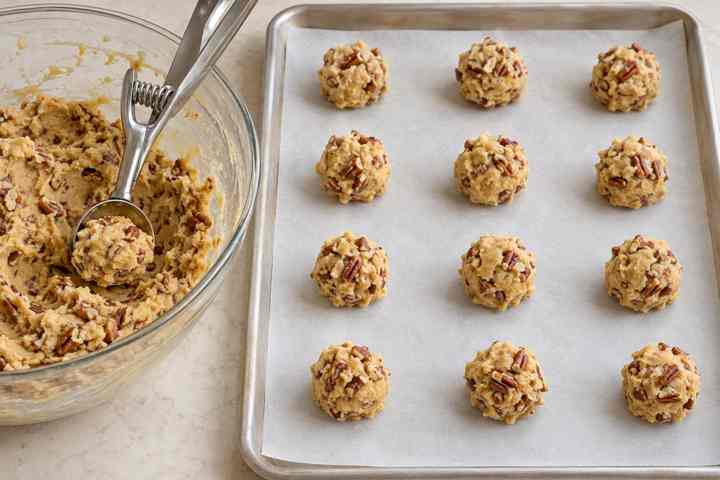
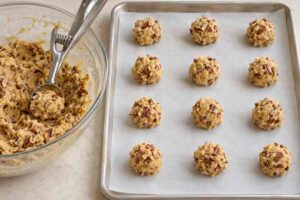
Beat the butter, brown sugar and granulated sugar until evenly creamy, about 2 minutes. Scrape the bowl, beat in the egg and alcohol-free vanilla, then scrape again. In a separate bowl whisk the flour, baking soda and salt. Stir the dry ingredients into the butter mixture just until the flour disappears, then fold in the cooled pecans. Cover and refrigerate for 45 minutes. Divide into 20 portions, about 29 g each, and place on two parchment-lined baking sheets with about 5 cm between portions. Keep the second tray refrigerated while the first bakes.
3. Bake, settle and cool
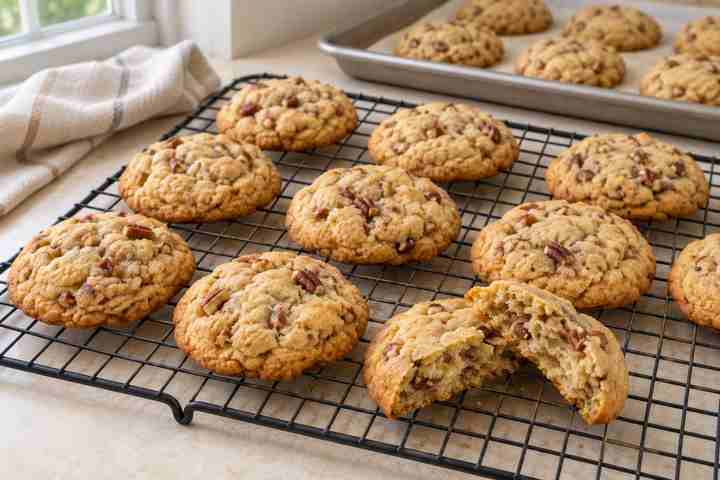
Bake one tray at a time at 350°F (175°C) for 11–13 minutes per tray. The edges should be set and lightly golden; the centers should look soft but no longer glossy with raw batter. Leave each tray undisturbed for 5 minutes, then move the cookies to a wire rack. Allow at least another 15 minutes before packing. Repeat with the second tray, using a cool baking sheet if you are reusing the same one.
Troubleshooting spread and texture
The cookies spread into thin puddles
The usual causes are warm butter, warm pecans or dough that has not chilled. Chill the remaining portions until firm and check that your baking sheet is completely cool. Do not grease parchment or a nonstick baking mat: extra surface fat encourages spreading. If the dough was measured accurately, avoid adding handfuls of flour to fix one warm tray.
The cookies stay in thick mounds
Too much flour can make the dough dry and limit spread. Use 170 g, and scrape every ingredient into the bowl rather than estimating. Dough refrigerated overnight will be firmer than dough chilled for 45 minutes; let it soften just enough to scoop, without becoming greasy. A slight press on the top of each portion can help an especially cold batch bake evenly.
The nuts taste scorched
Small pecan pieces brown quickly, and carryover heat continues after the tray leaves the oven. Check them early and transfer them off the metal immediately. A dark tray or a strong fan oven may require a shorter toast. Scorched nuts will make the whole dough bitter, so start again with fresh nuts if necessary.
Serving ideas and holiday packing
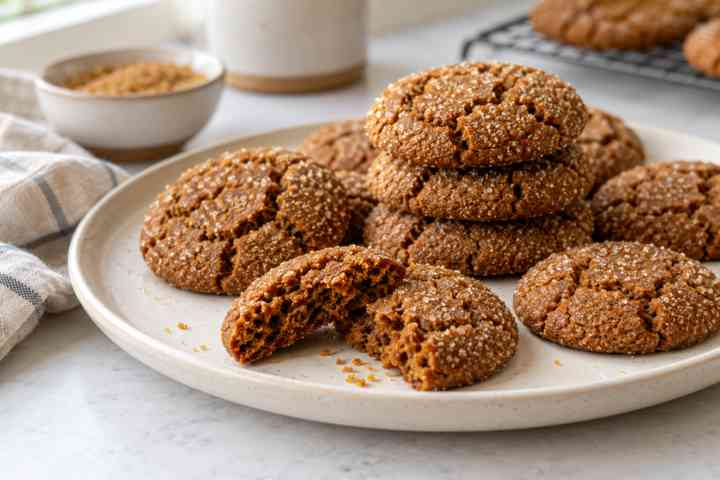
Serve butter pecan cookies with tea, coffee or a glass of milk. For a varied dessert tray, pair their nutty chew with soft molasses cookies, crisp-edged spritz cookies or fruit-filled Linzer cookies. For another pecan treat with a completely different texture, try pecan pralines. For another pecan treat, try mini pecan pies. For a citrus contrast, try classic lemon bars. For a no-bake option, try Oreo balls.
Let the cookies cool fully before putting them in a tin. Pack them in shallow layers with parchment between them, and keep strongly mint-flavored sweets in a separate container. Clearly label the pecans when sharing a cookie box. Optional drinks, ice cream and other desserts are not included in the nutrition estimate.
Storage, freezing and gentle reheating
Store cooled cookies in an airtight container at cool room temperature for up to 3 days for best texture. Keep the container away from the oven, direct sunlight and humidity. Do not seal warm cookies: trapped steam softens the edges and makes the bottom layers damp.
Freeze baked cookies in a sealed container, with parchment between layers, for up to 2 months for best quality. Thaw them covered at room temperature. To warm a thawed cookie, use a 300°F (150°C) oven for 3–4 minutes, then let it stand briefly before eating. Repeated warming will dry out the center.
You can also refrigerate covered dough for up to 24 hours. For a longer pause, freeze the portioned dough on a tray, transfer it to a labeled freezer bag, and use within 2 months. Thaw overnight in the refrigerator before baking and use the same doneness cues. Keep raw dough separate from ready-to-eat food and do not taste it; see the FDA guidance on raw flour and dough.
Frequently asked questions
Can I make these without a mixer?
Yes. Use a sturdy spoon to work softened butter and both sugars into a smooth paste, then beat in the egg thoroughly. The dough may be a little less aerated, so judge the bake by the edges and center rather than expecting an identical height.
Can I use salted butter?
You can use the same weight, but reduce the added salt to a small pinch. Salt levels vary by brand, so unsalted butter gives the most predictable result.
Should I press a pecan half on top?
It is optional rather than part of the base recipe. The chopped nuts already give each cookie plenty of texture. If adding a pecan half, press it gently into the dough before baking and remember that the extra nut is excluded from the nutrition estimate.
Can I double the batch?
Yes. Double every ingredient by weight, keep the 29 g portions, and bake in batches on cool trays. A larger batch needs more oven time overall, even though each individual tray follows the same baking range.
Conclusion
These butter pecan cookies with toasted pecans are useful for a make-ahead holiday cookie box because the dough portions neatly and the finished cookies need no decoration. Cool the nuts, chill the dough and stop baking while the centers still look soft. Those simple checks keep the brown sugar pecan cookies tender in the middle with lightly crisp edges.
Follow us on Pinterest and Follow us on Instagram.
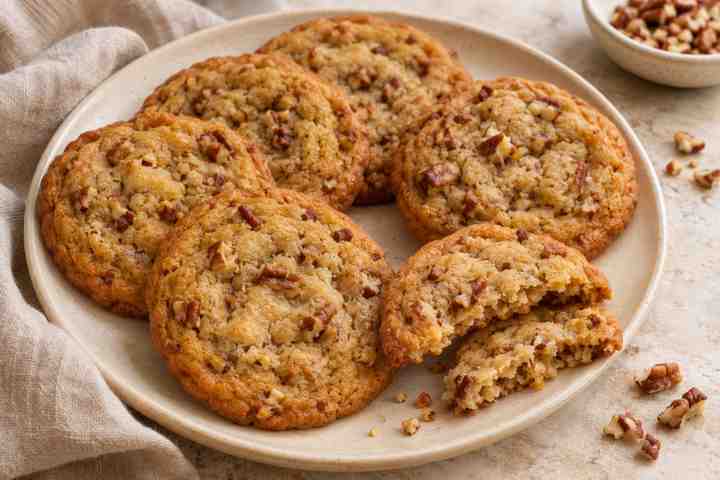
Butter Pecan Cookies
Ingredients
Method
- Heat the oven to 350°F (175°C). Spread the chopped pecans over a light-colored rimmed baking sheet in one layer. Toast for 6–8 minutes, stirring once, until fragrant and slightly darker. Transfer to a plate and cool for about 10 minutes. They should feel cool before they touch the dough; do not leave them on the hot tray.

- Beat the butter, brown sugar and granulated sugar until evenly creamy, about 2 minutes. Scrape the bowl, beat in the egg and alcohol-free vanilla, then scrape again. In a separate bowl whisk the flour, baking soda and salt. Stir the dry ingredients into the butter mixture just until the flour disappears, then fold in the cooled pecans. Cover and refrigerate for 45 minutes. Divide into 20 portions, about 29 g each, and place on two parchment-lined baking sheets with about 5 cm between portions. Keep the second tray refrigerated while the first bakes.
- Bake one tray at a time at 350°F (175°C) for 11–13 minutes per tray. The edges should be set and lightly golden; the centers should look soft but no longer glossy with raw batter. Leave each tray undisturbed for 5 minutes, then move the cookies to a wire rack. Allow at least another 15 minutes before packing. Repeat with the second tray, using a cool baking sheet if you are reusing the same one.

Notes
Get easy recipes in your inbox
Join TasteWiser for new recipes, cooking tips and fresh inspiration.
Confirm your email to subscribe. Unsubscribe anytime.