Sauteed Bok Choy with Garlic and Ginger
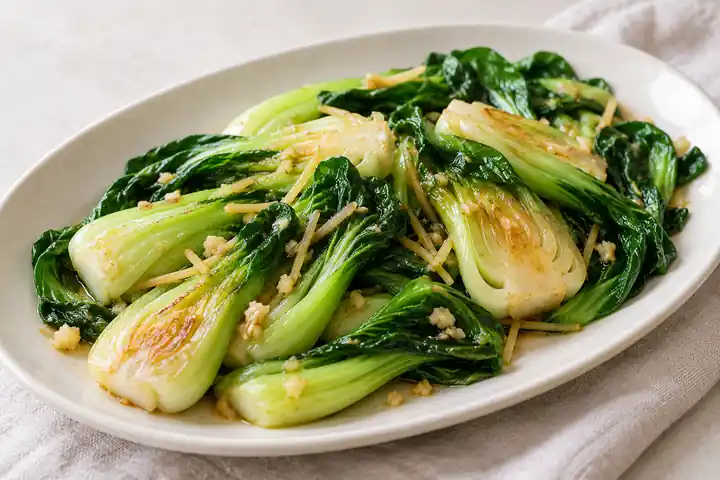
This sauteed bok choy pairs lightly browned stems with tender green leaves, fresh garlic and a small splash of soy sauce. A little ginger adds warmth, and toasted sesame oil finishes the vegetables without covering up their mild flavor.
The key is to dry the bok choy well and cook it in an uncrowded pan. Give the cut sides time against the hot surface, soften the thick stems with a brief covered steam, then add the garlic at the end. You get a vegetable side that works with rice, noodles, fish, chicken or tofu.
Jump to the recipe card for the full ingredient quantities and instructions.
Why This Sauteed Bok Choy Works
Baby bok choy has two textures in one vegetable: juicy stalks that need a little cooking and thin leaves that wilt quickly. Halving small heads keeps the stalks together so you can brown them while protecting some of the delicate leaves.
Instead of boiling the vegetables in a large amount of water, this method uses just a tablespoon of water per batch. Once the stems soften, the lid comes off so excess moisture can escape. Garlic and ginger go into the pan afterward, where you can watch them closely and stop them from scorching.
The sauce is deliberately light. There is enough soy sauce to season the bok choy, with sesame oil and lemon added off the heat for a fragrant finish. You can always offer extra seasoning at the table.
Ingredients for Sauteed Bok Choy
- Baby bok choy: Use 600 grams, about 1⅓ pounds. Choose small heads with firm stalks and fresh-looking leaves. Head sizes vary, so use the weight rather than a fixed number.
- Neutral oil: Two tablespoons, divided between searing and cooking the aromatics. Canola, sunflower or another neutral cooking oil works.
- Fresh garlic: Four cloves, finely minced. Add it after searing the vegetables so it does not sit in the hot pan throughout both batches.
- Fresh ginger: One teaspoon, finely grated. It adds a gentle warmth without making the dish taste strongly of ginger.
- Reduced-sodium soy sauce: One tablespoon seasons the entire batch. Different brands vary, so taste before adding salt.
- Water: Two tablespoons, divided between the batches, with a little extra only if the pan dries before the stalks soften.
- Toasted sesame oil: One teaspoon, added at the end for flavor.
- Lemon juice: Two teaspoons brighten the finished vegetables.
This recipe contains soy and sesame. Standard soy sauce also commonly contains wheat. For a gluten-free version, choose a certified gluten-free tamari and check the other ingredient labels. For a sesame-free version, omit the sesame oil and use a little extra neutral oil if wanted.
How to Clean and Cut Bok Choy
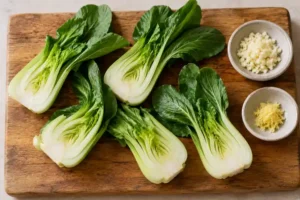
Trim only the dry tip from each base, keeping enough of the base intact to hold the stalks together. Cut small heads in half lengthwise. Quarter wider heads if their stalks are particularly thick, so the pieces cook at a similar rate.
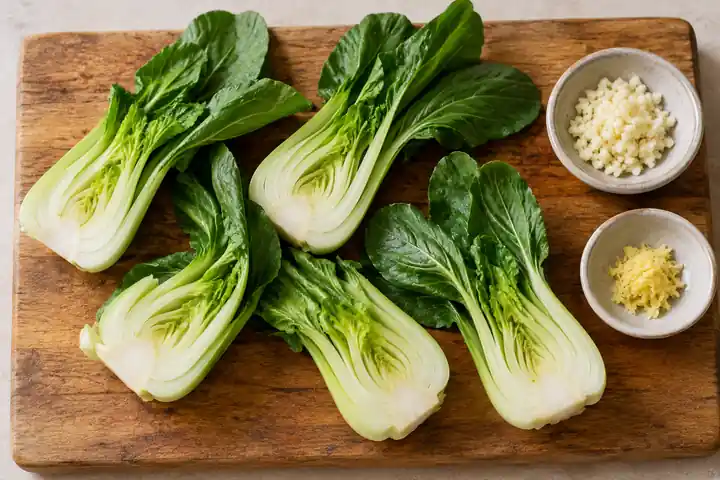
Dirt can hide where the stalks meet. Gently open the layers under cool running water and rinse away visible grit. If there is stubborn dirt, separate the leaves and cook the thicker stalk pieces before adding the leafy tops.
Dry the bok choy with a clean towel or salad spinner, paying attention to water caught inside the layers. Wet vegetables can splatter in hot oil and release enough moisture to steam before they brown. The FDA recommends washing produce under running water; soap and detergent are not recommended for washing vegetables.
How to Make Sauteed Bok Choy
1. Organize the ingredients
Have the minced garlic, grated ginger, soy sauce, water, sesame oil and lemon juice ready before heating the pan. The final seasoning step moves quickly, so measuring everything first makes it easier to keep the garlic from burning.
2. Sear the first batch
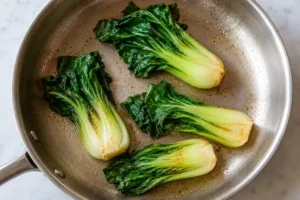
Heat a large, lidded skillet over medium-high heat. Add 2 teaspoons of neutral oil, then place half the bok choy cut-side down. Leave space between the pieces; use smaller batches if your skillet cannot hold them comfortably.
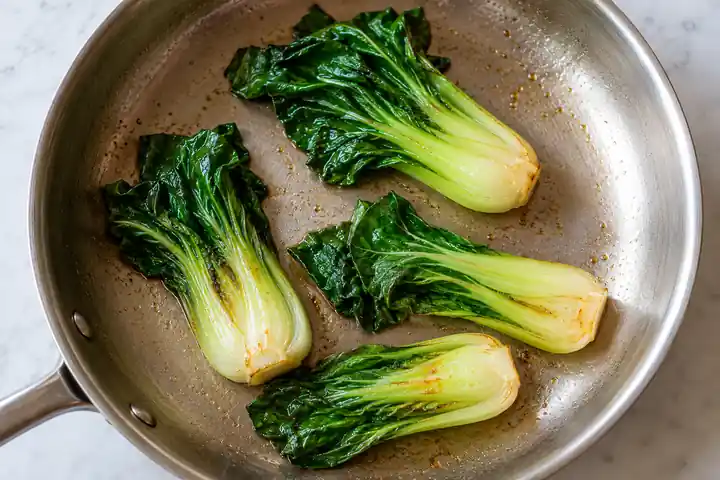
Cook for about 2 minutes without moving the vegetables, until the cut faces have light golden patches. Turn them gently with tongs. Deep charring is not necessary: a little color gives flavor while the leaves stay tender.
3. Briefly steam the stalks
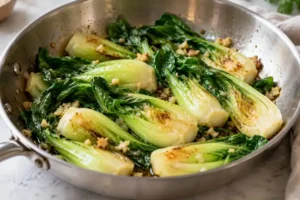
Reduce the heat to medium. Carefully add 1 tablespoon of water at the side of the pan and cover immediately, keeping your face and hands away from the steam. Cook for 1–2 minutes, until the thickest stalk can be pierced with a knife but still has a little bite.
Uncover, let any remaining water evaporate and transfer the bok choy to a plate. Repeat with 2 more teaspoons of oil, the remaining vegetables and the second tablespoon of water. If thick stalks need longer, add another small splash of water rather than letting the pan scorch.
4. Add garlic, ginger and soy sauce
After the second batch, lower the heat to medium-low. Let an excessively hot pan cool briefly. Add the remaining 2 teaspoons of neutral oil, followed by the garlic and ginger. Stir for about 30 seconds, just until fragrant; do not let the garlic turn dark brown.
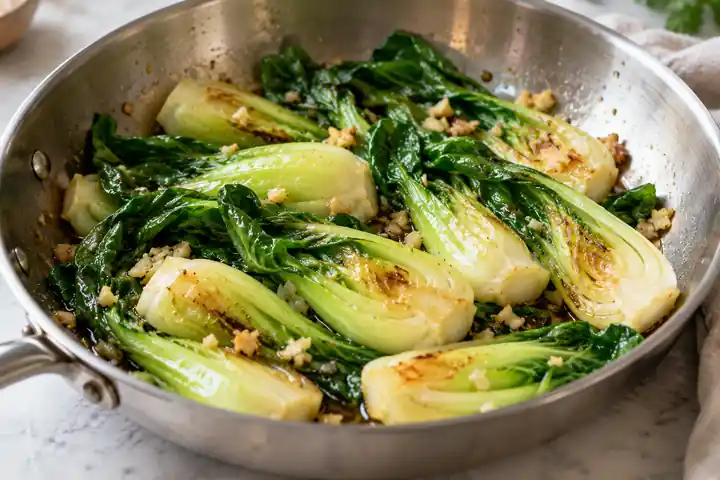
Return all the bok choy and any juices from the plate to the skillet. Add the reduced-sodium soy sauce and turn gently for about 1 minute, until everything is hot and lightly coated. If the vegetables have released a lot of liquid, let the excess bubble away uncovered.
5. Finish the sauteed bok choy off the heat
Remove the skillet from the heat. Drizzle over the toasted sesame oil and lemon juice, then turn the vegetables once more. Taste a stalk before deciding whether to add more seasoning. Serve promptly for the best balance of juicy stems and tender leaves.
Tips for Sauteed Bok Choy That Is Not Watery
- Start dry: Drain washed bok choy well and blot moisture from the cut faces.
- Use a wide pan: A crowded skillet traps the vegetables’ moisture. Cook in two batches, or more if necessary.
- Keep the steaming water small: Add only enough to soften the stalks, then uncover and evaporate the excess.
- Watch the garlic: Lower the heat before adding it. Bitter, blackened garlic can overpower the whole dish.
- Check the stalks: Wilted leaves alone do not mean the thick base is tender. Pierce a stalk to judge doneness.
If you like softer stalks, extend the covered stage slightly. If you prefer a firmer bite, uncover sooner. In both cases, keep the final sauce thin and avoid cooking the leafy tops for longer than needed.
Sauteed Bok Choy Variations
Chili-garlic: Add a small pinch of chili flakes with the garlic and ginger. Or offer chili oil separately so each person can choose the heat level.
Extra lemon: Serve with lemon wedges for a brighter finish. Add more juice gradually so it complements the soy sauce.
Mushroom version: Brown sliced mushrooms separately, then combine them with the bok choy during the final seasoning step. Cooking them separately helps their moisture evaporate.
Tofu plate: Serve the vegetables over rice with browned tofu and a little extra sauce on the side. The base recipe’s nutrition does not include these optional additions.
What to Serve with Sauteed Bok Choy
Serve sauteed bok choy with rice or noodles to catch the light garlic-soy coating. Add a portion of baked fish, chicken, eggs or tofu to make a fuller meal. For another idea, pair the greens with our lemon-garlic shrimp marinade recipe, cooking the shrimp separately.
If you enjoy vegetable sides, try our roasted cabbage steaks with garlic and lemon. They offer browned, tender cabbage in a different shape. Our fried cabbage with onions is another skillet option for a future dinner.
How to Store Sauteed Bok Choy
Refrigerate leftovers promptly in a shallow, covered container at 40°F (4°C) or colder. Use within 3–4 days. Refrigerate within 2 hours of cooking, or within 1 hour if the room or outdoor temperature is above 90°F (32°C).
Reheat in a skillet over medium heat with a small splash of water if needed, turning gently until hot throughout. Following USDA guidance for leftovers, reheat to 165°F (74°C). The leaves will be softer after reheating.
For advance preparation, clean and cut the vegetables, dry them thoroughly and refrigerate them in a covered container lined with a clean paper towel. Keep the sauce ingredients separate until cooking. Freezing cooked bok choy softens its texture, so freshly cooked vegetables are preferable for this dish.
Frequently Asked Questions
Can I make sauteed bok choy with full-size heads?
Yes. Separate and wash the stalks, then cut the thick stalks into bite-size pieces and keep the leafy tops separate. Cook the stalk pieces first, using a little water to help soften them, then add the leaves toward the end. Judge doneness by the stalks.
Do I need to blanch bok choy first?
No. The brief covered stage in the skillet softens the stems without a separate pot of boiling water. Drying and searing the raw vegetables first also gives the cut faces a chance to brown.
Can I leave out the soy sauce?
Yes. Add a small pinch of salt to taste and keep the lemon, garlic and ginger. The flavor and sodium content will change. Check any substitute’s ingredients if you are avoiding soy or wheat.
Why is my sauteed bok choy bitter?
Bok choy can have a mild natural bitterness, especially in larger or older heads. Choose fresh, compact vegetables and trim damaged leaves. Also check the garlic: burned garlic adds a much harsher bitterness.
A Simple Garlic Bok Choy Side
For flavorful sauteed bok choy with garlic and ginger, start with dry vegetables, keep the skillet uncrowded and finish with the aromatics over lower heat. This baby bok choy recipe gives you a flexible side for rice bowls, noodle dinners and everyday family meals.
Nutrition: About 100 calories per side portion, with 3 g protein, 5 g carbohydrate, 8 g fat, 1 g saturated fat, 2 g fiber, 2 g sugar and 250 mg sodium. Values are approximate, based on one-quarter of the full recipe, including all oil and seasoning. Soy sauce brands and optional additions change the values.
Save more dinner ideas: Follow us on Pinterest and Follow us on Instagram.

Sauteed Bok Choy with Garlic and Ginger
Ingredients
Equipment
Method
- Trim only the dry tip of each bok choy base, leaving the stalks attached. Halve small heads lengthwise; quarter wide heads so the pieces are similar in thickness. Rinse carefully between the stalks under running water and dry thoroughly. Have all seasonings ready.

- Heat a large skillet over medium-high heat. Add 2 teaspoons neutral oil and half the bok choy, cut-side down, without crowding. Cook about 2 minutes until the cut faces have light golden patches, then turn gently.
- Reduce heat to medium. Carefully add 1 tablespoon water at the side of the pan, cover immediately and cook 1–2 minutes until the stalks are tender with a little bite. Uncover and evaporate remaining water. Transfer to a plate. Repeat with 2 teaspoons oil, the remaining bok choy and 1 tablespoon water. Add a small extra splash only if needed for thick stalks.
- Lower the heat to medium-low and let an excessively hot pan cool briefly. Add the remaining 2 teaspoons neutral oil, garlic and ginger. Stir about 30 seconds until fragrant, without letting the garlic darken.
- Return all bok choy and its juices to the pan. Add reduced-sodium soy sauce and turn gently for about 1 minute until hot and lightly coated. Let excess liquid evaporate uncovered. Remove from the heat, add toasted sesame oil and lemon juice, turn gently and serve.
Notes
Get easy recipes in your inbox
Join TasteWiser for new recipes, cooking tips and fresh inspiration.
Confirm your email to subscribe. Unsubscribe anytime.