Eggless Sugar Cookies (Soft Vanilla Cookies Without Eggs)
Eggless sugar cookies bring together vanilla, butter and a light coating of sugar without using an egg or a packaged egg replacer. These are round drop-style cookies with lightly golden edges and a tender center, rather than rolled cutout cookies. The recipe makes 16 cookies using pantry ingredients plus a little milk.
If you have run out of eggs and want a straightforward baking project, this version keeps the ingredient list familiar. Weigh the flour, start with softened butter and give the dough its chill before shaping. The printable card with quantities and timings is at the bottom.
What to Expect From These Cookies
These eggless sugar cookies have a simple vanilla-butter flavor, a delicate crumb and a thin sugary surface. Cornstarch reduces the amount of gluten-forming flour in the dough, while milk supplies moisture. A small amount of baking powder helps the cookies rise without making them tall or cakey.
They will firm as they cool. Aim for pale centers and a little color around the edges, rather than a deep brown top. This is a recipe developed from standard baking proportions; Tastewiser has not yet kitchen-tested this exact version. Oven times are guides, and the photos are AI-generated illustrations.
Ingredients and What Each One Does
Use the quantities here for 16 cookies. Grams are the most reliable way to measure flour and cornstarch; packed measuring cups can produce a dry dough.
- 113 g unsalted butter — ½ cup; softened, not melted
- 100 g granulated sugar — ½ cup, for dough
- 30 ml milk — 2 tablespoons; room temperature
- 1 teaspoon vanilla extract
- 180 g all-purpose flour — 1½ cups, spooned and leveled
- 20 g cornstarch — about 2½ tablespoons; weigh for accuracy
- 0.5 teaspoon baking powder
- 0.25 teaspoon fine salt
- 15 g granulated sugar — for rolling
Butter: use unsalted butter so the salt level is predictable. Softened butter traps air during creaming; melted butter changes how the dough behaves. If using salted butter, omit the added salt as a starting point.
Sugar: white granulated sugar keeps the flavor clean and provides the coating. Brown sugar adds moisture and molasses flavor, so it is not a direct replacement for the intended result.
Milk: a little liquid brings the dough together. This recipe uses dairy milk. Unsweetened plant milk and a baking-style dairy-free butter may be workable adaptations, but Tastewiser has not tested them. Egg-free does not automatically mean vegan.
Cornstarch: in UK ingredient labels, this may be called cornflour. Use the fine white starch, not yellow cornmeal. It helps keep the cookie crumb delicate. Leaving it out changes the dough balance.
Equipment
You need a kitchen scale, mixing bowls, a hand mixer or stand mixer, a flexible spatula, two baking trays, parchment and a cooling rack. A tablespoon or small scoop can help portion the dough, but weigh the portions if you want an even batch. Use ordinary parchment rated for your oven temperature.
How to Make Eggless Sugar Cookies
1. Cream butter and sugar
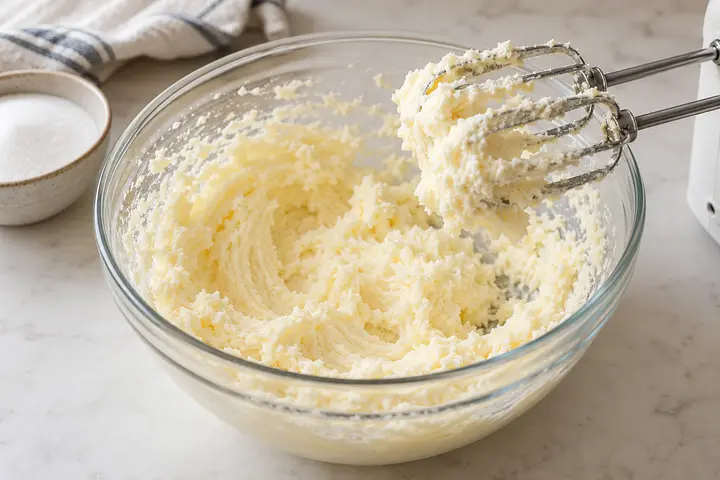
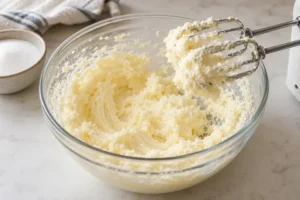
Beat 113 g softened unsalted butter and 100 g granulated sugar until lighter and fluffy, about 2 minutes. Scrape the bowl. Butter should hold its shape while taking a finger indentation; it should not be melted or oily.
2. Add milk and vanilla
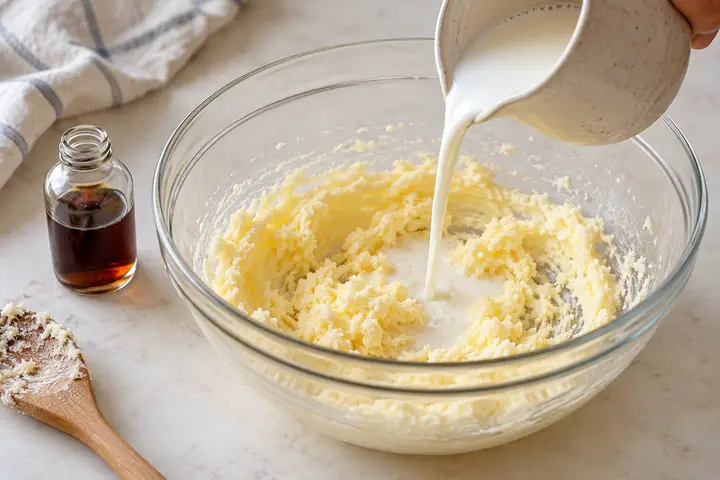
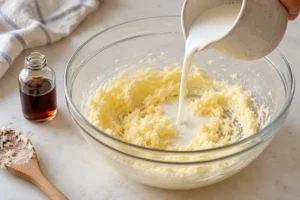
Beat in 30 ml milk and 1 teaspoon vanilla extract until incorporated. A slightly uneven mixture is fine; scrape the bowl again.
3. Mix the dough
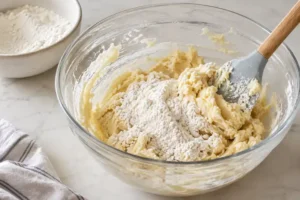
In a separate bowl whisk 180 g all-purpose flour, 20 g cornstarch, ½ teaspoon baking powder and ¼ teaspoon salt. Add to the butter mixture and mix on low just until no dry patches remain. The dough should hold together when pressed. Do not taste raw dough.
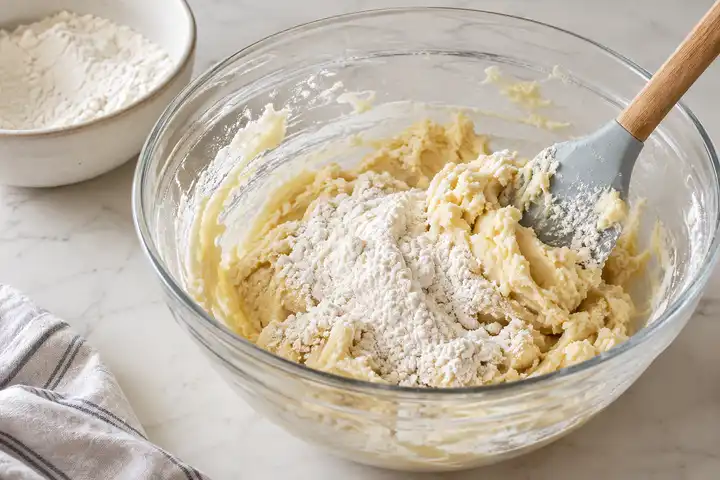
4. Chill and shape
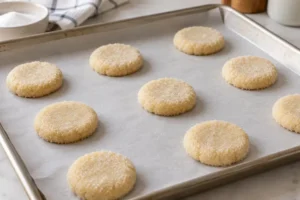
Cover and refrigerate dough for 30 minutes. Heat oven to 350°F (177°C). Line two baking sheets with parchment. Divide dough into 16 portions, about 28 g each. Roll in 15 g sugar, then gently flatten to disks about ½ inch (1.3 cm) thick. Place 8 per tray, about 2 inches apart.
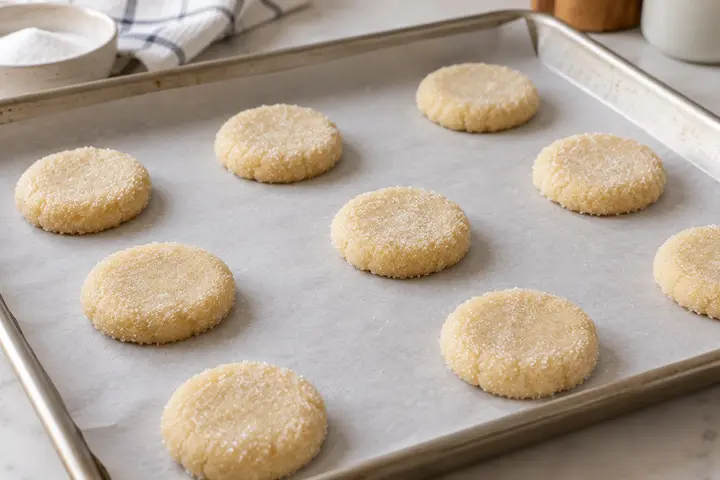
5. Bake and cool
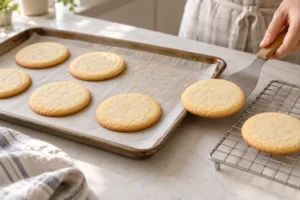
Bake one tray at a time on the middle rack for about 10–13 minutes, until edges are lightly golden and the tops look set rather than glossy. The card allows 12 minutes per tray, 24 minutes for both batches. Keep the second tray chilled. Let cookies rest on their tray for 5 minutes before transferring to a wire rack; cool completely before storing.
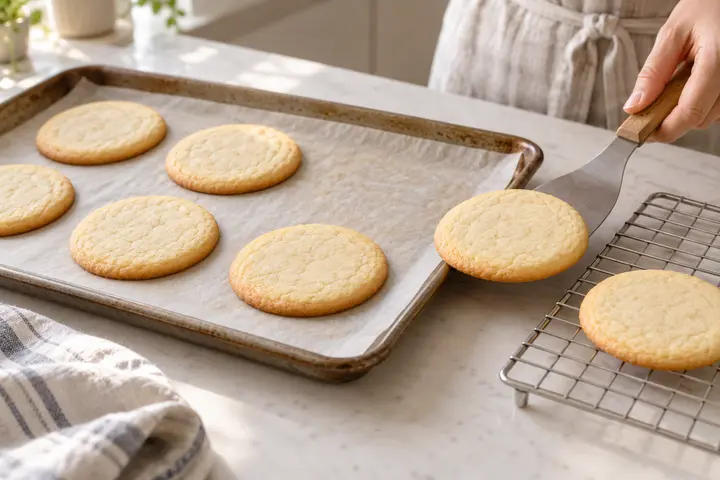
How to Keep the Texture Tender
For tender eggless sugar cookies, weigh the flour before mixing and stop as soon as the dry patches disappear. Adding flour repeatedly to make the dough feel dry can leave a crumbly finished cookie. The dough needs to be cohesive, not stiff like pastry.
Chilling helps control spread, especially if your kitchen is warm. If the shaped dough becomes greasy while you work, return the tray to the refrigerator before baking. Use a cool tray for each batch; placing dough on a hot baking sheet starts melting the butter before the tray reaches the oven.
Shape the portions consistently. A much thicker disk can stay doughy in the middle after its outside has colored, while a very thin one will crisp faster. Use the appearance of the edges and the set surface alongside the time range. Do not intentionally leave a wet, raw center.
Troubleshooting
Why is the dough crumbly?
First press a small portion between your fingers. If it holds together, gather it gently with the spatula rather than beating for longer. If it genuinely will not bind, flour may have been overmeasured. Add milk 1 teaspoon at a time, only until cohesive. Record any adjustment; extra liquid can affect spread.
Why did the cookies spread too far?
Very soft butter, warm dough or a hot tray can contribute. Chill the remaining shaped cookies and check your flour weight. Greased pans can also behave differently from parchment-lined trays. Avoid changing several ingredients at once when troubleshooting.
Why are the cookies hard after cooling?
Overbaking and too much flour are common contributors. Pull the next tray when the surface is set and the edges are just lightly golden. Oven thermostats vary, so an oven thermometer can help if browning consistently happens much earlier than the suggested range.
Serving and Simple Variations
Serve these eggless sugar cookies plain with tea or a Biscoff latte. For another vanilla-friendly coffee, try our hot or iced honey latte. Let the cookies cool before packing them for a snack box.
For an optional citrus note, rub 1 teaspoon finely grated lemon zest into the dough sugar before creaming. You can also roll the portions in cinnamon sugar, keeping the total coating amount similar. These variations are suggestions rather than tested versions; added toppings change the nutrition estimate.
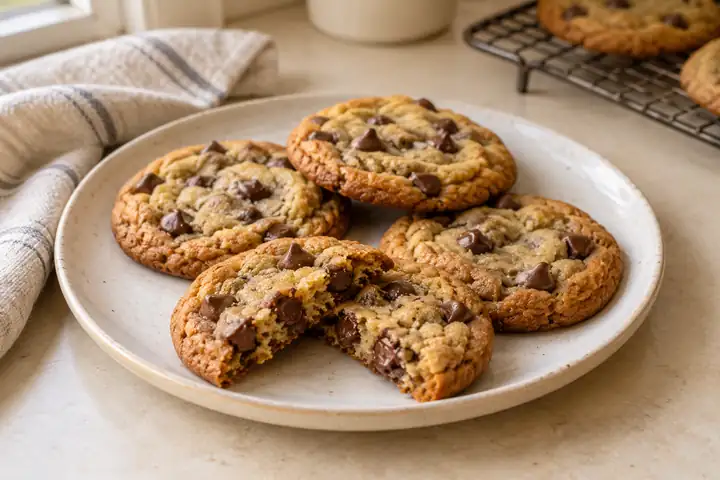
If you want chocolate instead, see chocolate chip cookies without brown sugar. That separate recipe contains an egg, so it should not be treated as an egg-free substitute.
Storage and Make-Ahead
Let the cookies cool completely, then keep them in an airtight container at cool room temperature for up to 3 days for best quality. Avoid sealing them while warm, which traps steam. In a hot or humid kitchen, make smaller batches and check for changes in texture or signs of spoilage.
Refrigerate covered raw dough for up to 2 days. If it becomes too firm to portion, let it soften briefly on the counter. For longer storage, freeze shaped portions on a tray, then move them into a sealed freezer bag for up to 2 months for best quality. Label the bag and bake from chilled or frozen, allowing extra time as needed until the surface is set and edges are lightly golden.
Nutrition Card
Estimated per cookie, dividing the dough and 15 g coating sugar into 16: 126 calories, 18 g carbohydrates, 1 g protein, 6 g fat, 4 g saturated fat, 7 g sugar, less than 1 g fiber and approximately 55 mg sodium. Values are ingredient-based estimates and vary by brand, portion and how much coating sugar adheres.
Calories Card
Approximately 126 calories per cookie. Frosting, extra rolling sugar and other toppings are not included. The estimate includes the full listed sugar coating; unused coating can slightly reduce the amount consumed.
Tastewiser Cooking Notes
This recipe has not yet been kitchen-tested by Tastewiser. Generated photos illustrate the process and are not proof of a tested batch. Butter temperature, flour weight and portion thickness are the main control points to record when you try it. The printable recipe provides a clear starting formula and observable doneness checks.
Even without eggs, raw cookie dough is unsafe to taste because flour is a raw food. Follow FDA guidance on flour and raw dough, wash hands and clean bowls, utensils and work surfaces after handling it. Baking the cookies fully matters; removing eggs does not make raw flour safe.
Frequently Asked Questions
Can I make sugar cookies without eggs?
Yes. Eggless sugar cookies can use a dough designed around butter, flour and a small amount of milk. Simply omitting an egg from any sugar-cookie recipe can change the moisture and structure; start with a formula specifically written without eggs.
Are these vegan or dairy-free?
No. They use butter and milk. Dairy-free substitutions have not been tested for this recipe. Check ingredient labels and avoid cross-contact when baking for someone with a food allergy; an egg-free ingredient list is not a guarantee about manufacturing or your kitchen.
Can I use this dough for cutout cookies?
This is a drop-cookie dough shaped into disks. It has not been developed for sharp cutout shapes or detailed icing designs. A dedicated eggless cutout recipe is a better starting point for decorated holiday cookies.
Can I skip chilling?
Keep the chill for this version. It firms the butter and makes the dough easier to portion consistently. Warm dough may spread differently, particularly in a hot kitchen.
Do I need an egg replacer?
No packaged egg replacer, flax egg or applesauce is included. Adding one would introduce moisture or other ingredients and change this dough.
Final Thoughts
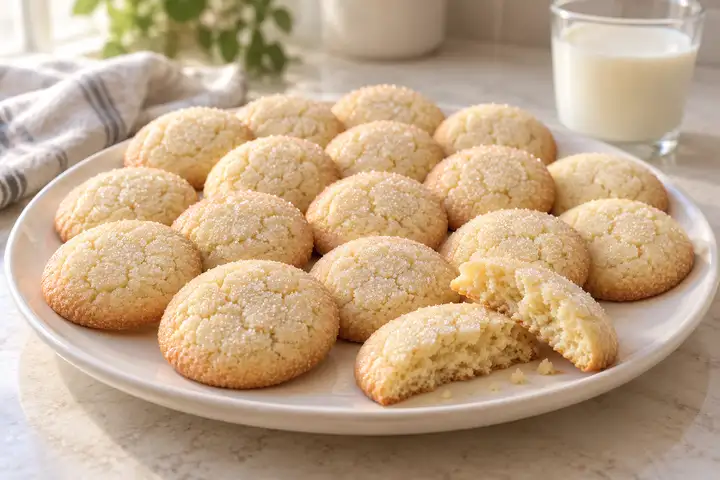
These eggless sugar cookies are a practical starting point for soft vanilla cookies without eggs. Weigh the ingredients, chill the dough and bake until the tops are set with lightly golden edges. For a simple sugar cookies without eggs recipe, consistent portions and careful baking are more useful than adding extra flour to every sticky spot.
Follow us on Instagram for more Tastewiser recipes.
Follow us on Pinterest for more baking ideas.

Eggless Sugar Cookies
Ingredients
Equipment
Method
- Beat 113 g softened unsalted butter and 100 g granulated sugar until lighter and fluffy, about 2 minutes. Scrape the bowl. Butter should hold its shape while taking a finger indentation; it should not be melted or oily.
- Beat in 30 ml milk and 1 teaspoon vanilla extract until incorporated. A slightly uneven mixture is fine; scrape the bowl again.
- In a separate bowl whisk 180 g all-purpose flour, 20 g cornstarch, ½ teaspoon baking powder and ¼ teaspoon salt. Add to the butter mixture and mix on low just until no dry patches remain. The dough should hold together when pressed. Do not taste raw dough.
- Cover and refrigerate dough for 30 minutes. Heat oven to 350°F (177°C). Line two baking sheets with parchment. Divide dough into 16 portions, about 28 g each. Roll in 15 g sugar, then gently flatten to disks about ½ inch (1.3 cm) thick. Place 8 per tray, about 2 inches apart.
- Bake one tray at a time on the middle rack for about 10–13 minutes, until edges are lightly golden and the tops look set rather than glossy. The card allows 12 minutes per tray, 24 minutes for both batches. Keep the second tray chilled. Let cookies rest on their tray for 5 minutes before transferring to a wire rack; cool completely before storing.
Notes
Get easy recipes in your inbox
Join TasteWiser for new recipes, cooking tips and fresh inspiration.
Confirm your email to subscribe. Unsubscribe anytime.