2 Ingredient Peanut Butter Cookies (No Eggs or Flour)
2 ingredient peanut butter cookies use natural peanut butter and pure maple syrup for a small batch with a rich nutty flavor. There is no flour, egg, butter or baking powder in the dough. The result is a delicate cookie with a short, crumbly bite, rather than the chewy texture of a traditional peanut butter cookie.
This version makes 12 modest cookies. Choosing the right jar matters more than using a mixer: use well-stirred, peanuts-only peanut butter and weigh both ingredients. The complete printable recipe and timings are at the end.
What Makes This Recipe Different?
With only two ingredients, there is little room to compensate for a dry jar or an oily scoop. Peanut butter supplies the fat and peanut solids; maple syrup supplies sweetness and moisture. Stirring, even portions and a full cooling period are the main steps to pay attention to.
Expect a peanut-forward flavor and restrained sweetness. These cookies are fragile while warm. If you need sturdy cookies for mailing or a chewy bakery-style result, choose a conventional recipe with more structure instead.
The Two Ingredients
- 250 g natural smooth peanut butter — about 1 cup; peanuts-only, thoroughly stirred
- 40 g pure maple syrup — 2 tablespoons
Natural peanut butter: read the ingredient list. For the simplest version, choose one containing only peanuts. Stir the entire jar, including the thick material at the bottom, so the measured portion contains both oil and peanut solids. Do not drain the oil.
Pure maple syrup: use maple syrup rather than pancake syrup. A maple-flavored blend or a sugar-free syrup can have a different consistency and should not be treated as a tested one-for-one swap. Avoid adding extra syrup simply to make a runny mixture sweeter.
For 2 ingredient peanut butter cookies, weighing is especially useful because peanut butter is sticky and difficult to level in a cup. Scrape the measured amount fully into the bowl. Choose smooth peanut butter for consistent shaping; crunchy peanut butter is an untested variation here.
Equipment
A kitchen scale, medium mixing bowl, spoon or silicone spatula, large baking sheet, parchment, fork and thin spatula are enough. You do not need an electric mixer. Use a baking sheet large enough to leave space around the cookies; if using two trays, bake them separately and allow extra cooking time.
How to Make 2 Ingredient Peanut Butter Cookies
1. Stir the peanut butter
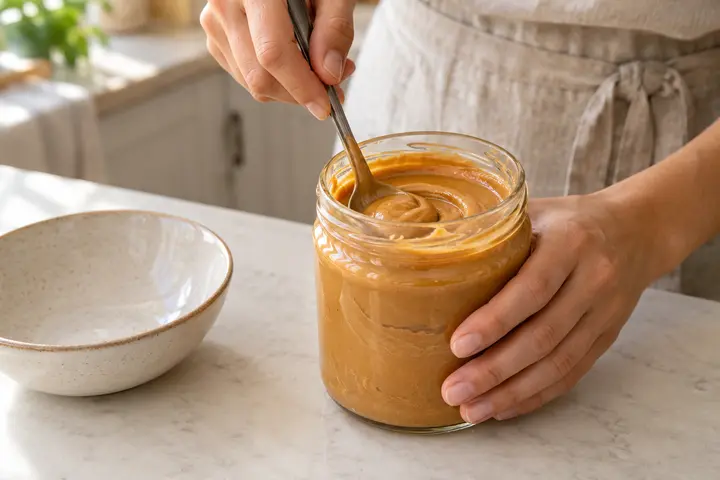
Heat oven to 350°F (177°C) and line a large baking sheet with parchment. Stir the whole jar of natural peanut butter thoroughly to distribute separated oil before measuring 250 g (about 1 cup). Use room-temperature peanut butter made from peanuts only.
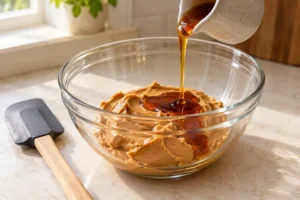
2. Make the dough
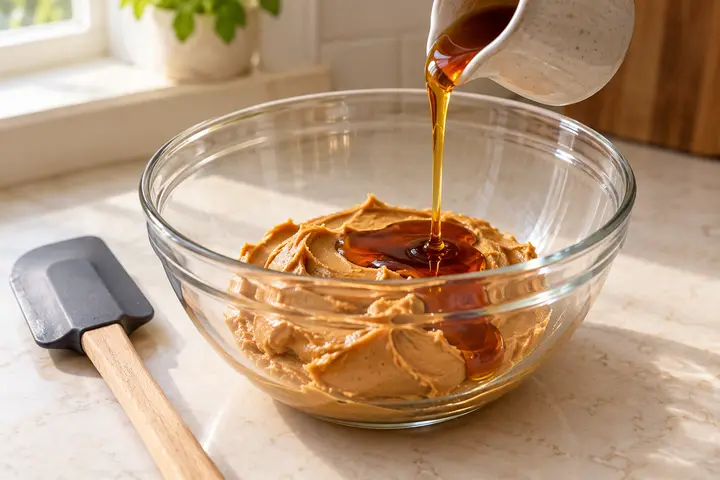
Mix the measured peanut butter with 40 g pure maple syrup (2 tablespoons) in a bowl. Stir until evenly combined and thick enough to gather into a soft dough. If too warm to shape, refrigerate briefly until workable; do not add flour to this two-ingredient version.
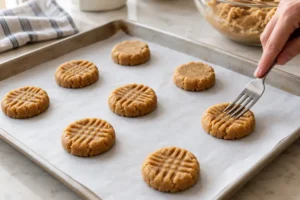
3. Portion and flatten
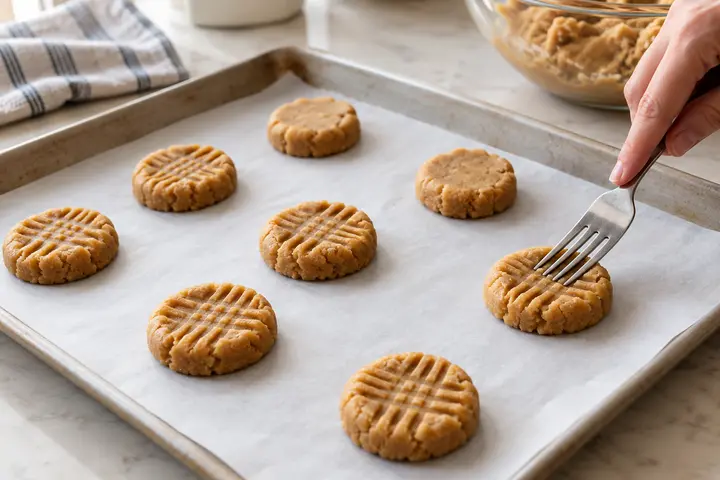
Divide the mixture into 12 portions, about 24 g each. Roll gently, place on the lined tray with about 2 inches between portions, then press each with a fork in two directions to form a crosshatch. Aim for disks about ⅓ inch (8 mm) thick; mend small edge cracks with your fingers.
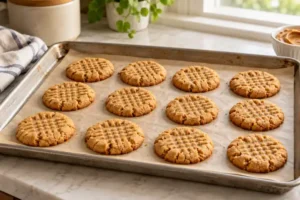
4. Bake and cool completely
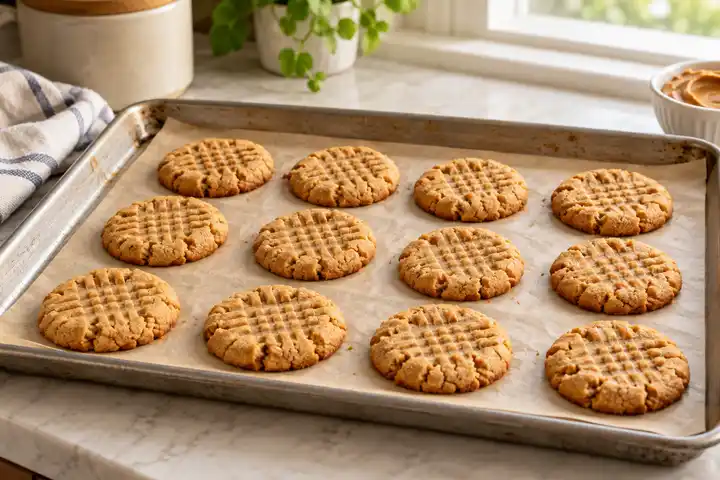
Bake on the middle rack for about 10–12 minutes, until the surface looks set and edges darken slightly. Check early to avoid scorching. The cookies will still feel soft. Leave undisturbed on the tray until completely cool, allowing at least 30 minutes and longer if needed. Lift gently with a thin spatula only after they firm.
Getting the Dough Consistency Right
The mixed dough should gather when pressed without leaving a puddle of oil. Scrape the sides of the bowl and keep mixing until the syrup is evenly distributed. If the dough is soft because the room is hot, a brief chill can make portioning easier. Chilling does not correct a jar that was measured without stirring.
Try shaping one portion before arranging the whole tray. Small cracks around the edges are normal for a dough without flour or eggs, but the disk should hold its outline. Gently press cracks back together rather than squeezing the dough hard or making paper-thin cookies.
If the mixture remains liquid or falls apart despite accurate measurements and properly stirred peanut butter, stop and check the ingredient labels. A different formulation may need a different recipe. Adding flour, oats or powdered peanut butter turns this into another recipe and changes the proportions.
Troubleshooting
Why do my cookies fall apart?
The first check is whether they cooled fully. Warm cookies have not firmed enough to lift. Let them stay on the tray until the center and underside are cool, then slide a thin spatula underneath. The finished cookies remain delicate, so handle them individually.
Why do they look greasy?
Separated oil in a scoop from the top of the jar can contribute. Thoroughly stirring before weighing helps avoid that imbalance. Use parchment rather than heavily greasing the tray; the dough already contains peanut fat.
Why are the bottoms too dark?
A dark baking sheet, lower rack position or an oven running hot can affect browning. Use the middle rack and check before the top looks deeply browned. Maple-sweetened dough can color quickly. An oven thermometer is useful when several batches brown sooner than expected.
Can I make them sweeter?
This formula keeps the syrup amount fixed. Adding more may affect shape and texture. For a sweeter cookie, choose a recipe developed for that balance. An optional drizzle after cooling is another serving idea, but it adds an ingredient and changes the nutrition estimate.
Serving Ideas
Serve 2 ingredient peanut butter cookies with sliced fruit or a cup of coffee. Our Biscoff latte has a warm biscuit flavor, while a honey latte gives you another hot or iced option.
For a different cookie texture, try white-sugar chocolate chip cookies. That recipe includes flour and an egg, so it is not a replacement for an egg-free or flourless version.
Storage
Once fully cool, store these 2 ingredient peanut butter cookies in a sealed container at cool room temperature and enjoy within 2 days for best quality. Place parchment between layers and avoid filling a deep jar where the lower cookies can be crushed. In a warm kitchen, refrigerate for firmer handling.
For longer storage, freeze cooled cookies in a shallow sealed container for up to 2 months for best quality. Separate the layers with parchment and thaw only the portion you need. Let any condensation dry before resealing. These storage periods are quality guides, not laboratory shelf-life measurements.
Nutrition Card
Estimated per cookie when divided into 12: 131 calories, 6 g carbohydrates, 5 g protein, 10 g fat, 2 g saturated fat, 4 g sugar, 2 g fiber and approximately 5 mg sodium. The estimate uses unsalted peanuts-only peanut butter; salted or sweetened products change the values.
Calories Card
Approximately 131 calories per cookie. Portion size matters: making six large cookies roughly doubles the calories per piece. Extra syrup, chocolate or other toppings are excluded. A short ingredient list does not mean a sugar-free or low-calorie cookie.
Tastewiser Cooking Notes
Tastewiser has not yet kitchen-tested this exact batch. Photos are AI-generated process illustrations, and baking times are guides. Record the peanut butter brand, dough weight, disk thickness and bake time when trying the recipe; those details help explain changes in texture.
The peanut-butter-and-maple approach is documented by Spice Bangla and My Vegan Minimalist. This article presents Tastewiser’s own instructions and portion guidance, without claiming an independently tested result.
This recipe contains peanuts. For someone with a food allergy, check labels and avoid cross-contact from utensils, trays and storage containers. There are no wheat, milk or egg ingredients in the stated formula, but suitability depends on the products and kitchen used.
Frequently Asked Questions
Can you make peanut butter cookies with only two ingredients?
Yes, peanut butter and maple syrup can form a flourless cookie dough. The method relies on natural peanut butter, accurate proportions and cooling before handling. The texture differs from cookies containing flour and eggs.
Are these cookies vegan?
The two specified ingredients are plant-based. Check the peanut butter and syrup labels for additional ingredients. Honey is not included and is not a vegan substitute.
Are these gluten-free?
No flour is added. If strict gluten avoidance matters, choose products labeled appropriately and prevent cross-contact. The ingredient list alone does not establish how a particular jar was manufactured.
Can I use powdered sugar or honey instead?
This card is written for maple syrup. Powdered sugar and honey behave differently; use a recipe developed for your chosen sweetener. Tastewiser has not tested those substitutions for this formula.
Can I skip baking?
This is a baked-cookie method. Skipping the oven produces a different consistency and has not been evaluated here as a no-bake recipe.
Final Thoughts
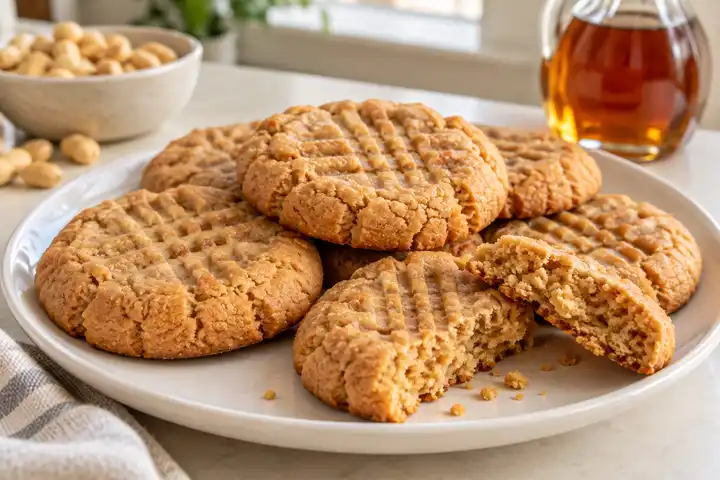
These 2 ingredient peanut butter cookies offer a simple peanut butter cookie recipe without eggs or flour. Start with a well-stirred natural jar, keep the maple syrup measured and allow the baked cookies to cool completely. The careful handling is what makes this small two-ingredient batch practical.
Follow us on Instagram for more Tastewiser recipes.
Follow us on Pinterest for more baking ideas.

2 Ingredient Peanut Butter Cookies
Ingredients
Equipment
Method
- Heat oven to 350°F (177°C) and line a large baking sheet with parchment. Stir the whole jar of natural peanut butter thoroughly to distribute separated oil before measuring 250 g (about 1 cup). Use room-temperature peanut butter made from peanuts only.
- Mix the measured peanut butter with 40 g pure maple syrup (2 tablespoons) in a bowl. Stir until evenly combined and thick enough to gather into a soft dough. If too warm to shape, refrigerate briefly until workable; do not add flour to this two-ingredient version.
- Divide the mixture into 12 portions, about 24 g each. Roll gently, place on the lined tray with about 2 inches between portions, then press each with a fork in two directions to form a crosshatch. Aim for disks about ⅓ inch (8 mm) thick; mend small edge cracks with your fingers.
- Bake on the middle rack for about 10–12 minutes, until the surface looks set and edges darken slightly. Check early to avoid scorching. The cookies will still feel soft. Leave undisturbed on the tray until completely cool, allowing at least 30 minutes and longer if needed. Lift gently with a thin spatula only after they firm.
Notes
Get easy recipes in your inbox
Join TasteWiser for new recipes, cooking tips and fresh inspiration.
Confirm your email to subscribe. Unsubscribe anytime.