Soft Molasses Cookies with Crinkled Sugar Tops
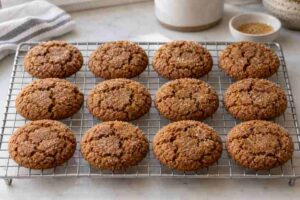
Soft molasses cookies have rounded shapes, crinkled sugar tops and a warm ginger-cinnamon flavor. They start as small dough balls, so there is no rolling pin or cookie cutter involved. A short chill firms the butter enough to make portioning easier while still allowing the cookies to spread in the oven.
The batch makes twenty-four cookies for a Christmas tin, a small cookie exchange or a plate beside afternoon tea. These are different from shaped gingerbread people: the dough is portioned with a scoop and baked for a tender center. The simple sugar coating gives a little surface crunch without frosting or decorating.
The texture to aim for
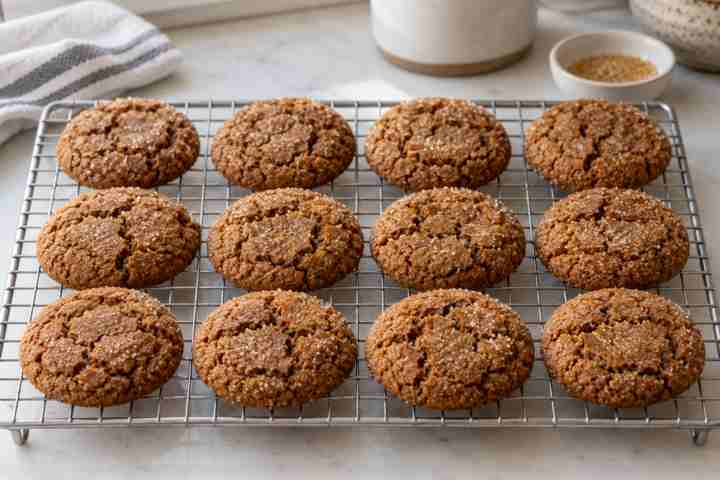
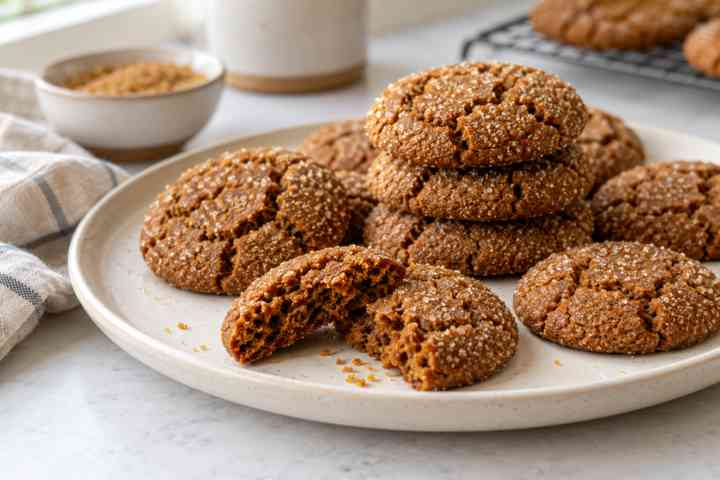
A soft cookie needs enough structure to lift cleanly once cooled, but it should not be baked until hard all the way through. Look for set edges and a surface that has lost its wet shine. The center will continue to firm on the hot tray. Judge the first tray carefully before baking the second.
Molasses brings moisture and a pronounced flavor, while brown sugar and softened butter help make the middle chewy. Too much flour can turn the same ingredient list into a dry, cakey cookie. Weigh the flour if you can, and mix only until it is incorporated rather than beating the dough smooth for several minutes.
Ingredients and substitutions
Use unsulphured molasses sold for baking. Blackstrap is much stronger and more bitter, so it is not a direct replacement for this amount. Scrape the sticky molasses measure well; leaving a substantial amount behind changes both flavor and moisture. A small flexible spatula is useful for getting it into the bowl.
Butter should dent when pressed but remain cool and opaque. Melted or very greasy butter changes the way the dough spreads. Light brown sugar gives a rounded sweetness without competing too strongly with molasses. Dark brown sugar can replace it by weight, producing a somewhat deeper flavor.
The spice blend uses ginger first, cinnamon second and a small amount of cloves. If you dislike cloves, omit that small amount rather than adding more ginger automatically. Use alcohol-free vanilla flavoring and check labels. The recipe contains wheat, egg and dairy; it should not be presented as allergy-friendly without a separate adaptation.
Granulated sugar works for the coating because the crystals remain visible after baking. Powdered sugar dissolves differently and is not an equal swap for this finish. Some rolling sugar may remain in the dish; the nutrition estimate conservatively includes the full listed amount rather than claiming a measured uptake.
- 280 g all-purpose flour
- 1 1/2 tsp baking soda (7 g)
- 2 tsp ground ginger (4 g)
- 1 tsp ground cinnamon (2.5 g)
- 1/4 tsp ground cloves (0.5 g)
- 1/2 tsp fine salt (3 g)
- 115 g unsalted butter (softened, not melted)
- 150 g light brown sugar
- 85 g unsulphured baking molasses (not blackstrap)
- 1 large egg (50 g without shell)
- 1 tsp alcohol-free vanilla flavoring (5 ml)
- 50 g granulated sugar (for rolling; nutrition assumes all is used)
How to make soft molasses cookies
1. Mix and chill the dough
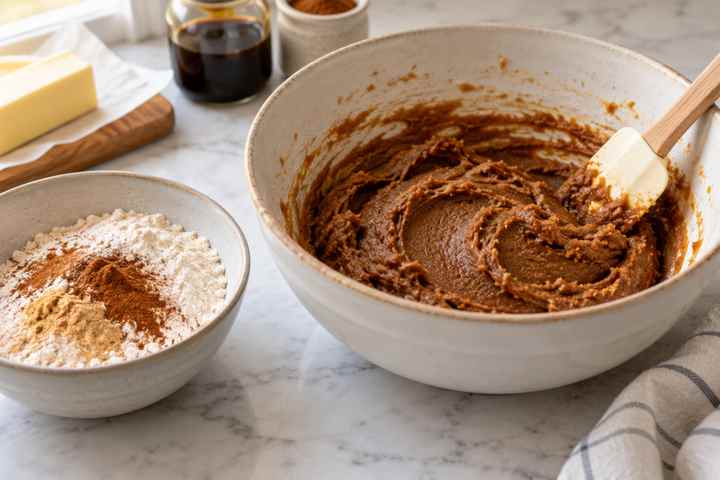
Whisk flour, baking soda, ginger, cinnamon, cloves and salt in a bowl. In another bowl beat softened butter and brown sugar for 2 minutes until creamy. Beat in molasses, egg and vanilla, scraping the bowl. Mix in the dry ingredients on low just until no dry flour remains. Cover and refrigerate 30 minutes. Do not taste raw dough.
2. Portion and coat
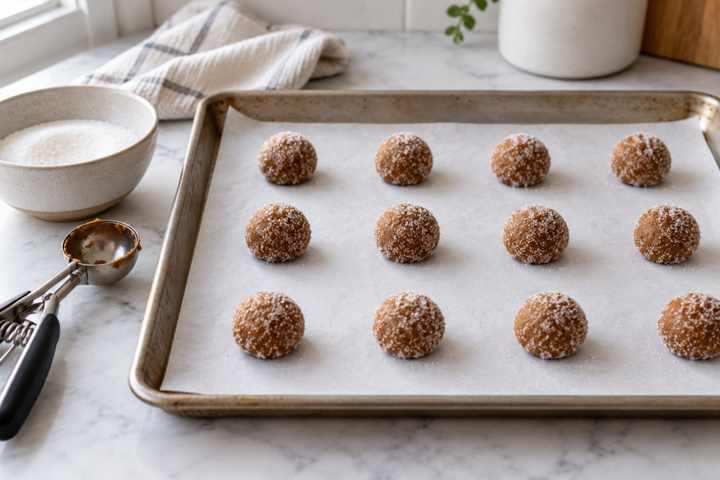
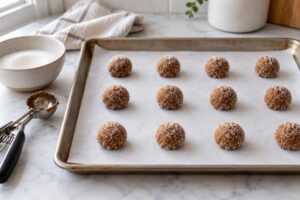
Heat oven to 350°F (175°C), conventional setting. Line two baking trays with parchment. Divide dough into 24 portions, about 33 g each, and gently roll into balls. Roll in the granulated sugar. Put 12 balls on each tray at least 2 inches (5 cm) apart; keep the second tray chilled while the first bakes. Do not flatten the balls.
3. Bake and cool
Bake one tray at a time on the middle rack for 10–11 minutes per tray, until edges are set and tops are crinkled; centers should look soft but not glossy or wet. Cool on each tray for 5 minutes, then move to a rack. Allow about 20 minutes total cooling after the final tray before packing. The two-tray baking allowance is 22 minutes.
Portioning and oven habits
Keep the dough portions similar in size so one cookie does not dry out while another finishes. A scale makes twenty-four roughly equal pieces easier to achieve. A small scoop is also useful, but scoop sizes vary between brands; check the total number rather than assuming one scoop automatically equals one serving.
Use cool trays for each batch. Dough placed on a warm tray can begin spreading before it reaches the oven. Bake one tray on the middle rack at a time for a consistent starting point, and leave enough room between the balls. Crowding them traps steam and can make the cookies join at the edges.
Troubleshooting
Why did the cookies spread too much?
The butter or dough may have been too warm, the flour may have been undermeasured or the tray may still have been hot. Chill the remaining dough until it feels firm enough to roll, cool the tray and check that the oven has reached the stated temperature. Avoid adding a large unmeasured handful of flour to compensate.
Why are they thick and barely spreading?
Too much flour or dough that has become extremely cold can limit spreading. Let a firmly refrigerated batch sit just until it can be scooped without crumbling. Use the stated flour weight and check the leavener. Do not force the cookies flat unless you intentionally want a different shape and texture.
Why did they turn hard after cooling?
The most likely issue is overbaking. A cookie that seems perfectly firm while still on the hot tray often becomes crisp later. Shorten the next tray slightly within the doneness cues, and pack only when fully cool. Air leaking into a storage container can also dry the cookies over time.
Serving and holiday packing
Serve the cookies plain with tea, coffee or a cold glass of milk. A sugar-crinkled top already provides a finished appearance. If you add a chocolate dip or frosting, calculate that separately; neither is included in the nutrition estimate. Keep spiced cookies in their own container if sharing a box with delicate vanilla or citrus cookies.
For a gift tin, separate layers with parchment and include a simple ingredient label. Wait until the centers are completely cool before closing the lid so trapped steam does not soften the coating. Use a food-safe container rather than placing the cookies directly against decorative packaging that is not intended for food.
Storage and freezing
Store cooled soft molasses cookies in an airtight container in a cool room for up to 4 days for best texture. Freeze in a sealed container for up to 2 months for quality, with parchment between layers. Thaw inside the closed container so condensation forms on the packaging rather than directly on the cookies.
You can also freeze the plain portioned dough balls on a tray, then transfer them to a freezer bag. Use within 2 months for quality. Thaw covered in the refrigerator, roll in sugar and bake as directed. Very cold dough may need a little extra oven time, so follow the set-edge cue rather than only the clock.
Flour and eggs are raw ingredients. Do not taste the dough or batter, and wash hands, bowls and utensils after mixing. The FDA guidance on raw flour explains why baking is necessary before eating.
Frequently asked questions
Can I refrigerate the dough overnight?
Yes. Cover it well and refrigerate for up to 24 hours. It may be firmer than after the standard chill, so let it stand briefly until easy to portion. Keep the second tray cold while the first bakes. The recipe card timing describes the same-day version.
Are these the same as gingersnaps?
They share molasses and warm spices, but this recipe aims for a soft center rather than an evenly crisp snap. Extending the bake to make them hard changes the intended result. For a crisp cookie, use a recipe designed around that texture.
Can I make half a batch?
Yes. Halve the weighed ingredients and use 25 g of beaten egg for twelve cookies. Keep the same size dough balls and the same oven temperature. One tray needs only one baking cycle, so the total cooking allowance is shorter than the full batch.
A simple cookie-tin staple
For make-ahead Christmas baking without cutters or icing, soft molasses cookies offer a practical mix of warm spices and tender texture. Keep the dough portions even, watch the first tray closely and let the round ginger molasses cookies cool fully before packing them for sharing.
More recipes to try
Follow us on Pinterest · Follow us on Instagram

Soft Molasses Cookies with Crinkled Sugar Tops
Ingredients
Method
- Whisk flour, baking soda, ginger, cinnamon, cloves and salt in a bowl. In another bowl beat softened butter and brown sugar for 2 minutes until creamy. Beat in molasses, egg and vanilla, scraping the bowl. Mix in the dry ingredients on low just until no dry flour remains. Cover and refrigerate 30 minutes. Do not taste raw dough.

- Heat oven to 350°F (175°C), conventional setting. Line two baking trays with parchment. Divide dough into 24 portions, about 33 g each, and gently roll into balls. Roll in the granulated sugar. Put 12 balls on each tray at least 2 inches (5 cm) apart; keep the second tray chilled while the first bakes. Do not flatten the balls.
- Bake one tray at a time on the middle rack for 10–11 minutes per tray, until edges are set and tops are crinkled; centers should look soft but not glossy or wet. Cool on each tray for 5 minutes, then move to a rack. Allow about 20 minutes total cooling after the final tray before packing. The two-tray baking allowance is 22 minutes.
Notes
Get easy recipes in your inbox
Join TasteWiser for new recipes, cooking tips and fresh inspiration.
Confirm your email to subscribe. Unsubscribe anytime.