Lemon Crinkle Cookies with Soft Centers
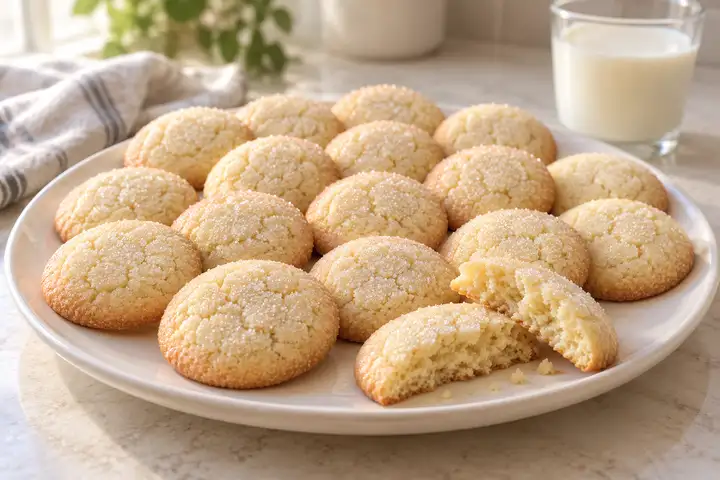
Lemon crinkle cookies bring a bright citrus flavor to a cookie tray without frosting or food coloring. Fresh zest perfumes the dough, a little lemon juice adds tang, and a thick powdered-sugar coating breaks into white patches as the cookies expand. The centers stay soft, while the edges become lightly set.
This recipe makes 24 small cookies. It uses ordinary all-purpose flour and butter, with a chilled dough that is easy to portion. The pale yellow color comes from the ingredients rather than dye, so the finished shade varies with your eggs and lemons. Serve them with tea, pack them beside chocolate cookies, or add them to a Christmas cookie exchange.
What Makes the Crinkle Coating Work?
The dough needs enough structure to hold a rounded shape, but it must also expand in the oven. Chilling firms the butter and gives the flour time to absorb moisture. A thin coat of granulated sugar creates a barrier between the damp dough and the powdered sugar. A generous second coating then stays more visible as the surface cracks.
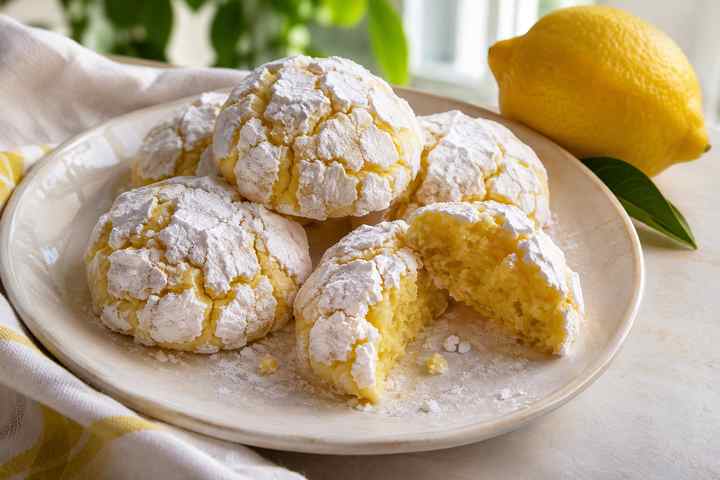
Expect irregular cracks rather than identical patterns. Lemon crinkle cookies are finished when their edges hold together and the tops look dry, even though the centers remain soft. Baking until they feel firm while hot can leave the cooled cookies dry.
Ingredients and Quantities
For the dough, gather 250 g all-purpose flour, 6 g baking powder, 2 g fine salt, 115 g unsalted butter softened but cool, 150 g granulated sugar, 1 large egg plus 1 large egg yolk (about 68 g combined without shells), 30 ml fresh lemon juice, 6 g finely grated lemon zest, and 5 ml alcohol-free vanilla flavoring.
For rolling, set out 35 g granulated sugar and 70 g powdered sugar in separate bowls. You may have some coating left over. The nutrition estimate allows for about 25 g granulated sugar and 45 g powdered sugar adhering to the batch; the amount actually retained will vary.
Ingredient Notes and Practical Substitutions
- Lemons: Zest before juicing. Grate only the yellow surface because the white pith tastes bitter. Two medium lemons usually provide enough zest, but measure the juice rather than adding everything you squeeze.
- Butter: A finger should leave an indentation without sinking into an oily surface. Melted butter changes spreading and requires a different chilling time.
- Flour: Weigh it for consistency. If using cups, fluff, spoon and level rather than packing flour into the measure.
- Egg and yolk: The extra yolk adds richness without the additional water of a second whole egg. This recipe has not been adapted here for an egg replacement.
- Vanilla: Use an alcohol-free flavoring. You can omit it for a more direct lemon flavor.
- Coating: Powdered sugar containing a little starch usually resists dissolving better than finely ground sugar alone.
Orange zest and juice can replace the lemon in the same measured quantities for an orange version, although the flavor will be sweeter and less sharp. Avoid adding extra juice to strengthen the citrus flavor: more zest is the better adjustment because it adds aroma without much liquid.
How to Make Lemon Crinkle Cookies
1. Mix the Dough
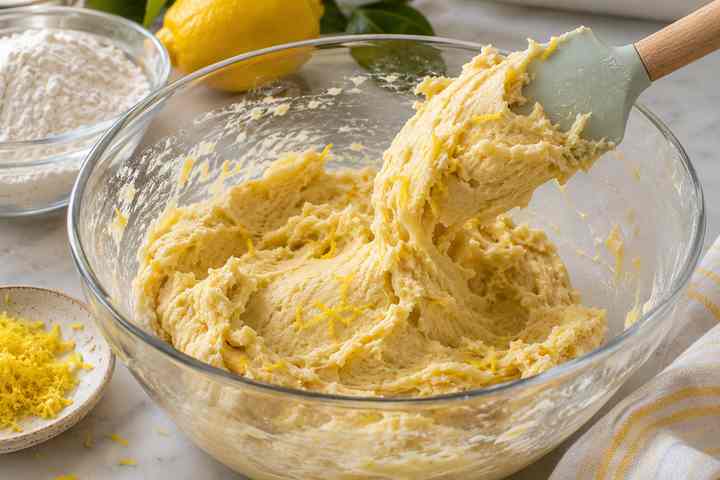
Whisk the flour, baking powder and salt in one bowl. In another, rub the lemon zest into the 150 g sugar with your fingertips until fragrant. Beat the butter with this lemon sugar until smooth and slightly lighter, then beat in the egg, yolk and vanilla. Mix in the measured lemon juice. A slightly curdled appearance at this stage is normal.
Add the flour mixture and stir only until no dry flour remains. Scrape the base and sides of the bowl to catch hidden pockets. The dough should be soft and slightly sticky, not pourable. Cover and refrigerate for at least 60 minutes.
2. Portion and Coat
Heat the oven to 175°C (350°F), conventional heat, and line two baking sheets with parchment. Divide the chilled dough into 24 portions, approximately 26 g each. Roll gently into balls. Coat each ball first in granulated sugar, then heavily in powdered sugar. Leave visible white sugar on the surface instead of shaking it all away.
Arrange 12 balls on each tray with at least 5 cm between them. Keep the second tray chilled while the first bakes. If the dough becomes sticky while rolling, return it to the refrigerator briefly rather than adding flour.
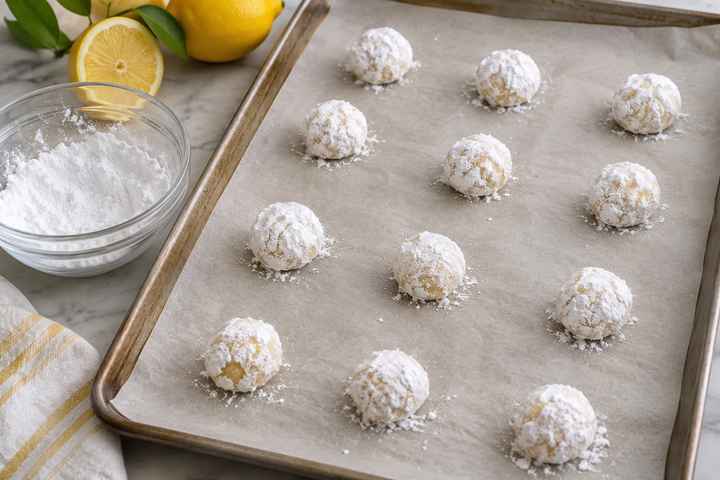
3. Bake and Cool
Bake one tray at a time on the middle rack for 11–13 minutes. Look for set edges, dry sugar patches and soft centers. The bottoms should be only lightly golden. Leave the cookies on the baking sheet for 5 minutes, then transfer them carefully to a rack. Repeat with the second tray. Allow them to cool completely before stacking or packing.
Troubleshooting
The sugar disappeared: The dough may have warmed, the coating may have been too thin, or the sugar absorbed moisture during a long wait. Coat each tray shortly before baking and use a generous powdered-sugar layer.
The cookies spread too far: Check that the butter was not melted and the dough was thoroughly chilled. Use a cool baking sheet; a hot tray melts the butter before the dough sets. Too little flour or extra lemon juice can also cause spreading.
The cookies stayed in tight balls: Too much flour or an oven running cool can reduce spreading. Weigh the ingredients and check oven temperature with a separate thermometer if this happens repeatedly. Do not flatten the next batch aggressively; a gentle press is enough if your chilled dough is exceptionally firm.
The texture is dry: Overbaking is the most likely cause. Remove lemon crinkle cookies while their centers still yield slightly. Their structure continues to set on the hot tray.
Serving and Cookie-Tray Ideas
Serve these cookies at room temperature so the lemon aroma is noticeable and the centers feel tender. Strong coffee, black tea or a glass of milk balances their sweetness. For a mixed tray, combine them with pistachio cookies, soft molasses cookies and chocolate covered pretzels. Keep strongly spiced cookies in a separate container until serving so their aromas do not dominate the lemon.
If you want a sliceable citrus dessert for a larger gathering, classic lemon bars offer a different texture and a sharper lemon filling.
Storage and Make-Ahead Options
Store completely cooled cookies in an airtight container at cool room temperature for up to 3 days. Separate layers with parchment. Humidity can soften or partially dissolve the white coating; that affects appearance more than flavor. Do not pack warm cookies, because trapped steam makes the coating damp.
Freeze baked cookies in a well-sealed container for up to 2 months. Thaw them inside the closed container to reduce condensation on their surfaces. For a fresher-looking coating, freeze uncoated dough portions instead, thaw them overnight in the refrigerator, then roll in both sugars just before baking. They may need an extra minute in the oven.
Do not taste raw dough. Raw flour and uncooked eggs can carry harmful germs; follow CDC guidance on raw dough and wash hands and utensils after handling it. Keep egg-containing dough refrigerated while it waits.
Frequently Asked Questions
Can I make the dough the day before?
Yes. Refrigerate it, covered, for up to 24 hours. If very firm, let it stand just until you can portion it without forcing the scoop. Keep the sugar coating separate until baking.
Do I need lemon extract?
No. Fresh zest supplies most of the aroma in this recipe. Bottled juice can supply acidity, but fresh zest is still important for a clear lemon flavor.
Why use two kinds of sugar for rolling?
The first, thin granulated layer helps keep the powdered sugar visible. Powdered sugar alone can absorb moisture directly from the dough and become translucent.
Can I bake both trays together?
One tray at a time gives more predictable results in a conventional oven. If baking together, swap positions partway through and watch the edges closely. Oven airflow can change the baking time.
A Bright Addition to Your Cookie Collection
With measured lemon juice, plenty of fresh zest and well-chilled dough, lemon crinkle cookies make a useful citrus option for holiday trays and everyday tea breaks. Keep the coating generous and the baking gentle for soft lemon cookies with powdered sugar cracks that stay appealing after cooling.
Follow us on Pinterest · Follow us on Instagram

Ingredients
Method
- Whisk flour, baking powder and salt. Rub zest into the 150 g sugar, then beat with butter until smooth and slightly lighter. Beat in egg, yolk and vanilla, then lemon juice. Stir in dry ingredients just until combined. Cover and chill at least 60 minutes.

- Heat oven to 175°C (350°F). Line two trays with parchment. Divide dough into 24 portions, about 26 g each. Roll first in granulated sugar, then heavily in powdered sugar. Place 12 per tray, at least 5 cm apart. Keep waiting dough chilled.
- Bake one tray at a time for 11–13 minutes until edges are set and tops look dry but centers remain soft. Cool on tray 5 minutes, then transfer to a rack. Repeat with second tray and cool completely.


Notes
Get easy recipes in your inbox
Join TasteWiser for new recipes, cooking tips and fresh inspiration.
Confirm your email to subscribe. Unsubscribe anytime.