Lemon Garlic Chicken Meatballs (Easy Oven-Baked Recipe)
Lemon garlic chicken meatballs give ground chicken a bright, savory flavor with a short oven method. Lemon zest goes into the mixture, while fresh juice is added after baking. That separates the citrus aroma from the finishing acidity and keeps the meatballs easy to pair with different sides.
The mixture includes a small breadcrumb-and-milk binder, egg and finely grated Parmesan. These ingredients help hold the portions together without needing a heavy sauce. Make sixteen evenly sized meatballs for four servings, then check their centers with a thermometer rather than relying on a golden surface.
Why bake these meatballs?
A baking sheet gives all sixteen portions room to cook together. You avoid turning each one in a skillet, and the lightly oiled surfaces can take on some color. The aim is a tender cooked center with a modest browned exterior, not a thick fried crust. A rimmed sheet also keeps cooking juices contained.
Lemon garlic chicken meatballs work well as a flexible main dish. Serve them with vegetables and rice, tuck them into a wrap or add them to a pasta bowl. Keep those additions separate from the measured meatball recipe so you can change the meal without losing track of the quantities.
Ingredients and buying notes
For sixteen meatballs, use 60 g plain fine dry breadcrumbs, 30 ml milk, one large egg, 30 g finely grated Parmesan, three garlic cloves (9 g), 8 g parsley, 2 teaspoons lemon zest, ½ teaspoon salt, ¼ teaspoon pepper, 500 g ground chicken, 15 ml olive oil and 30 ml fresh lemon juice. The juice is reserved for the cooked meatballs.
Choose ground chicken labeled around 93% lean for a balance of moisture and structure. Extra-lean breast-only mince can make a firmer result, while a fattier product releases more juices. Keep it refrigerated until the binder is ready. Do not rinse ground chicken; keep raw poultry and its utensils away from ready-to-eat foods.
Fine breadcrumbs hydrate more evenly than large coarse crumbs. Use plain crumbs so the garlic and lemon remain clear, and check the label if you are avoiding a particular ingredient. Grate Parmesan finely so it spreads through the mixture rather than leaving large pockets. Zest only the yellow lemon skin; the white pith can taste bitter.
How to make lemon garlic chicken meatballs
1. Mix the binder and seasonings
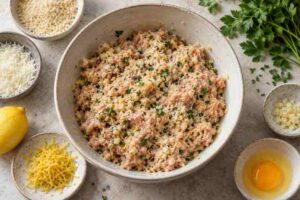
Heat oven to 425°F (220°C). Line a rimmed baking sheet with parchment rated for that temperature. Mix breadcrumbs and milk in a large bowl and let stand 2 minutes. Stir in egg, Parmesan, garlic, parsley, lemon zest, salt and pepper. Add cold ground chicken and fold gently just until evenly combined. Do not taste raw mixture.
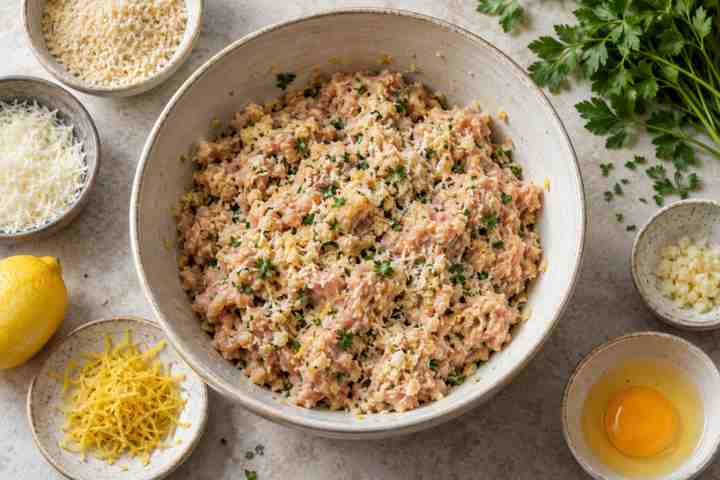
2. Shape sixteen even meatballs
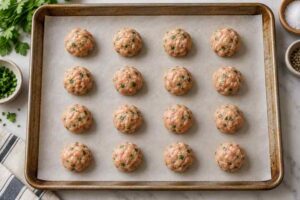
Divide the mixture into 16 equal portions, about 43 g each. Lightly oil clean hands with part of the measured olive oil and roll gently into balls about 1½ inches (4 cm) wide. Place with space between them on the lined sheet. Brush remaining measured oil lightly over the tops. Wash hands and utensils after contact with raw chicken.
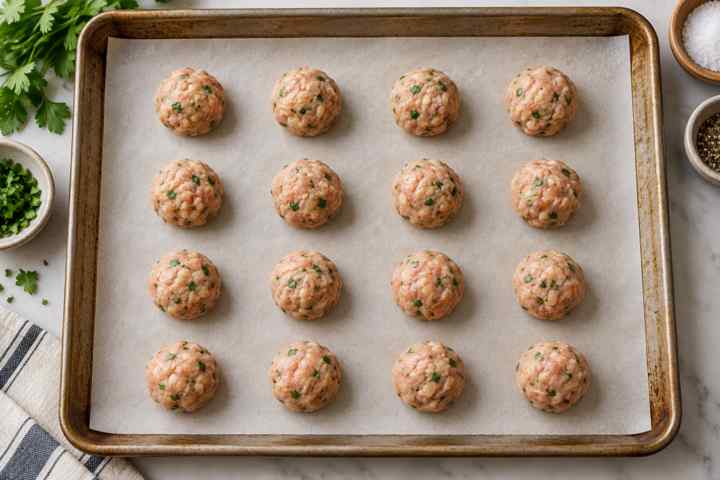
3. Bake to temperature and finish with lemon
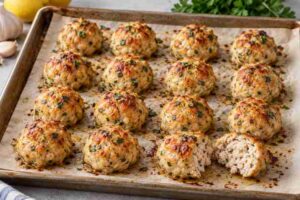
Bake on the middle rack for about 18–22 minutes, checking early. Insert a food thermometer into the center of several meatballs, including the largest: each must reach 165°F (74°C). Continue cooking if needed; color alone is not a safety check. Transfer cooked meatballs to a clean serving dish and gently toss with the measured lemon juice. Serve four meatballs per portion.
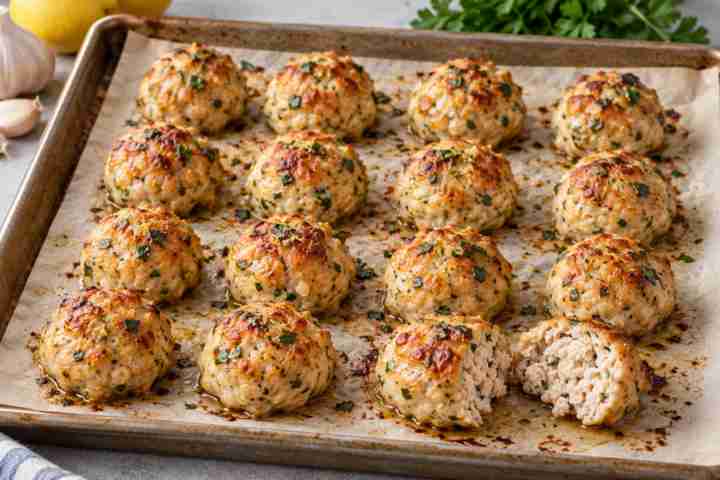
Keep the mixture gentle and evenly portioned
Combine the seasonings with the binder before adding chicken. This helps distribute garlic, salt and zest with less handling of the meat. Fold with a spatula or clean hands only until no obvious streaks remain. Kneading it repeatedly can make the finished texture more compact.
A scale makes sixteen portions easier to keep consistent. The mixed batch is roughly 700 g, so each portion is about 43 g. A small scoop is useful too, but check that the portions are close in size. Very large balls take longer to heat through and can leave the smallest ones dry by comparison.
Doneness matters more than browning
Ground chicken can stay pale even when cooked, or brown before the center is ready. Follow USDA guidance for ground poultry: the internal temperature must reach 165°F (74°C). Probe the center of more than one meatball, especially larger pieces or those in a cooler area of the pan.
Use an instant-read thermometer with a probe suitable for small foods and avoid touching the hot tray with the tip. If a reading is low, return the tray to the oven and check again. Clean the probe after contact with undercooked chicken. Do not use a pink-versus-white color check as the only decision.
Substitutions that keep the method practical
Ground turkey can replace the chicken by weight. Its flavor and moisture vary, but it still needs the same safe 165°F (74°C) center temperature. Do not switch to beef and assume every instruction stays identical; choose a recipe designed around that meat if you want a different result.
A plain gluten-free breadcrumb can replace the regular crumbs, though absorption differs by brand. Let it hydrate before judging the mixture. If avoiding dairy, use unsweetened milk alternative and a suitable hard-cheese alternative; expect a different flavor and nutrition. Leaving out both the binder and egg requires a separate formulation.
Finely chopped fresh dill can replace part of the parsley for another citrus-friendly flavor. Use a little at first because it is stronger. Garlic powder is an option if needed: start with ¾ teaspoon instead of the fresh cloves. Avoid adding extra lemon juice to the raw mixture, which can loosen it more than the measured zest does.
Troubleshooting
Mixture sticking to your hands? Use part of the measured oil and handle gently. A slightly sticky mixture is normal; it does not automatically need another large handful of breadcrumbs. If it is unusually loose, refrigerate briefly while keeping it within safe handling time, then portion with a scoop.
Meatballs turning out dry? Check the chicken’s fat level, portion size and thermometer timing. Pull the tray once the centers reach the required temperature rather than leaving it in for a darker crust. The lemon finish adds flavor and a little moisture, but it cannot reverse substantial overcooking.
Serving ideas
Pair lemon garlic chicken meatballs with maple roasted carrots or balsamic Brussels sprouts. A plain grain or green salad can complete the plate. Those sides are outside the meatball nutrition.
For a pasta meal, serve them alongside creamy pumpkin pasta without changing that sauce’s measurements. If you want a contrasting dip for a wrap, lemon-based yum yum sauce is another option. Put dips on the table rather than mixing an unmeasured quantity into the whole batch.
Storage, freezing and reheating
Refrigerate cooked meatballs promptly in shallow covered containers at 40°F (4°C) or below. Use within 3–4 days, following USDA leftover guidance. Refrigerate within two hours, or one hour if the surroundings are above 90°F (32°C). Use a clean container rather than the tray that held raw portions.
Freeze cooked, chilled meatballs in a single layer, then pack airtight for best quality up to three months. Thaw in the refrigerator. Reheat covered with a small splash of water until the centers reach 165°F (74°C). Arrange them in one layer and check more than one piece so a hot outer surface does not hide a cold middle.
Frequently asked questions
Can I use lemon juice instead of zest in the mixture?
Zest supplies citrus aroma without much extra liquid. Keep the measured juice for the finish. If you have no zest, the recipe can still be made, but do not automatically pour additional juice into the raw chicken mixture.
Can I shape them ahead?
Shape them on a covered tray and refrigerate promptly, then cook within a day. Keep raw portions separate from cooked foods and follow the use-by date on the chicken. Do not leave a tray out while waiting for the oven or another meal to finish.
Do they need a cream sauce?
No. The measured recipe is finished with lemon juice and works without cream or orzo. Add your chosen side separately. That makes the meatballs easier to use in different meals while keeping their cooking method consistent.
A flexible baked chicken dinner
Lemon garlic chicken meatballs are easiest to repeat when the binder is mixed first, the portions are even and the center temperature guides the baking time. Add the lemon finish after cooking and serve with a side that suits the meal. These oven-baked chicken meatballs with lemon and Parmesan give you a practical alternative to pan-fried patties or a heavily sauced skillet.
Follow us on Pinterest · Follow us on Instagram
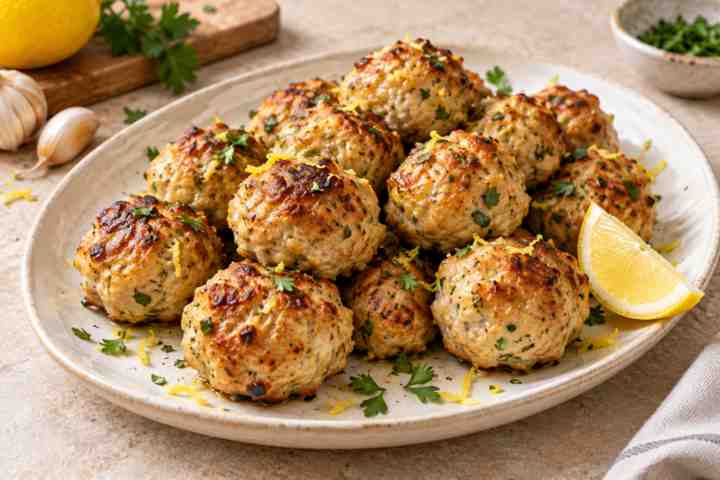

Lemon Garlic Chicken Meatballs (Easy Oven-Baked Recipe)
Ingredients
Method
- Heat oven to 425°F (220°C). Line a rimmed baking sheet with parchment rated for that temperature. Mix breadcrumbs and milk in a large bowl and let stand 2 minutes. Stir in egg, Parmesan, garlic, parsley, lemon zest, salt and pepper. Add cold ground chicken and fold gently just until evenly combined. Do not taste raw mixture.

- Divide the mixture into 16 equal portions, about 43 g each. Lightly oil clean hands with part of the measured olive oil and roll gently into balls about 1½ inches (4 cm) wide. Place with space between them on the lined sheet. Brush remaining measured oil lightly over the tops. Wash hands and utensils after contact with raw chicken.
- Bake on the middle rack for about 18–22 minutes, checking early. Insert a food thermometer into the center of several meatballs, including the largest: each must reach 165°F (74°C). Continue cooking if needed; color alone is not a safety check. Transfer cooked meatballs to a clean serving dish and gently toss with the measured lemon juice. Serve four meatballs per portion.
Notes
Get easy recipes in your inbox
Join TasteWiser for new recipes, cooking tips and fresh inspiration.
Confirm your email to subscribe. Unsubscribe anytime.