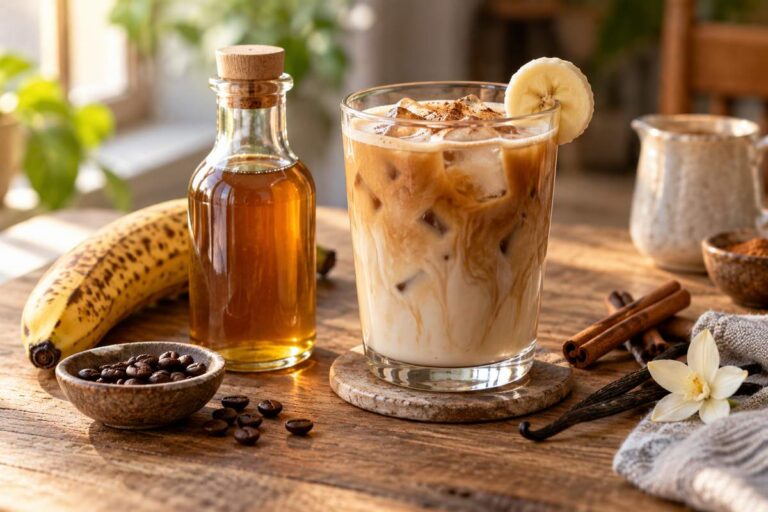
Almond Coffee Syrup (Easy 3-Ingredient Recipe)
Almond coffee syrup adds a sweet, marzipan-like flavor to hot coffee, iced lattes and cold brew. This simple version uses sugar, water and food-grade almond extract. No nuts are soaked or toasted, and no milk goes into the bottle.
A small batch makes it easy to adjust the amount in each drink. Start with a teaspoon, stir well and add more if you want a sweeter coffee. The printable card at the end includes the complete formula, approximate yield and timings.
What Kind of Almond Syrup Is This?
This almond coffee syrup is an extract-flavored simple syrup. The sugar-water base carries the almond aroma and mixes readily into drinks. It is not almond milk, almond butter, or a syrup made by steeping ground nuts.
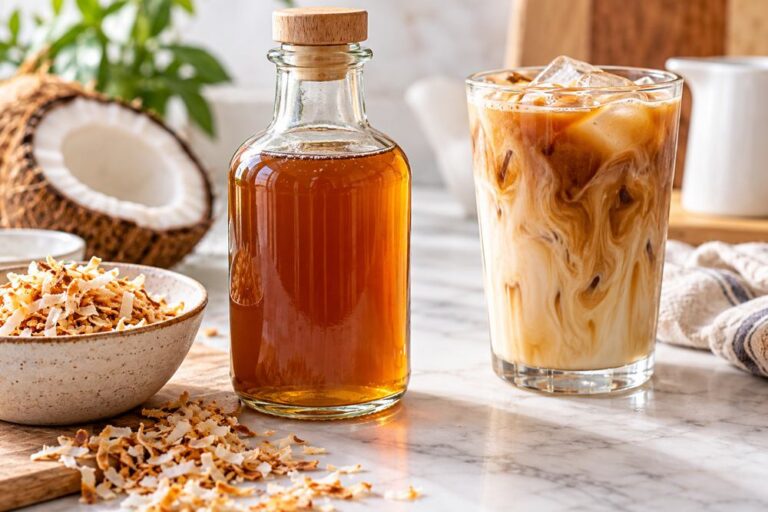
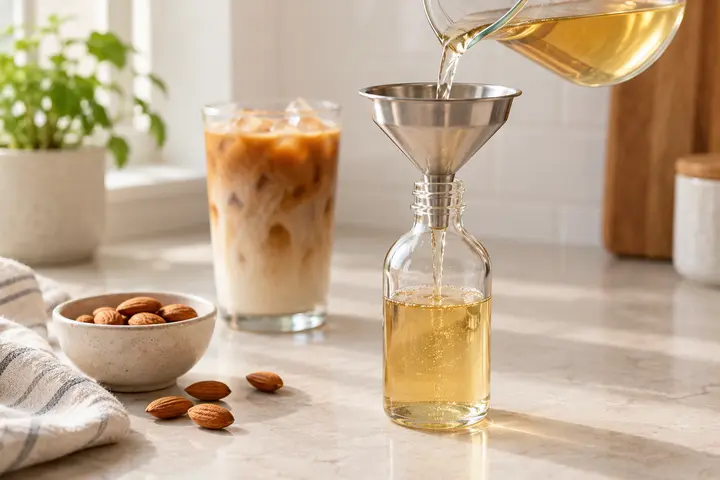
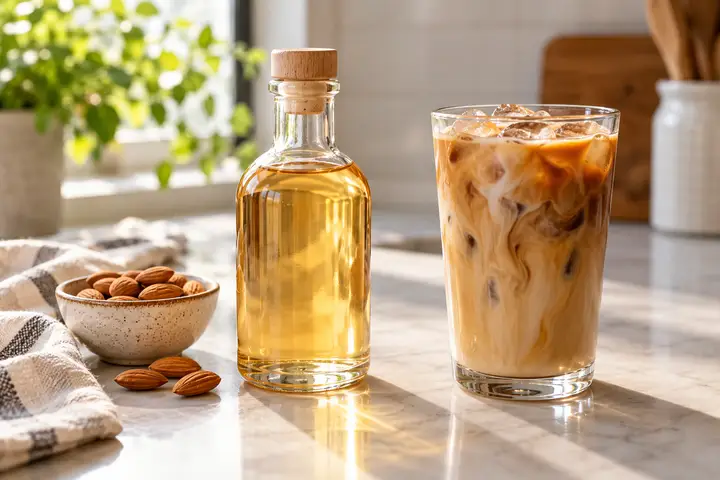
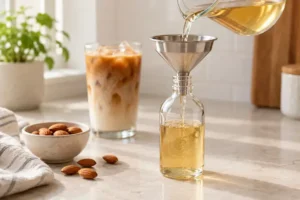
It is also not presented as a toasted-almond syrup or a traditional orgeat recipe. Those use different ingredients or methods. Almonds beside the bottle in the generated photos are serving props and flavor cues, not ingredients in this version.
Ingredients
- 200 g granulated sugar — 1 US cup
- 240 ml water — 1 US cup
- 0.5 teaspoon food-grade almond extract — 2.5 ml; not almond oil or essential oil
Granulated sugar: white sugar keeps the syrup flavor neutral and the appearance clear. Brown sugar introduces a molasses note and a darker color, so it would be a separate flavor variation rather than an identical batch.
Water: use drinking water. The recipe uses one cup of water and one cup of sugar by volume, with gram and milliliter measurements supplied for consistency. Those cup amounts are not equal weights.
Almond extract: choose a food-grade baking extract. Its strength and ingredients vary by brand. The starting amount is deliberately modest because an excessive almond note can dominate coffee. Do not substitute essential oil or an unspecified almond oil.
Check the label if you need to avoid nuts, alcohol or another ingredient. Some extracts contain alcohol or are made from different flavor sources. The name alone is not enough to establish suitability for a particular dietary requirement.
Equipment
You need a small saucepan, a spoon or spatula, a kitchen scale, measuring jug, measuring spoon and a clean heat-safe bottle or jar with a lid. A funnel makes pouring easier. Choose a container with room for the estimated batch rather than forcing hot liquid into a narrow bottle.
How to Make Almond Coffee Syrup
1. Combine sugar and water
Place 200 g granulated sugar and 240 ml water in a small saucepan. Stir to moisten the sugar. Have a clean heat-safe jar or bottle ready; wash the container, lid and funnel thoroughly before use.
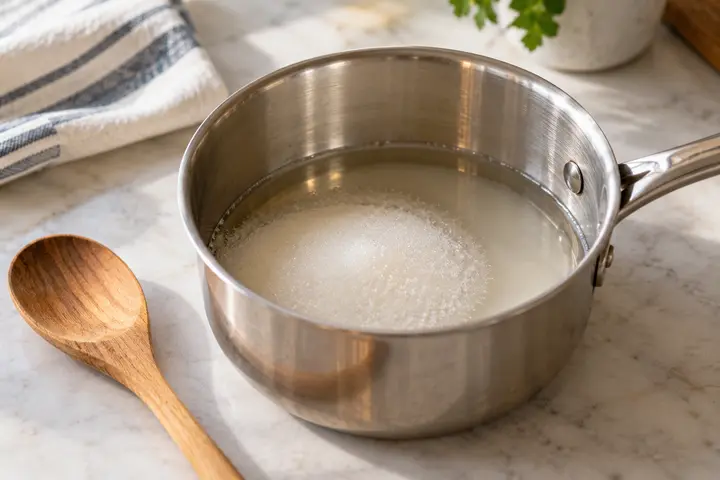
2. Dissolve gently
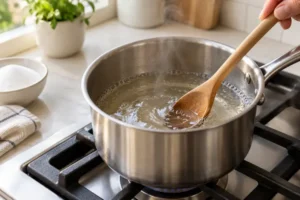
Warm over medium-low heat, stirring until all sugar dissolves and the syrup looks clear, about 3–5 minutes. Avoid a prolonged rolling boil or caramelizing the sugar. Remove from the heat as soon as the syrup is clear.
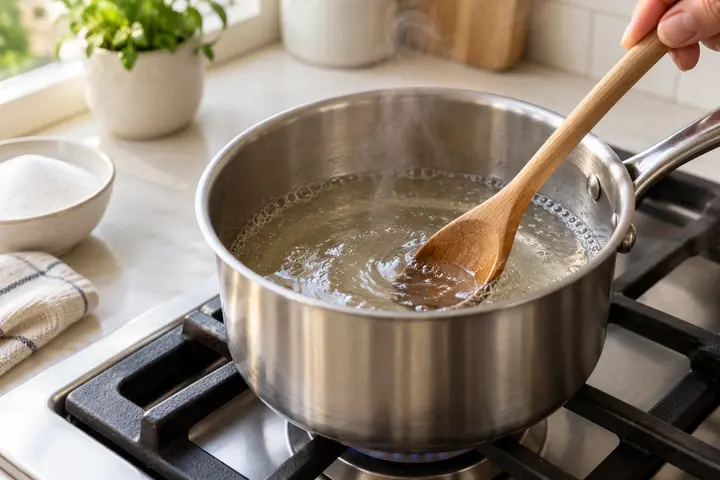
3. Add almond extract
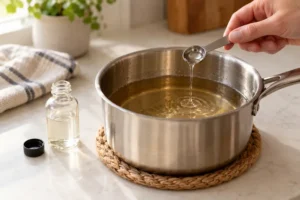
Let the syrup stop bubbling and cool briefly, then stir in ½ teaspoon food-grade almond extract. Use a proper measuring spoon. Extract strength varies; assess flavor later in a diluted drink rather than tasting hot syrup.
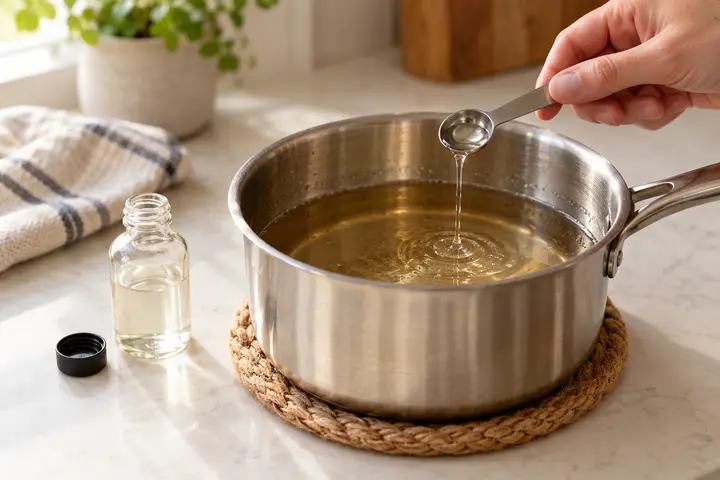
4. Cool, measure and refrigerate
Cool until safe to handle, allowing about 20 minutes as a guide. Measure the finished syrup: expect roughly 360 ml, or 24 US tablespoons, but evaporation changes yield. Transfer to the clean bottle, close and refrigerate promptly. Label with the date and use within 7 days as a conservative quality target. This is not a shelf-stable canning recipe.
How Much Syrup Should I Add to Coffee?
For almond coffee syrup, begin with 1 teaspoon in a normal cup of coffee or a small latte. Stir and taste the finished drink, then increase gradually. A larger iced latte may suit 2–3 teaspoons, depending on your coffee strength and sweetness preference.
For iced coffee, stir the syrup into the coffee before adding ice and milk. This makes it easier to distribute the flavor instead of leaving a sweet layer at the bottom. In a hot latte, mix with the espresso before adding the warm milk.
For a simple almond-flavored iced latte, combine 60 ml espresso, 1–2 teaspoons of syrup, 180 ml cold milk and ice. That is a serving suggestion; the nutrition card below describes the syrup alone, not the complete latte.
Flavor Adjustments
Assess the almond flavor in a diluted coffee drink after the syrup cools. If it is too mild, you can add another ⅛ teaspoon extract to the batch, stir and retest. Record the final amount so you can reproduce the next bottle.
If the almond coffee syrup is too strong, adding more milk or coffee to your serving can reduce its intensity. A larger batch of plain syrup can also dilute the bottle, but this changes the yield and nutrition per spoonful. Do not keep adding sugar to try to remove the almond taste.
An optional vanilla accent uses a small amount of vanilla extract, added off the heat with the almond extract. This makes a four-ingredient variation and is not part of the main card. The basic formula is intended to remain a straightforward almond syrup.
Troubleshooting
Why is the syrup thinner than a shop-bought bottle?
This is a simple sugar-water syrup without commercial thickeners. It should pour easily and become slightly thicker when chilled. A long reduction can make it sweeter per spoonful and reduce the yield; that is not needed for the stated formula.
Why are there sugar crystals?
Undissolved sugar and crystals on the saucepan sides can contribute. Stir while warming until the base is clear, and avoid letting sticky residue dry around the bottle opening. If an otherwise fresh batch develops crystals, gentle reheating can dissolve them, but reheating does not rescue spoiled syrup.
Why did the syrup turn brown?
White-sugar syrup should remain clear or lightly tinted by the extract. Prolonged cooking or too much heat can change its color and taste. Remove it once the sugar dissolves; the goal is a mixing syrup, not caramel.
Can I use less sugar in the bottle?
Changing the sugar-water ratio changes sweetness, texture and storage behavior. For less sweetness in a drink, use a smaller serving of the original syrup. This article does not provide a tested reduced-sugar or sugar-free substitute.
Storage and Handling
Keep almond coffee syrup refrigerated in a clean closed container at 40°F (4°C) or below. Use within 7 days as a conservative quality target for this untested home batch. Make a half batch if you only drink flavored coffee occasionally.
Pour out each serving or use a clean spoon; do not return a spoon that has touched milk or your drink to the bottle. Date the container and avoid topping an old bottle up with fresh syrup.
Discard the whole batch if you notice mold, unusual cloudiness, gas or an unexpected smell. Do not skim mold or taste to check safety. This recipe has not been validated for room-temperature storage or canning. General refrigerator guidance is available from the FDA; it does not establish a shelf life for this specific syrup.
Related Coffee Recipes
Build a small home coffee menu with vanilla syrup for coffee and hazelnut syrup for coffee. Keep each bottle separate so you can control flavor and sweetness instead of combining several full syrup servings.
For a chocolate-and-almond flavor idea, use a little almond coffee syrup alongside homemade mocha syrup, reducing the total sweetener to taste. The combination is a serving suggestion rather than a tested standalone recipe.
Nutrition Card
Estimated per 1 US tablespoon (15 ml), assuming approximately 360 ml total yield: 34 calories, 8.3 g carbohydrates, 8.3 g sugar, 0 g fat, 0 g protein, 0 g fiber and approximately 0 mg sodium. Extract brands and actual evaporation can change the estimate.
Calories Card
Approximately 34 calories per tablespoon, or about 11 calories per teaspoon. A coffee drink’s milk, cream and other additions are not included. Measure the finished yield if you need a more precise portion estimate.
Frequently Asked Questions
Can I make almond coffee syrup without actual almonds?
Yes. This recipe uses food-grade almond extract for the flavor, so no whole or ground almonds are added. Read the extract label if allergy or dietary suitability matters.
Is almond syrup the same as almond milk?
No. Almond milk is a beverage or milk substitute. This almond coffee syrup is a concentrated sweetener and flavoring used in small amounts, not a replacement for the milk in a latte.
Can I call it toasted almond syrup?
Not for this method. No toasting is involved. A toasted version needs its own recipe and flavor development rather than a change of title.
Can I use it in cold brew?
Yes. Stir a small measured amount into cold brew, then add milk or water to your usual dilution. Taste the complete drink before adding more syrup.
Is it sugar-free?
No. Sugar is the main ingredient after water, and almond coffee syrup adds sugar to a drink. A sugar substitute would require a separately developed recipe.
Final Thoughts
This almond coffee syrup is a simple starting point for homemade almond syrup for iced coffee, lattes and cold brew. Dissolve the sugar gently, add a measured extract dose off the heat and keep the bottle refrigerated. Start with a small serving so the almond flavor complements your coffee.
Follow us on Instagram for more Tastewiser recipes.
Follow us on Pinterest for more home-café ideas.

Almond Coffee Syrup
Ingredients
Equipment
Method
- Place 200 g granulated sugar and 240 ml water in a small saucepan. Stir to moisten the sugar. Have a clean heat-safe jar or bottle ready; wash the container, lid and funnel thoroughly before use.
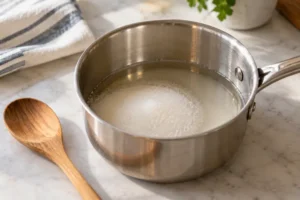
- Warm over medium-low heat, stirring until all sugar dissolves and the syrup looks clear, about 3–5 minutes. Avoid a prolonged rolling boil or caramelizing the sugar. Remove from the heat as soon as the syrup is clear.
- Let the syrup stop bubbling and cool briefly, then stir in ½ teaspoon food-grade almond extract. Use a proper measuring spoon. Extract strength varies; assess flavor later in a diluted drink rather than tasting hot syrup.
- Cool until safe to handle, allowing about 20 minutes as a guide. Measure the finished syrup: expect roughly 360 ml, or 24 US tablespoons, but evaporation changes yield. Transfer to the clean bottle, close and refrigerate promptly. Label with the date and use within 7 days as a conservative quality target. This is not a shelf-stable canning recipe.
Notes
Get easy recipes in your inbox
Join TasteWiser for new recipes, cooking tips and fresh inspiration.
Confirm your email to subscribe. Unsubscribe anytime.