Tinned Fish Charcuterie Board with Sardines, Salmon and Tuna
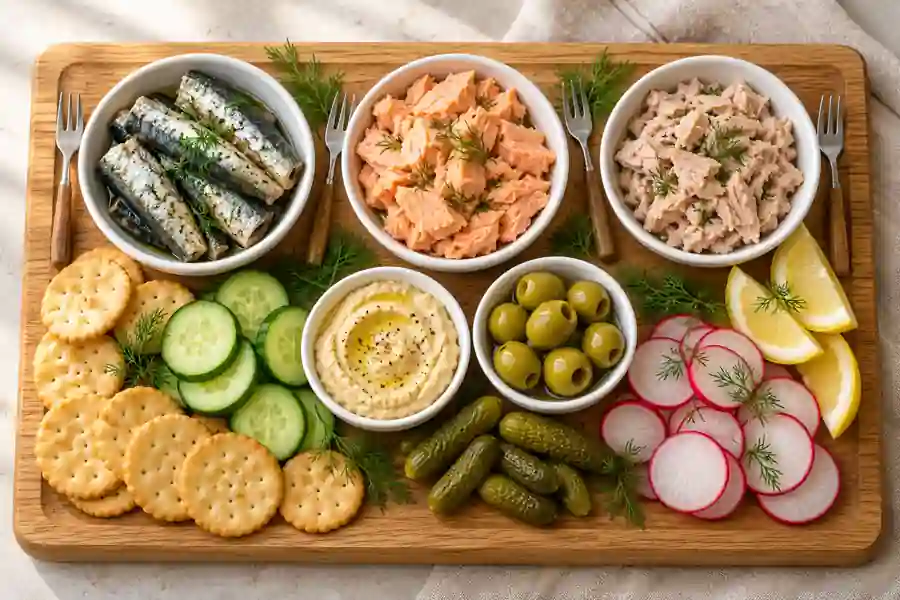
A tinned fish charcuterie board turns a few pantry staples into a generous platter of salty fish, crisp vegetables and crunchy crackers. This version pairs sardines, salmon and light tuna with hummus, olives, cornichons and lemon. Each fish stays in its own bowl, so guests can start with a familiar flavor and build their own bites.
The trick is balance. Rich sardines need something sharp, soft tuna benefits from crunch, and salmon works beautifully with lemon and dill. You do not need expensive specialty tins or a complicated spread to get those contrasts right.
What Is a Tinned Fish Charcuterie Board?
It is a grazing board built around ready-to-eat canned fish and small accompaniments. Traditional charcuterie usually centers on cured meat; this seafood variation is also called a fish grazing board or seacuterie board. Here, the fish takes the lead and the crackers, vegetables and dips support it.
Think of it as a collection of small combinations rather than one mixed fish salad. Keep the individual flavors separate and offer a serving fork for each bowl. Someone who loves sardines can enjoy them whole, while a first-time fish-board guest can choose a mild tuna bite.
Why This Board Works
Three different fish give the platter variety without making the shopping list overwhelming. Sardines bring a stronger, savory flavor, canned salmon adds tender flakes, and light tuna gives you a mild starting point. The cucumber and radishes break up the richness, while cornichons and lemon add a bright finish.
Everything has a job. Crackers provide a dry, sturdy base. Hummus adds a creamy layer. Olives contribute a salty bite, so there is no need to sprinkle salt across the finished board. Keeping wet ingredients in bowls also helps the crackers stay crisp.
Ingredients for the Board
The exact quantities are in the recipe card at the end. Buy ready-to-eat, commercially prepared shelf-stable canned fish and check each label for storage instructions. The fish quantities are drained weights; the number of tins you need will depend on their size.
Choose three complementary fish
Sardines: Oil-packed sardines hold their shape well and make an attractive bowl. Drain excess oil without squeezing or breaking them apart. If you already enjoy them on bread, our sardine toast recipes offer more ideas for a tin you have left over.
Salmon: Plain canned salmon provides a softer texture and a different color. Gently separate the flakes instead of mashing it. Check for any bones you prefer to remove before serving.
Light tuna: Choose plain canned light tuna for a mild option that does not compete with the other fish. Water-packed tuna works well here. Drain it thoroughly, then loosen the flakes with a fork.
Add crunch, creaminess and acidity
Crackers and vegetables: Plain crackers keep the focus on the fish. Cucumber rounds add a cool crunch, and thin radish slices bring a peppery bite. Dry the vegetables after washing so water does not collect on the serving board.
Hummus, olives and cornichons: Plain hummus is an easy creamy accompaniment. Use pitted olives for easier eating, and drain both the olives and pickles. Small cornichons fit neatly into gaps between bowls.
Lemon and dill: Put lemon wedges within reach rather than squeezing juice over the whole platter. Guests can choose how much acidity they want. A little fresh dill is enough to finish the fish without hiding its flavor.
How to Make a Tinned Fish Charcuterie Board
Set out a clean board, five small bowls and three serving forks before opening the fish. You can use a large platter instead of a wooden board; the arrangement works the same way.
Step 1: Prepare the vegetables
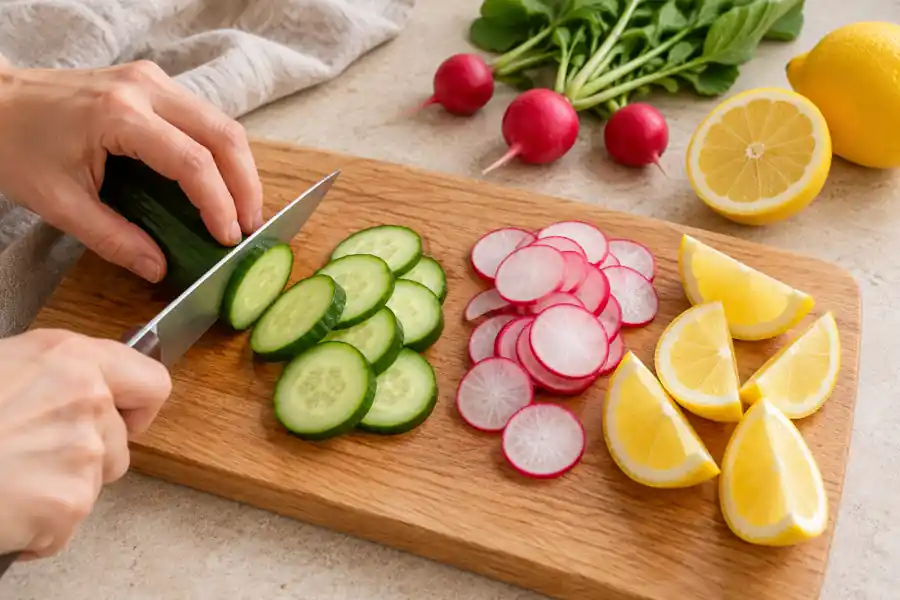
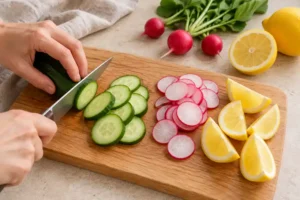
Wash and dry the cucumber, radishes, lemon and dill. Slice the cucumber into rounds and the radishes thinly. Cut the lemon into wedges. Drain the olives and cornichons, then pat them dry. Keep the fish sealed while you prepare the accompaniments.
Step 2: Drain and portion the fish
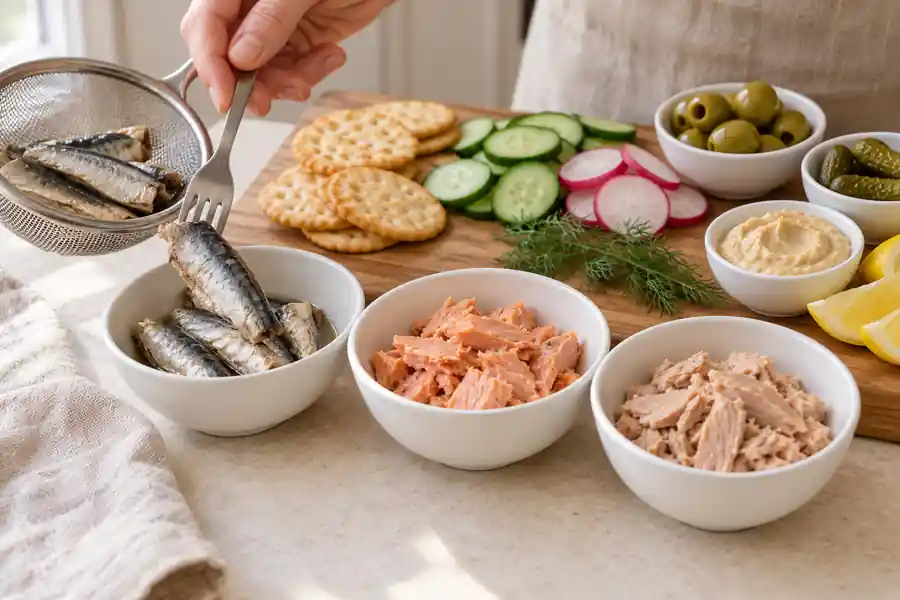
Clean the tin lids before opening. Drain the ready-to-eat sardines, salmon and light tuna, then transfer them into three separate small bowls. Keep the sardines mostly whole and gently loosen the salmon and tuna with separate forks. Check for any bones you prefer to remove. Discard the sharp lids.
Step 3: Arrange the bowls and vegetables
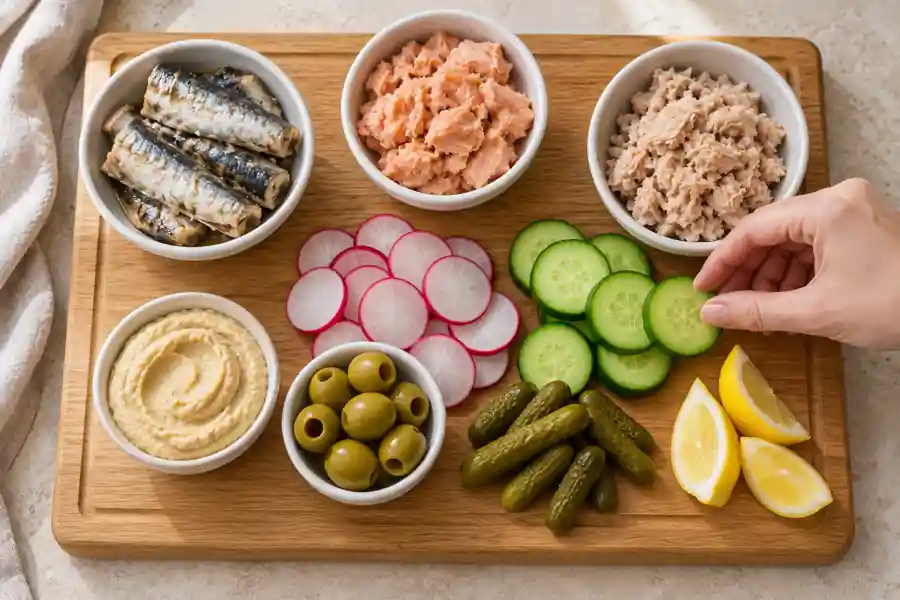
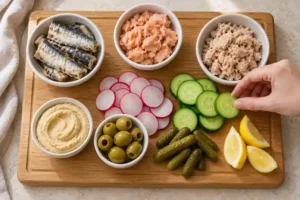
Place the three fish bowls across a clean serving board. Add smaller bowls of hummus and olives, then arrange the cucumber, radishes, cornichons and lemon in distinct clusters. Leave dry spaces around the edge for the crackers.
Step 4: Finish and serve
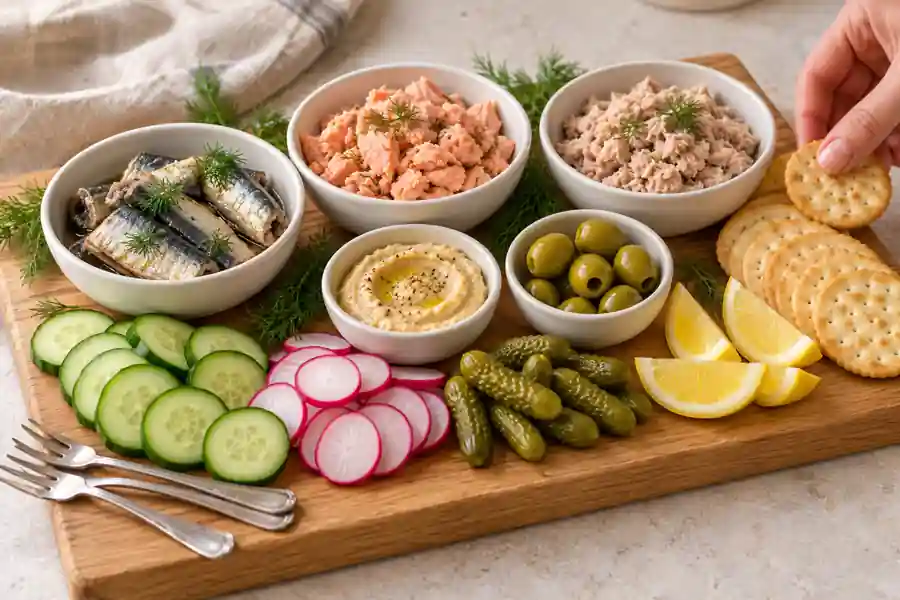
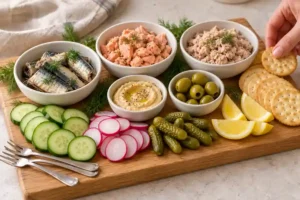
Add the crackers just before serving and scatter the dill sparingly over the fish. Give each fish bowl its own serving fork. Serve promptly in small portions, keeping any reserved fish chilled. Replace nearly empty bowls with fresh ones rather than topping up used bowls.
Easy Bites to Try First
For a mild first bite, spread a little hummus on a cracker and add tuna plus a cucumber slice. For something brighter, pair salmon with radish and a squeeze of lemon. Sardines work well with a cornichon on the side, which gives a sharp contrast to their richness.
Keep the bites small enough to eat comfortably. A heavily loaded cracker tends to break before it reaches your plate. Guests can also use cucumber rounds as an extra base, though they are more slippery than crackers.
Tips for a Better Tinned Fish Charcuterie Board
Start with bowls, then fill the gaps. Arrange the fish first, followed by hummus and olives. Tuck the vegetables into clusters around them and add crackers last. This gives the board a clear structure without needing a decorative centerpiece.
Keep the fish recognizable. Leave sardines mostly whole and keep salmon and tuna in loose flakes. Mixing all three together loses the different textures that make the board interesting.
Give wet foods a boundary. Drain pickles well and keep fish juices inside their bowls. Do not put crackers beneath the fish or pile them against a puddle of brine.
Use separate utensils. One fork per fish bowl makes it easier to serve neatly. Offer a spoon or spreader for the hummus as well, and give everyone a small plate.
Check dietary needs before shopping. This recipe contains fish; many crackers contain wheat, and hummus commonly contains sesame. Read labels and ask guests about allergies rather than assuming a swap makes the entire board suitable.
Variations and Serving Ideas
You can make the tinned fish charcuterie board milder by using two bowls of tuna and one of salmon, or use two sardine varieties for guests who already enjoy them. Choose plain or lightly seasoned fish when starting out so the pickles, lemon and dill remain useful across the whole platter.
If you prefer a different creamy accompaniment, serve a small bowl of quick and easy tartar sauce beside the board. Our easy dips with few ingredients also give you options for a larger gathering. These additions are optional and are not included in the recipe card’s nutrition estimate.
The listed quantities make four appetizer portions. For eight guests, double the ingredients and arrange two smaller boards so each group can reach the fish comfortably. Keep spare portions refrigerated and bring them out in fresh bowls as needed.
Make-Ahead and Storage
Wash, slice and refrigerate the vegetables in separate covered containers ahead of serving. Keep unopened shelf-stable fish according to its label, and wait until you are ready to assemble the board before opening it. Store crackers separately so they stay dry.
Once the fish is opened, keep it refrigerated when you are not serving it. Put any untouched reserved fish into a clean covered food-safe container and follow the brand’s instructions for how long to keep it. Store the fish and vegetables separately from crackers. Do not mix fish from used serving bowls back into an untouched reserve.
For the assembled tinned fish charcuterie board, keep perishables at 40°F (4°C) or below when holding. Discard perishables that have been above refrigeration temperature for more than two hours, or one hour when the surroundings are above 90°F (32°C). Count preparation and serving time together.
For a longer gathering, use small portions and replace nearly empty bowls with freshly chilled ones. A wooden board alone does not keep food cold. The FDA buffet guidance explains cold holding, the time limits and why fresh food should not be added to a used serving dish.
Frequently Asked Questions
What is the best fish for a tinned fish charcuterie board?
A mix of sardines, salmon and light tuna gives you different flavors and textures. Start with fish you already enjoy, then add one variety you would like to try. You do not need premium tins for a balanced board.
Should I serve the fish straight from the tins?
Small bowls are easier to arrange and avoid leaving sharp lids or edges near guests. They also give you room for a separate serving fork. Drain the fish before transferring it, especially if the tin contains a lot of oil or water.
Does canned fish need cooking for this recipe?
This recipe uses commercially prepared ready-to-eat canned fish, which does not need cooking before serving. Check the label when shopping. Products that require cooking or refrigeration before opening are outside this recipe’s shelf-stable fish selection.
Can I make it without crackers?
Yes. Add more cucumber rounds or serve an appropriate alternative separately. The texture and portion sizes will change, and you should check all ingredient labels if you are adapting the board for a specific dietary need.
How do I keep crackers from going soggy?
Dry the vegetables, drain the fish and pickles, and keep moist ingredients in bowls. Add crackers immediately before serving, in their own dry clusters around the board’s edge.
Bring the Board Together
A good tinned fish charcuterie board needs a few clear contrasts: savory fish, something crisp, a creamy spread and a sharp bite. Keep the ingredients separate, add crackers at the end and let everyone build a combination they enjoy. This easy tinned fish charcuterie board with sardines, salmon and tuna is a practical starting point for your next small gathering.
Tinned Fish Charcuterie Board Recipe
Follow us on Pinterest for more recipes and cooking ideas. · Follow us on Instagram

Tinned Fish Charcuterie Board
Ingredients
Equipment
Method
- Wash and dry the cucumber, radishes, lemon and dill. Slice the cucumber into rounds and the radishes thinly. Cut the lemon into wedges. Drain the olives and cornichons, then pat them dry. Keep the fish sealed while you prepare the accompaniments.
- Clean the tin lids before opening. Drain the ready-to-eat sardines, salmon and light tuna, then transfer them into three separate small bowls. Keep the sardines mostly whole and gently loosen the salmon and tuna with separate forks. Check for any bones you prefer to remove. Discard the sharp lids.

- Place the three fish bowls across a clean serving board. Add smaller bowls of hummus and olives, then arrange the cucumber, radishes, cornichons and lemon in distinct clusters. Leave dry spaces around the edge for the crackers.
- Add the crackers just before serving and scatter the dill sparingly over the fish. Give each fish bowl its own serving fork. Serve promptly in small portions, keeping any reserved fish chilled. Replace nearly empty bowls with fresh ones rather than topping up used bowls.
Notes
Get easy recipes in your inbox
Join TasteWiser for new recipes, cooking tips and fresh inspiration.
Confirm your email to subscribe. Unsubscribe anytime.