Cream Cheese Pound Cake in a Loaf Pan
Cream cheese pound cake is a simple loaf with a golden crust, a close buttery crumb and a gentle tang. The cream cheese goes directly into the batter rather than forming a filling, so every slice has the same soft texture. This version makes one 23 × 13 cm (9 × 5-inch) loaf, enough for ten slices without the large quantities needed for a Bundt cake.
The cake needs no frosting. Serve it plain with coffee, offer fresh berries separately, or use thin slices as the base for a plated dessert. A measured amount of baking powder gives the loaf a little help while careful creaming supplies the rest of its lift. Letting the cake cool before cutting is just as useful as mixing it correctly: warm slices can seem gummy even when the cake is baked through.
Why Cream Cheese Works in Pound Cake
Full-fat cream cheese adds moisture, fat and a mild cultured flavor. It also makes the batter thicker than an ordinary milk-based loaf cake. When beaten with softened butter and sugar, it helps create a fine crumb that holds together when sliced. The finished cake should feel substantial without being heavy or wet.
Use block-style cream cheese where available. Spreadable products can contain more water and stabilizers, which change how the batter behaves. The ingredients should be softened enough to combine smoothly, but the butter should still hold its shape rather than look shiny or melted.
Ingredients and Exact Quantities
For one loaf, use 170 g unsalted butter, 115 g full-fat block cream cheese, 250 g granulated sugar, 3 large eggs (about 150 g without shells), 190 g all-purpose flour, 3 g baking powder, 2 g fine salt, and 10 ml alcohol-free vanilla flavoring. Have a little additional butter for greasing the pan; it is not included in the nutrition estimate.
This cream cheese pound cake contains no milk, glaze or filling. Optional berries, whipped cream, sauces and drinks are excluded from the per-slice nutrition. Measure the flour by weight because a tightly packed cup can add enough extra flour to make a small loaf noticeably dry.
Ingredient Notes and Substitutions
- Butter: Unsalted butter lets you control the salt. If using salted butter, omit the added salt, remembering that brands vary.
- Cream cheese: Choose plain full-fat cream cheese, not a sweetened or flavored spread. Reduced-fat versions can produce a different crumb and are not a direct equivalent.
- Eggs: Room-temperature eggs blend more readily. Crack them into a separate bowl first so shell fragments are easy to remove.
- Flour: All-purpose flour provides enough structure for clean slices. Do not replace it with almond or coconut flour in the same quantity.
- Vanilla: Use alcohol-free vanilla flavoring. For a citrus variation, add 4 g finely grated lemon or orange zest without adding juice.
- Sugar: Granulated sugar gives a clean vanilla flavor. A large reduction changes both tenderness and aeration, so avoid treating it as a simple sweetness adjustment.
How to Make Cream Cheese Pound Cake
1. Prepare the Pan and Dry Ingredients
Heat the oven to 165°C (325°F), conventional heat, with a rack in the lower-middle position. Grease a 23 × 13 cm metal loaf pan and line the base and long sides with parchment, leaving handles. Whisk the flour, baking powder and salt together in a bowl. A dark pan can brown the crust sooner; begin checking early if yours is very dark.
2. Cream and Mix the Batter
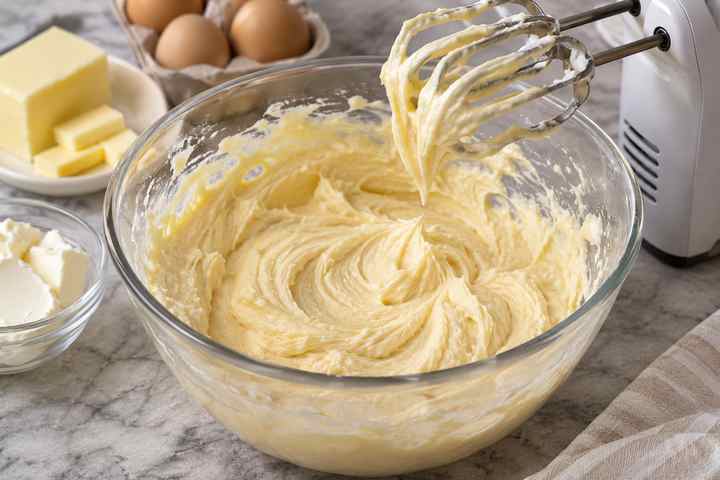
Beat the softened butter and cream cheese until completely smooth, scraping the bowl. Add the sugar gradually and beat for about 3 minutes at medium speed, until the mixture looks lighter and fluffy. Scrape the bowl again, including the base where dense cream cheese can hide.
Add the eggs one at a time, beating just until incorporated after each addition. Mix in the vanilla. A slightly uneven appearance is acceptable, but large cold lumps mean the ingredients were not sufficiently softened. Add the flour mixture in two additions at low speed, stopping as soon as no dry streaks remain. Finish with a spatula rather than continuing to beat.
3. Fill the Pan and Bake
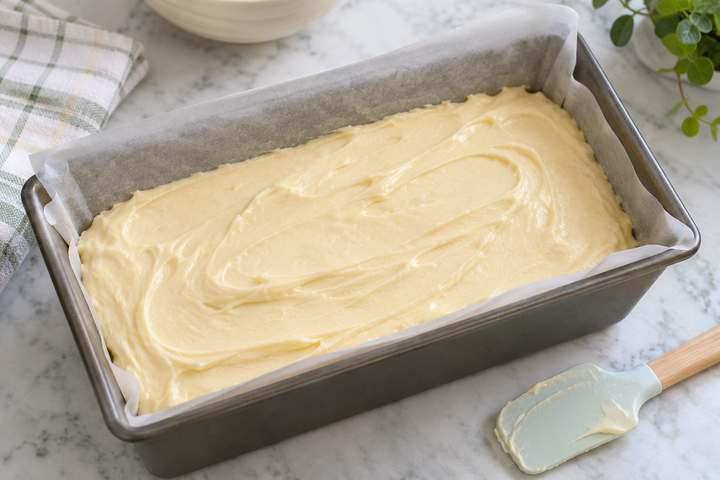
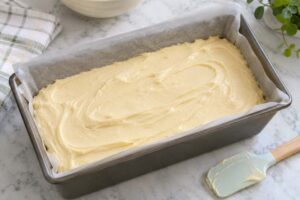
Transfer the thick batter to the prepared pan and spread it into the corners. Smooth the top. Bake for 65–75 minutes, checking at 60 minutes. The surface should be deeply golden and a skewer inserted into the center should come out clean or with a few dry crumbs. If the top is darkening before the middle is done, tent it loosely with foil.
4. Cool Before Slicing
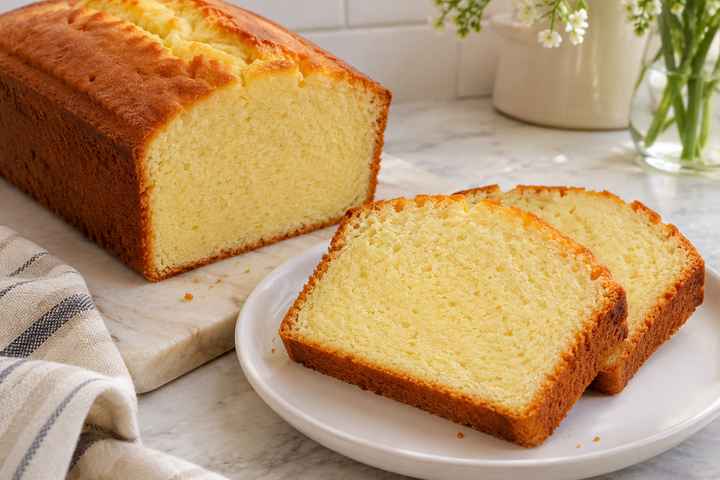
Let the cake rest in its pan for 15 minutes. Lift it out using the parchment and set it on a rack. Cool for at least 90 minutes before slicing into ten portions. A long serrated knife and gentle sawing motion keep the crust from compressing the crumb. Do not wrap the loaf while it is still warm, because condensation softens the crust.
Troubleshooting a Dense or Uneven Loaf
A wet line near the bottom: The loaf may be underbaked, the batter may have been poorly blended, or the cake may have been sliced while warm. Check the center with a skewer rather than judging by the crust alone.
A heavy, compact crumb: Butter and cream cheese that are too cold do not aerate well. Conversely, melted butter cannot hold the same air. Aim for soft but cool ingredients, and scrape the bowl before adding the flour.
A cracked top: A long central crack is normal for a thick loaf cake. The outer batter sets before the center finishes expanding. It is not a sign that the cake has failed.
Large tunnels: Mixing too vigorously after adding flour can create a tougher, uneven interior. Use low speed and stop promptly. Measure the baking powder rather than adding an extra spoonful for more height.
A dark crust and raw center: Confirm the oven temperature and pan size. A smaller pan holds a deeper layer of batter that needs longer. Avoid repeatedly opening the oven early in baking.
Serving Suggestions
Plain slices show off the vanilla and cream cheese flavor. For a dessert table, offer berries or a spoonful of cream on the side so guests can choose their own additions. A lightly toasted slice also works with fruit, although it should be watched closely because the sugar browns quickly.
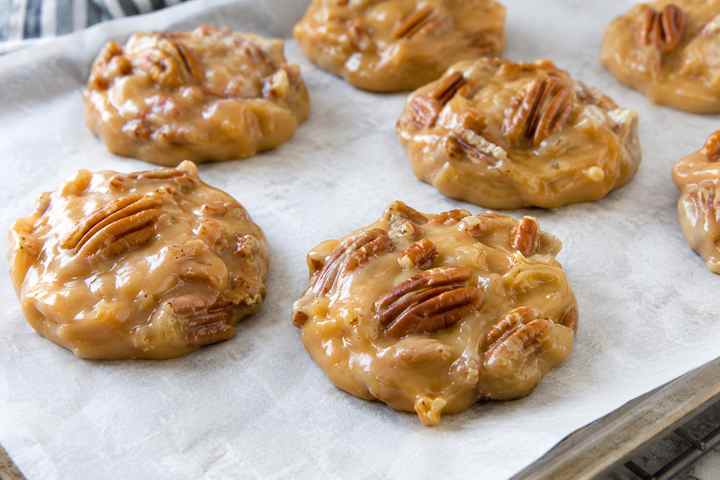
For a varied holiday selection, serve this loaf alongside gingerbread cake, mini pecan pies or lemon crinkle cookies. If you want a spiced quick bread for another occasion, pumpkin chocolate chip bread offers a different flavor and mixing method.
Storage, Freezing and Rewarming
Once fully cool, wrap the cake tightly and refrigerate for up to 5 days. Bring individual slices to room temperature before serving for a softer texture. This conservative storage method also keeps the cake separate from warm kitchen conditions. There is no cream cheese frosting to add later.
Freeze the whole loaf or individual slices for up to 2 months. Wrap first, then place in a freezer bag or airtight container. Thaw overnight in the refrigerator while wrapped. To warm a slice, microwave briefly in 5-second increments until just softened; overheating can make it tough or oily. Avoid repeatedly warming the entire loaf.
Raw batter contains flour and eggs. Do not taste it before baking, and wash bowls and utensils after handling it, following CDC guidance on raw flour and dough. Keep eggs and cream cheese refrigerated until needed rather than leaving them out for an extended period.
Frequently Asked Questions
Can I use a smaller loaf pan?
A smaller pan can overflow or leave the center underdone while the edges darken. Use the stated 23 × 13 cm pan. If your pan differs substantially, choose a recipe developed for that size rather than guessing a new baking time.
Does this cake taste like cheesecake?
No. Cream cheese pound cake has a baked cake crumb, not a custard filling. The cream cheese adds a gentle tang and tenderness, while butter and vanilla remain prominent.
Can I add chocolate chips?
A small addition changes the flavor and nutrition, but a large amount can weigh down the batter. For this plain version, keep additions out of the batter and offer chocolate sauce separately if desired.
Why is the batter so thick?
There is no added milk, and both butter and cream cheese are relatively firm ingredients. Thick, smooth batter is expected. Do not thin it with milk simply to make it pourable.
A Simple Loaf for Sharing
A well-cooled cream cheese pound cake gives you neat slices, a golden crust and a rich vanilla crumb without elaborate decoration. Use the correct loaf pan, cream the ingredients carefully and allow enough cooling time for an easy cream cheese pound cake loaf that fits a family dessert table or a make-ahead gathering.
Follow us on Pinterest · Follow us on Instagram

Ingredients
Method
- Heat the oven to 165°C (325°F). Lightly grease a 23 x 13 cm (9 x 5 inch) metal loaf pan and line with parchment, leaving an overhang.
- Beat butter and cream cheese until smooth. Add sugar and beat for about 3 minutes until lighter, scraping the bowl. Beat in eggs one at a time, then vanilla.

- Whisk flour, baking powder and salt separately. Fold into the creamed mixture just until no dry flour remains. Scrape into the prepared pan and smooth the top.
- Bake for 65–75 minutes, checking from 60 minutes. A skewer inserted into the center should emerge without wet batter. Tent loosely with foil if the top browns early. Cool in the pan for 15 minutes, then lift onto a rack and cool for about 90 minutes before slicing into 10 pieces.
Notes
Get easy recipes in your inbox
Join TasteWiser for new recipes, cooking tips and fresh inspiration.
Confirm your email to subscribe. Unsubscribe anytime.