Hot Apple Cider with Orange and Whole Spices
Hot apple cider fills a mug with apple flavor, gentle cinnamon and a little orange. This version starts with pasteurized, nonalcoholic cider and warms it with whole spices. It does not require pressing apples, adding alcohol or making a syrup first.
One saucepan makes six modest servings. Keep the simmer quiet, taste before adding any sweetness and remove the spices when the flavor is balanced. Hot apple cider is useful for a Thanksgiving gathering because it can be strained into a heatproof jug and served separately from coffee or dessert.
Choose the right cider first
For this recipe, cider means unfermented apple cider, not hard cider. Check the label for a nonalcoholic product. Choose pasteurized or otherwise safety-treated cider. A refrigerated bottle is not automatically treated; ask the seller if the label is unclear.
The FDA juice-safety guide explains why untreated juice and cider can carry harmful bacteria. Starting with a treated product keeps this a straightforward warming recipe. The spice simmer is written for flavor and is not a validated home-pasteurization process for raw cider.
Cloudy cider often has a fuller apple flavor than clear filtered juice. Pasteurized apple juice can be used when that is what you have; its finish may be lighter and sweeter. Avoid a sparkling drink, concentrate that has not been diluted according to its label, or a bottle that already contains a strong spice blend.
Ingredients and quantities
Use 1.5 liters pasteurized nonalcoholic apple cider, one small orange weighing about 150 g, two cinnamon sticks, four whole cloves and one whole star anise. The orange is sliced, while the spices stay whole so they can be strained out. There is no added sugar in the base recipe.
Wash the orange under running water before cutting it, then remove any seeds from the slices. You can leave its peel on for a stronger citrus aroma, but taste during simmering. If you dislike bitter peel, use two broad strips of orange zest and the peeled orange slices instead, keeping the thick white pith out.
Two cinnamon sticks about three inches (7.5 cm) long are enough for this pot. Very large sticks or strongly flavored cinnamon can produce a more intense result. Four cloves give a small warming note; a large handful would overwhelm the fruit. One star anise is optional if its licorice-like flavor is not welcome at your table.
Do not substitute tablespoons of ground spice for these whole pieces. Ground cinnamon remains suspended, feels gritty and is difficult to remove with an ordinary strainer. If whole spices are unavailable, use a small pinch of ground cinnamon in individual mugs rather than changing the entire saucepan without tasting.
Equipment and a steady heat
Use a two- to three-liter saucepan with enough space above the liquid to stir safely. A fine-mesh strainer, heatproof jug and heat-safe mugs make serving easier. Handle a filled jug with care; a decorative glass pitcher may not be designed for hot drinks.
An uncovered gentle simmer lets you watch the surface, but it also allows evaporation. Keep the heat low once small bubbles appear around the edge. A rolling boil can concentrate sweetness faster than the spices mellow, leaving less liquid and a harsher balance.
How to make hot apple cider
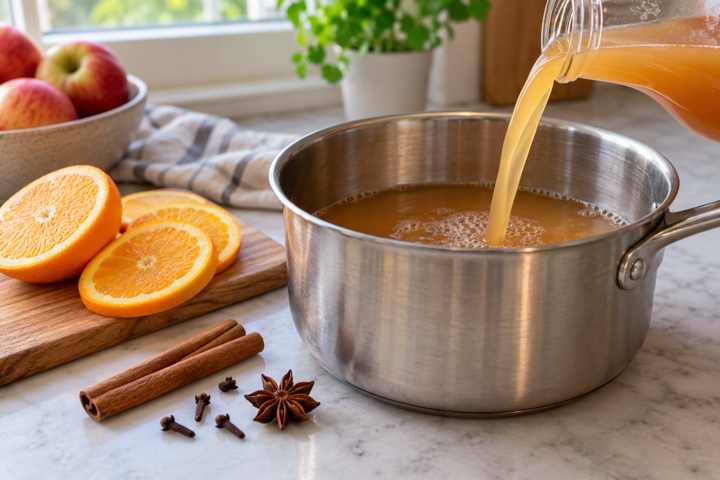
1. Combine cider, orange and whole spices
Pour the cider into the saucepan. Add the orange slices, cinnamon sticks, four cloves and star anise if using. Stir once to wet the floating spices. Set a timer when simmering begins rather than when the cold pan first goes onto the stove.
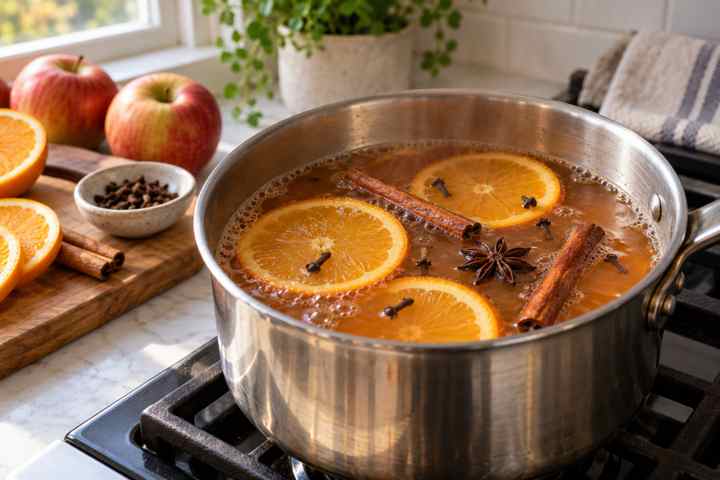
2. Simmer gently and taste
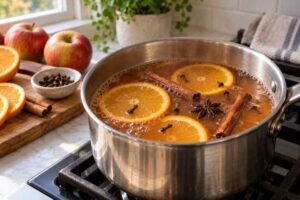
Bring the mixture just to a gentle simmer over medium heat, then reduce to low. Simmer for 20 minutes, stirring occasionally. The surface should show small lazy bubbles, not vigorous boiling. Taste a cooled spoonful at about 15 minutes and again near the end.
If the spice flavor is already strong enough, remove the spices sooner. If the cider is unusually concentrated, add a small splash of water and warm it through. Additional sugar is normally unnecessary; cider and juice brands differ, so taste before considering a sweetener.
3. Strain and serve warm
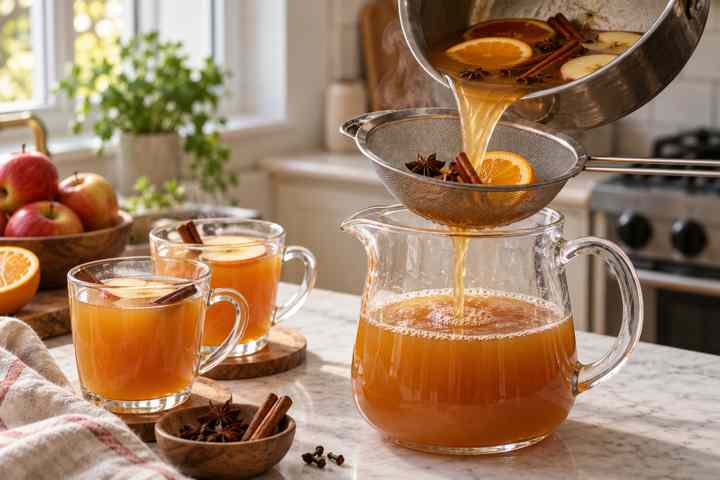
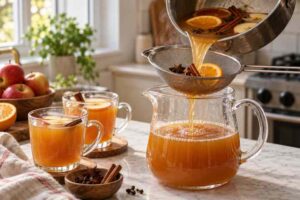
Pour through a fine-mesh strainer into the heatproof jug, catching the fruit and spices. Divide into six servings of roughly 225–250 ml, depending on evaporation. Let mugs cool to a comfortable drinking temperature before sipping.
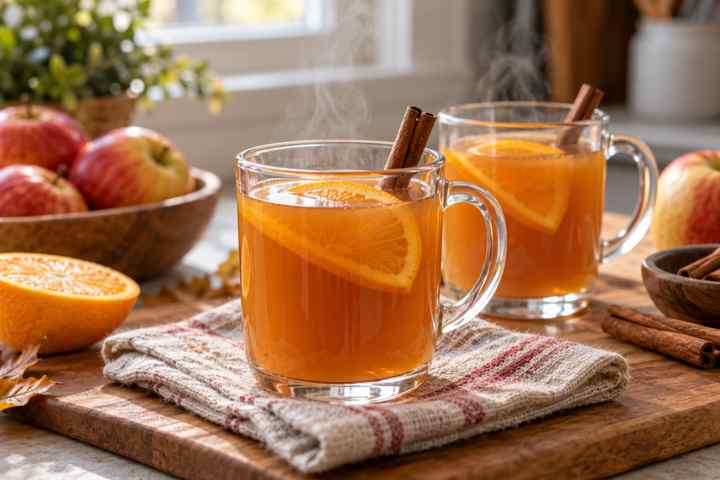
A fresh thin orange slice or cinnamon stick is an optional garnish. Use clean garnish rather than leaving a hard clove or star-anise fragment in a mug where someone could swallow it. Extra garnishes and any optional sweetener are excluded from the nutrition estimate.
Adjustments that keep the apple flavor clear
Hot apple cider should taste of apples first. If the cloves dominate, strain immediately rather than waiting for the full time. Diluting with a little more plain pasteurized cider is more useful than adding sugar to hide bitterness.
For a ginger variation, add two thin slices of fresh ginger during simmering and remove them with the other spices. For a less citrusy drink, use only half the orange. Keep the base amount of cider the same so the serving estimate remains sensible.
Do not add essential oils or decorative dried botanicals intended for crafts. Ingredients for a food recipe need to be suitable for eating. This drink contains no rum, wine, hard cider or alcoholic vanilla extract; it is intended as a nonalcoholic holiday beverage.
Make ahead, storage and reheating
Strain the cider before storing it so the spices do not keep infusing. Divide leftovers into smaller heat-safe containers, cool promptly and refrigerate at 40°F (4°C) or below within two hours. Use within three days, or sooner if the opened cider’s label gives a shorter limit.
Reheat only the amount you need in a saucepan until steaming hot, then let it cool enough to drink. Avoid repeated cycles of warming and cooling the whole batch. A microwave-safe mug can hold a single portion; stir carefully after heating because hot spots can form.
Freeze cooled cider in a freezer-safe container for up to two months for best flavor, leaving expansion space. Thaw in the refrigerator. This is a refrigerated beverage recipe, not a shelf-stable canning process; do not seal warm cider in jars and store it in a cupboard.
If using an appliance to keep drinks warm at a gathering, follow its food-holding instructions and check that it maintains a suitable hot-holding temperature. A switched-off saucepan slowly cooling on the table is not a plan for all-day service. Small fresh batches are easier to manage than an oversized pot left unattended.
Serving ideas
Pour small mugs beside gingerbread cookies or Linzer cookies. Pumpkin coffee cake gives a soft cake option, and cranberry brie bites can be offered separately for a savory snack.
These pairings are serving suggestions rather than ingredients in the drink’s nutrition. Leave a little space in each mug to prevent spills, especially when guests are carrying a plate at the same time. A ladle and stable heatproof serving surface help keep the setup practical.
Frequently asked questions
Is this alcoholic cider?
No. Buy nonalcoholic, unfermented apple cider and check the bottle. Hard cider is a different product and is not used here.
Can I leave the spices in overnight?
Straining before chilling gives more control. Long contact with cloves, peel and star anise can make the drink harsh even though it is refrigerated.
Why is my cider cloudy?
Cloudiness can be normal for unfiltered cider. Follow the product’s storage instructions and discard it if there are signs of spoilage; appearance alone is not a substitute for safe storage.
A warm apple drink for holiday gatherings
Hot apple cider needs good cider, restrained spices and a quiet simmer. Start with a pasteurized nonalcoholic product, strain when the flavor is right and keep leftovers refrigerated. This orange-and-cinnamon apple cider makes an easy Thanksgiving drink without an alcoholic ingredient or a separate sweet syrup.
Follow us on Pinterest · Follow us on Instagram

Hot Apple Cider with Orange and Whole Spices
Ingredients
Method
- Pour cider into a 2–3 liter saucepan. Add orange slices, cinnamon sticks, cloves and optional star anise. Stir once.

- Bring just to a gentle simmer over medium heat; reduce to low. Simmer 20 minutes, stirring occasionally, without a rolling boil. Taste a cooled spoonful around 15 minutes. Remove spices earlier if strong enough.
- Strain into a heatproof jug. Divide into 6 mugs of about 225–250 ml depending on evaporation. Cool to comfortable drinking temperature. Optional clean orange slices or cinnamon sticks for garnish; keep whole cloves/anise out of mugs.
Notes
Get easy recipes in your inbox
Join TasteWiser for new recipes, cooking tips and fresh inspiration.
Confirm your email to subscribe. Unsubscribe anytime.