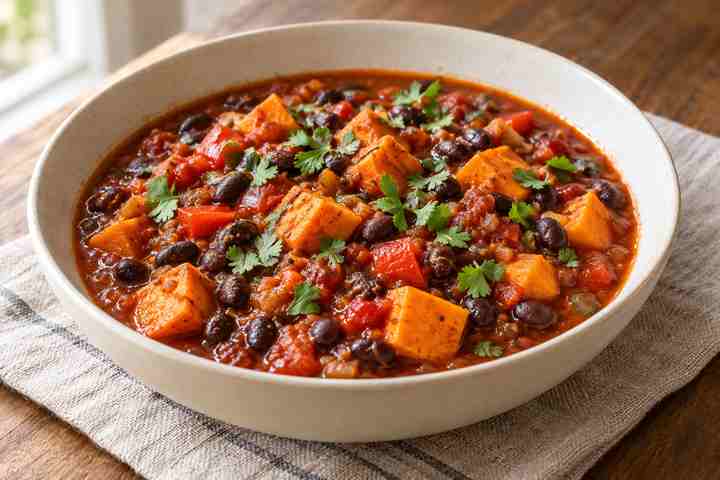
Roasted Cabbage Steaks with Garlic and Lemon
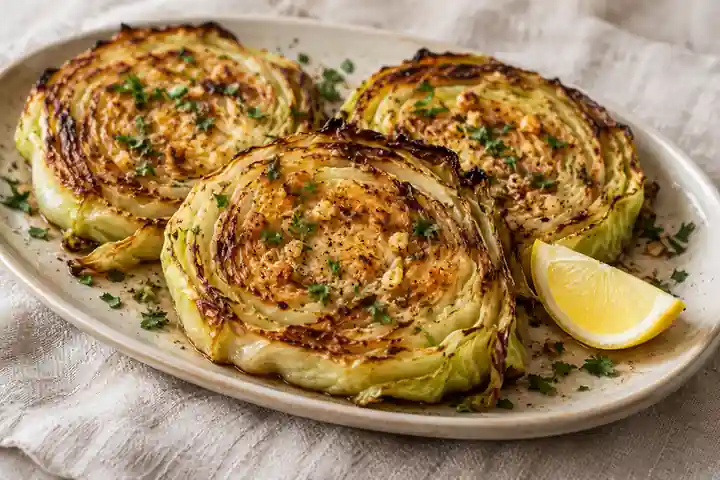
These roasted cabbage steaks have caramelized cut surfaces, tender centers and ruffled edges that turn golden in a hot oven. Garlic goes on near the end so it stays fragrant, while lemon juice and parsley brighten the finished vegetables.
A small green cabbage, olive oil and a few pantry seasonings are all you need for the base. Serve a thick round beside chicken, spoon chickpeas over it for a vegetable-led plate, or add it to a rice bowl with your favorite sauce. The method below focuses on even slices, enough space on the pan and a gentle turn halfway through.
Jump to the recipe card for quantities and complete instructions.
Why You’ll Love These Roasted Cabbage Steaks
Cutting cabbage into steaks exposes a broad surface to the hot pan. That contact helps the leaves brown, while the thicker middle softens without disappearing into a pile of shreds. The result tastes sweeter and more savory than raw cabbage, with a little crunch at the outer edges.
These are vegetable steaks: the name describes the shape and serving style. They make a generous side dish, and you can build a fuller meal around them by adding beans, grains or another protein. Their simple lemon-garlic flavor works with plenty of different dinners.
If you usually cook cabbage in a skillet, this oven method gives you a different texture. For another option, try our buttery fried cabbage with onions.
Ingredients for Roasted Cabbage Steaks
- Green cabbage: Use one small, firm head, about 2 pounds before trimming, yielding roughly 800 grams of usable cabbage. Tight leaves hold together better than loose, floppy leaves.
- Olive oil: Three tablespoons coat the cabbage and help the cut surfaces brown. Reserve a little for the fresh garlic.
- Garlic powder: It seasons the cabbage at the start without the same scorching risk as chopped fresh garlic.
- Paprika: Sweet paprika adds a warm, mild flavor. Use smoked paprika if you prefer a smoky finish.
- Fine salt and black pepper: Fine salt distributes evenly. Different salts vary in density, so adjust if you substitute coarse crystals.
- Fresh garlic: Add finely minced garlic toward the end of roasting, mixed with the reserved oil.
- Lemon juice and parsley: Add these after cooking for a fresh finish. Use extra lemon wedges at the table if you like.
These roasted cabbage steaks are vegan and dairy-free. Check packaged seasonings if you need to avoid a particular allergen. There is no cheese in the recipe, so the cabbage’s browned flavor stays the focus.
How to Cut Cabbage Steaks
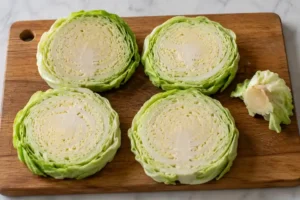
Remove damaged outer leaves, rinse the cabbage and dry it thoroughly. Trim only the dry, protruding end of the stem; leave the internal core in place. On a stable board, slice across the head into rounds about 1 inch thick, working from the top toward the stem. A large, sharp knife makes this easier than a small serrated knife.
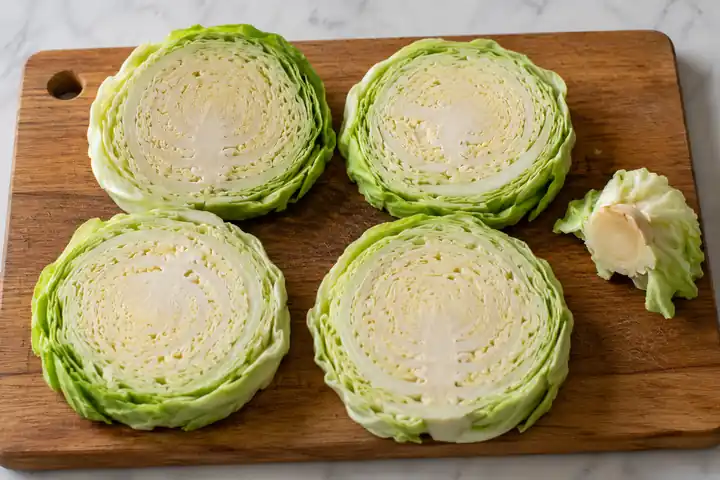
Expect four to six useful rounds, depending on the head’s shape. The upper slices may have little core and need extra care. Slide a wide spatula underneath them instead of lifting by an outer leaf. Some loose pieces are normal: arrange them near the rounds and remove them sooner if they brown quickly.
Keep the thickness consistent. Thin slices can burn before thicker pieces soften. If the final stem-end piece is too thick or woody, trim it and roast the edible leaves alongside the steaks.
How to Make Roasted Cabbage Steaks
1. Heat the oven and prepare the pan
Heat the oven to 425°F (220°C) using the conventional bake setting. Use a large rimmed metal baking sheet. For the strongest contact browning, roast directly on the metal. Parchment can make cleanup easier, provided it is rated for the oven temperature, but the underside may brown less deeply.
2. Season both sides
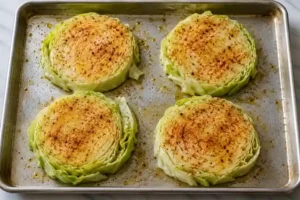
Mix 2½ tablespoons of the olive oil with the garlic powder, paprika, salt and pepper. Brush the mixture over both flat sides of the cabbage. Set the slices in one layer with space around them. If they will not fit comfortably, use two pans instead of overlapping the rounds.
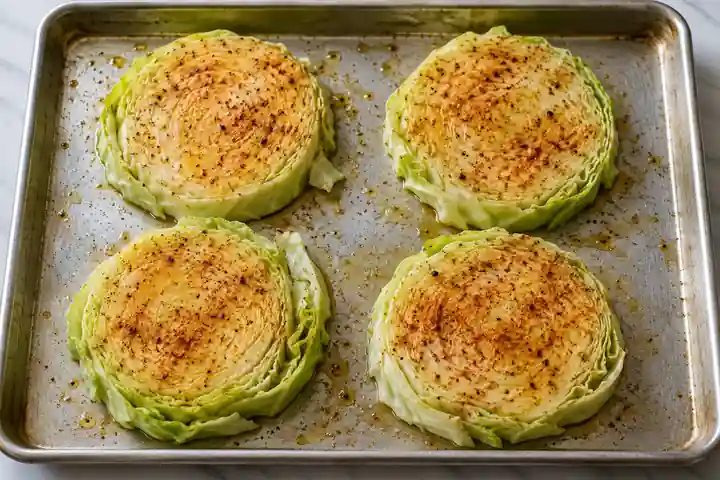
3. Roast, then turn gently
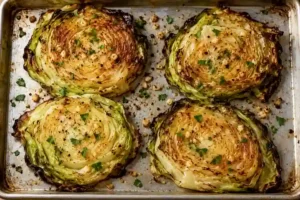
Roast for about 20 minutes, until the undersides have browned and the cabbage has begun to soften. Slide a wide spatula fully beneath each slice, support it with a second spatula if needed, and turn it carefully. Rotate the pan if one side is coloring faster.
Continue roasting for 10–15 minutes. The exact point depends on thickness, the cabbage’s moisture and your pan. Look at the food rather than waiting for a fixed shade on every leaf.
4. Add fresh garlic near the end
Mix the minced garlic with the remaining ½ tablespoon of oil. Gently dab it over the cabbage, then return the pan to the oven for another 5 minutes. This late addition keeps the fresh garlic from spending the entire roasting time against hot metal.
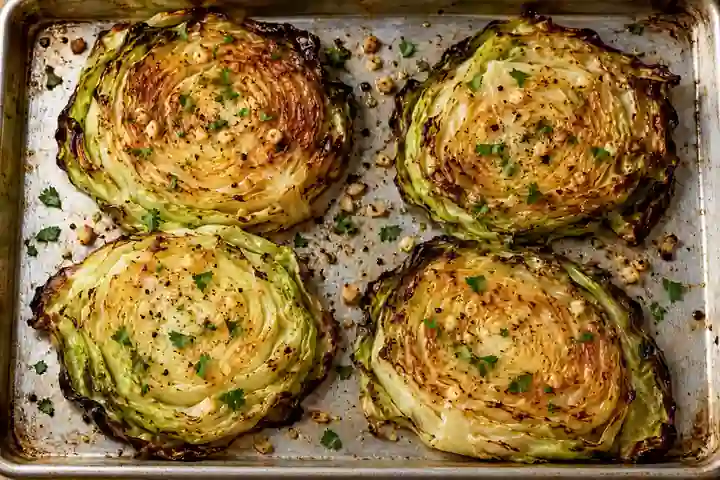
5. Finish with lemon and parsley
The roasted cabbage steaks are ready when a knife passes easily through the thickest part and the flat surfaces are well browned. A few darker outer edges are fine; widespread blackened leaves indicate too much heat or time. Add lemon juice and parsley after roasting, then serve warm.
Tips for Tender Roasted Cabbage Steaks
- Dry the leaves: Water left between layers encourages steaming. Pat the cut surfaces dry before brushing with oil.
- Leave room: Crowded cabbage releases moisture into its neighbors. Give the slices space or divide them between pans.
- Brush all the way to the edges: Dry, uncoated tips can scorch while the center is still pale.
- Check the core: Brown edges alone do not mean the center is done. Test the thickest section with a small knife.
- Watch small pieces: Loose leaves cook faster than whole rounds. Move or remove them as needed.
If the outside is getting too dark before the center softens, loosely cover the pan with foil and continue cooking until tender. If the center is soft but the surface looks pale, give the slices a little more uncovered time with enough space around them.
Easy Flavor Variations
Smoky and spicy: Use smoked paprika and add a pinch of chili flakes. Start small so the cabbage’s sweetness still comes through.
Lemon-tahini finish: Drizzle a spoonful of tahini thinned with lemon juice and water over the finished cabbage. Keep the sauce off until serving so the browned surfaces stay visible. Tahini contains sesame.
Cheesy finish: Sprinkle a little vegetarian hard cheese over the slices during the final few minutes. Check the label for microbial or vegetarian rennet if needed. This version contains dairy.
These additions change the nutrition. The recipe card below covers the lemon-garlic base without optional sauces, cheese or accompaniments.
What to Serve with Roasted Cabbage Steaks
For an easy dinner, serve a round beside garlic-herb chicken and potatoes. The cabbage also pairs well with roasted chickpeas, lentils, rice or a simple baked fish dish. Add a creamy sauce separately so everyone can choose how much to use.
For a vegetable spread, combine it with our garlic Parmesan roasted cauliflower. Cook vegetables on separate pans when they need different amounts of time. If you enjoy cabbage with a creamy sauce, our cabbage Alfredo skillet is another dinner idea.
How to Store Roasted Cabbage Steaks
Refrigerate leftovers promptly in a shallow, covered container at 40°F (4°C) or colder, and use within 3–4 days. Do not leave cooked cabbage at room temperature for more than 2 hours, or 1 hour when the temperature is above 90°F (32°C). The FDA’s guidance on leftovers explains prompt cooling in shallow containers.
Reheat roasted cabbage steaks on a baking sheet at 375°F (190°C) until hot throughout, checking after about 10 minutes. Following USDA guidance for leftovers, aim for 165°F (74°C) in the center. A microwave also works, though it softens the browned edges. Add a fresh squeeze of lemon after reheating.
To make roasted cabbage steaks ahead, slice the cabbage a day ahead and refrigerate it covered. Dry and season just before roasting. Freezing cooked cabbage is possible, but thawed leaves tend to be softer and wetter, making fresh roasting the better choice when texture matters.
Frequently Asked Questions
Can I use red cabbage?
Yes. Keep the slices about 1 inch thick and check for tenderness rather than using color alone. Red cabbage can be firmer, so it may need extra roasting time. Its darker leaves also make surface browning harder to judge.
Should I remove the core first?
Leave the internal core in place while slicing and cooking. It helps support the leaves. Trim the dry stem end before slicing, and cut away any tough section on your plate if needed.
Why did my roasted cabbage steaks fall apart?
Loose leaves, thin cuts and turning too early can all cause breakage. Choose a compact head, make even slices and support the full round with a wide spatula. A few separated leaves still taste good and can roast beside the larger pieces.
Do I need to boil cabbage before roasting?
No. This method cooks raw cabbage directly in the oven. Boiling adds moisture and makes the slices harder to handle, which works against the browned surfaces you want here.
Are cabbage steaks a complete main course?
They are a vegetable side on their own. For a more substantial meal, add beans, lentils, tofu, fish or chicken, plus grains or another accompaniment to suit your appetite.
Nutrition: About 150 calories per side portion, with 3 g protein, 14 g carbohydrate, 10 g fat, 1 g saturated fat, 5 g fiber, 7 g sugar and 330 mg sodium. Values are approximate, based on one-quarter of the full batch, including all oil and seasonings.
Find more dinner ideas and save this recipe for later: Follow us on Pinterest and Follow us on Instagram.

Roasted Cabbage Steaks with Garlic and Lemon
Ingredients
Equipment
Method
- Heat the oven to 425°F (220°C), conventional bake. Remove damaged outer leaves, rinse and dry the cabbage thoroughly. Trim only the dry stem end, leaving the internal core. Slice crosswise into 1-inch rounds; expect 4–6 depending on the head. Keep loose edible leaves to roast alongside.

- Mix 2½ tablespoons olive oil with garlic powder, paprika, fine salt and pepper. Brush both flat sides of the cabbage. Arrange in one layer on a large rimmed metal baking sheet with space between slices. Use two pans if necessary.
- Roast for 20 minutes, until the undersides brown. Turn carefully with a wide spatula, supporting fragile slices with a second spatula. Rotate the pan if needed and roast for another 10–15 minutes.
- Mix minced fresh garlic with the remaining ½ tablespoon oil. Dab over the cabbage and roast for another 5 minutes. The cabbage should be deeply browned and tender through the thickest part when pierced with a knife. If the outside darkens too quickly, loosely cover with foil and cook until tender.
- Drizzle with lemon juice and scatter with parsley. Serve warm. Divide the full batch into 4 side portions; the number of rounds per portion depends on the cabbage size.
Notes
Get easy recipes in your inbox
Join TasteWiser for new recipes, cooking tips and fresh inspiration.
Confirm your email to subscribe. Unsubscribe anytime.