
Rosemary Tea Recipe (Fresh or Dried Rosemary)
This rosemary tea recipe makes a light, aromatic herbal drink with culinary rosemary and hot water. The flavor is woodsy and slightly pine-like, with a clean finish when you keep the herb amount small and strain it promptly. Lemon and honey are optional, so you can try the plain infusion first.
Use either fresh leaves or dried rosemary, not both in the same cup. This version starts gently: one level teaspoon of lightly chopped fresh leaves, or half a level teaspoon of dried leaves, for 240 ml water. Rosemary strength varies, so taste the strained drink before making a stronger batch.
What does rosemary tea taste like?
Rosemary has a savory, resinous aroma rather than the floral sweetness of some herbal teas. A modest infusion tastes fragrant and herbal; a large handful steeped for a long time can taste bitter. The color may be almost clear or pale yellow-green. It does not need to turn dark to be ready.
This rosemary tea recipe contains no black tea or green tea. With just rosemary and water, it has no added caffeine. If you combine it with another tea or drink mix, check that ingredient separately.
Ingredients for this rosemary tea recipe
- 240 ml water: 1 US cup of drinking water.
- 1 level teaspoon lightly chopped fresh rosemary leaves: about 1 g as a rough guide, stripped from the woody stem. Alternatively, use ½ level teaspoon dried rosemary leaves.
- Optional lemon: 1 teaspoon juice, or a thin slice added after straining.
- Optional honey: 1 teaspoon, stirred in after brewing.
Buy culinary rosemary from the produce or spice section, or use a correctly identified food-use garden plant. Do not use decorative greenery, unidentified clippings or rosemary essential oil. The leaf quantity is more reliable than “one sprig,” because sprigs vary greatly in length and fullness.
Fresh versus dried rosemary
Fresh leaves bring a brighter herbal aroma and need rinsing before use. Dried leaves are convenient and can be measured directly into an infuser. They are more concentrated by volume, which is why this rosemary tea recipe starts with half as much dried herb. Avoid powder if you want a clear drink; fine particles pass through many strainers.
Check the dried herb for a recognizable aroma before brewing. Stale rosemary may give a dull infusion, but adding lots of it can still create a rough, woody taste. Start with a fresh packet rather than extending the steep indefinitely.
How to make rosemary tea
1. Rinse and measure the herb
Rinse the fresh rosemary under running water and remove the leaves from the woody stem. Chop lightly and measure one level teaspoon. If using dried rosemary, measure half a level teaspoon instead. Place the chosen herb in a heat-safe mug, small teapot or brewing jug.
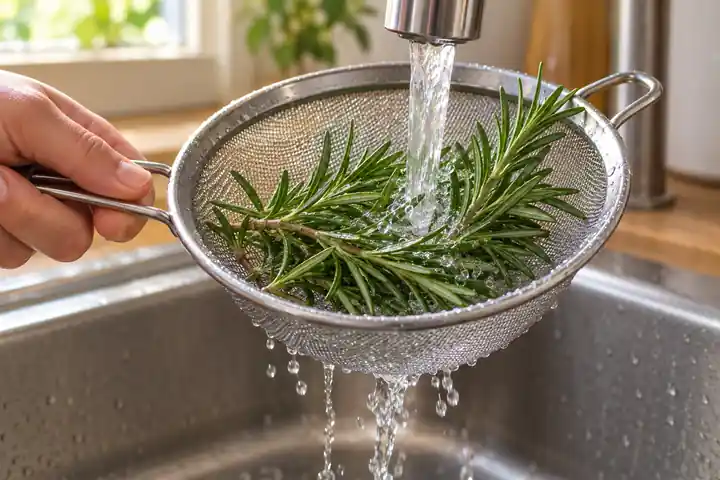
2. Add hot water
Bring 240 ml drinking water to a boil in a kettle or small saucepan, then remove it from the heat. Pour carefully over the leaves. Use a vessel made for hot drinks; an ordinary cold drinking glass may crack when boiling water is added.
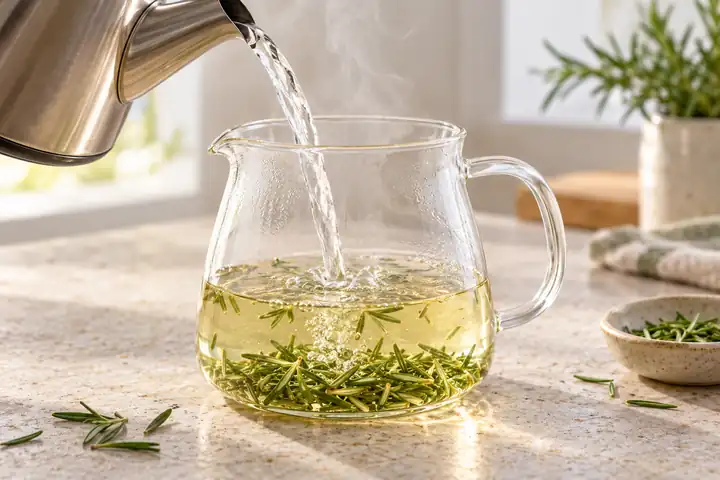
3. Cover and steep
Cover with a fitted lid or a clean saucer and steep for 3 minutes. Pour a small amount through a strainer, let it cool enough to taste, and assess the flavor. If you prefer more aroma, continue up to about 5 minutes. There is no need to keep boiling the rosemary.
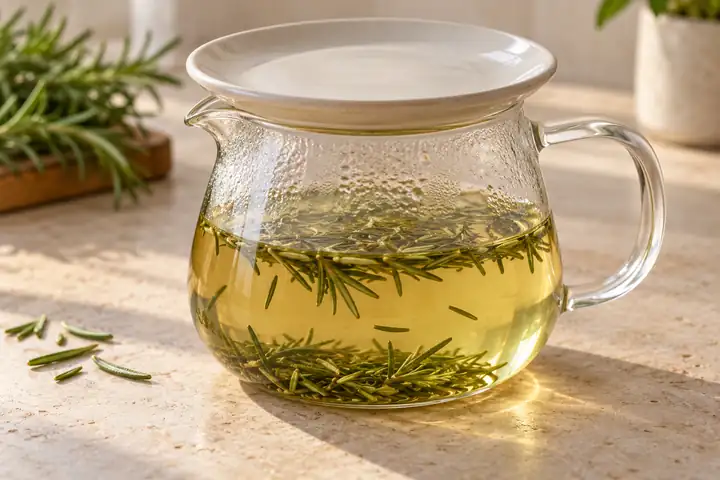
4. Strain and serve
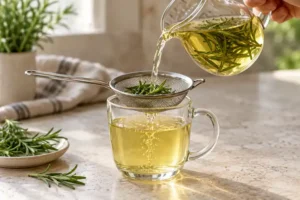
Pour through a fine-mesh tea strainer, removing all leaves and stem fragments. Let the tea reach a comfortable drinking temperature. Add optional lemon juice or honey now, then stir. The rosemary tea recipe is complete without either addition; adjust only after trying a small sip.
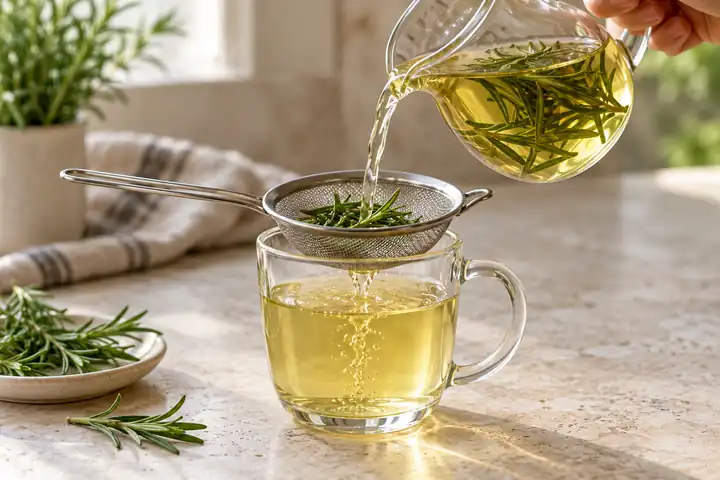
Rosemary tea recipe tips: avoid bitterness
The two easiest controls are herb quantity and steep duration. Use the stated small amount, set a timer and remove the leaves when the flavor suits you. Leaving a sprig in the mug as a garnish means it keeps steeping while you drink, so serve it beside the mug instead.
If your tea is too strong, dilute the strained infusion with a little hot water. Honey adds sweetness but does not remove an over-extracted herbal taste. For the next cup, shorten the steep or reduce the leaf quantity. Do not judge strength by color alone.
Lemon, honey and iced variations
For lemon rosemary tea, add 1 teaspoon lemon juice to the strained cup and taste before adding more. For a gently sweet version, stir in 1 teaspoon honey. These are starting amounts rather than required ingredients. Extra citrus, honey or sugar changes the final flavor and nutrition.
For iced rosemary tea, brew and strain the same mild infusion, cool it promptly, then serve over ice. Ice dilutes the drink, so use a chilled cup and taste before deciding whether the next batch needs a slightly different ratio. Do not compensate by simmering a large handful of rosemary into a concentrated brew.
For two cups, use 480 ml water and double the chosen leaf amount. Use a larger heat-safe teapot and keep the same initial 3-minute steep, checking the flavor before extending it. Do not leave the leaves in the serving pot after straining.
Serving ideas
Keep this rosemary tea recipe simple alongside toast, oatmeal or a small cookie. For another warm drink, browse Tastewiser’s honey latte recipe, which contains coffee. If you enjoy floral drink flavors, the separate lavender syrup guide explains a sweet syrup method. Both have their own ingredient lists and uses.
Make-ahead and storage
Freshly brewed tea gives you the clearest sense of the rosemary aroma. If saving a portion, strain out the leaves, cool promptly and refrigerate in a clean, covered container. Plan to use it within 24 hours as a conservative quality target, not a validated shelf life.
Do not keep brewed tea sitting out overnight, and do not top up an old batch with newly brewed tea. Discard an infusion with visible mold, unusual cloudiness or an off smell. Reheating does not make spoiled tea usable. Store unused dried rosemary separately in its original dry, closed container.
Nutrition card
The following values are rough estimates for one strained 240 ml cup without honey or lemon. The leaves are removed rather than eaten, and extraction varies; whole-leaf nutrition databases cannot precisely measure the finished infusion.
| Calories | About 1 kcal |
|---|---|
| Carbohydrate | About 0.2 g |
| Protein | 0 g, rounded |
| Fat | 0 g, rounded |
| Sugar | 0 g, rounded |
| Fiber | 0 g, rounded |
Calories card
Plain strained rosemary tea contributes very few calories; about 1 calorie is used here as an estimate. One teaspoon honey adds approximately 21 calories, and one teaspoon lemon juice adds approximately 1 calorie. A cup with both additions is therefore roughly 23 calories, depending on the amounts actually used.
Tastewiser recipe notes
This exact rosemary tea recipe has not been kitchen-tested by Tastewiser. Images are AI-generated illustrations; timing, yield and nutrition are estimates. The method follows the usual pour-over herbal-infusion approach, with a deliberately mild starting ratio. HealthyGreenSavvy’s fresh and dried rosemary tea guide describes short steeping and straining; its quantities differ from this version.
Frequently asked questions
Can I use a whole rosemary sprig?
You can, but sprig size makes the amount unpredictable. For a repeatable cup, strip and measure the leaves as described. Remove the herb after steeping rather than leaving it in the finished mug.
Should I boil the leaves?
This rosemary tea recipe uses hot water poured over the herb. The leaves do not need to simmer on the stove. A long boil changes the flavor and may give a stronger, less pleasant result.
Does it contain caffeine?
The plain rosemary-and-water infusion has no added caffeine. Adding black tea, green tea or another caffeinated ingredient changes that.
Is rosemary tea a treatment for hair loss or weight loss?
This page is a beverage recipe and does not establish a treatment benefit for hair loss, weight loss or any medical condition. A cup of tea should not replace prescribed care.
Can everyone drink it regularly?
Do not assume that a herb drink suits everyone. The European Medicines Agency’s rosemary-leaf monograph concerns medicinal herbal products and does not establish safety during pregnancy or breastfeeding. Seek clinician advice before regular use in those situations, for children, or with relevant medical conditions or medication. Avoid rosemary if you are allergic to it.
A simple fresh-herb drink
Start with this mild rosemary tea recipe, strain promptly and adjust the next cup to your taste. Whether you prefer fresh rosemary tea with lemon, a little honey, or an unsweetened herbal infusion, a measured amount and a short steep keep the method easy to repeat.
Follow us on Instagram for more Tastewiser drink ideas.
Follow us on Pinterest for recipes and kitchen inspiration.
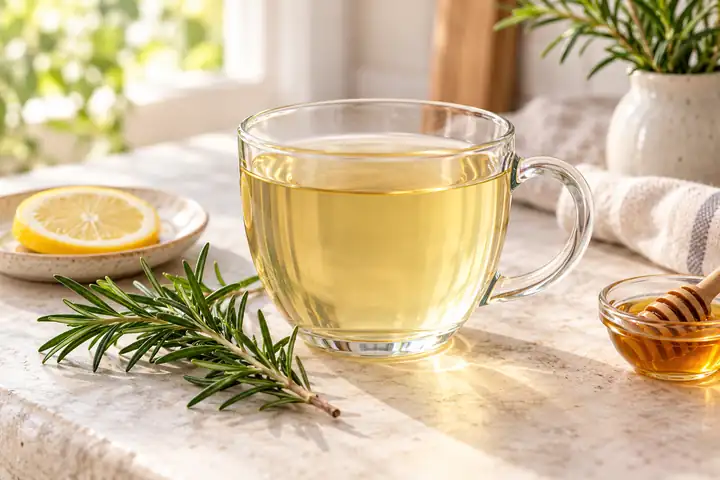

Rosemary Tea Recipe
Ingredients
Equipment
Method
- Rinse fresh rosemary under running water. Strip the leaves from the woody stem, chop lightly and measure 1 level teaspoon. Alternatively, use ½ level teaspoon dried culinary rosemary. Place the chosen herb in a heat-safe brewing vessel; do not use both forms.
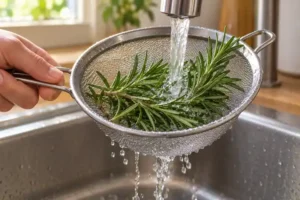
- Bring 240 ml drinking water to a boil in a kettle or saucepan, then remove from the heat. Carefully pour over the measured leaves. Use a vessel designed for hot drinks.
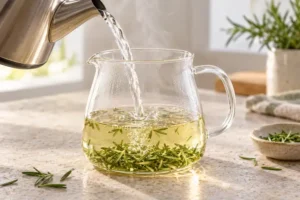
- Cover and steep for 3 minutes. Strain a small sample, cool it enough to taste, and check the flavor. If desired, continue steeping up to about 5 minutes. Do not simmer the leaves or wait for a dark color.
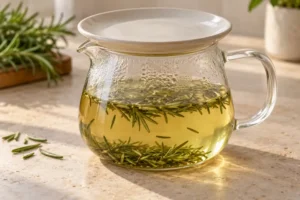
- Strain through a fine-mesh tea strainer, removing all leaves and stem fragments. Let the tea reach a comfortable drinking temperature. Add optional lemon or honey after straining, or drink plain. If too strong, dilute with a little hot water.
Notes
Get easy recipes in your inbox
Join TasteWiser for new recipes, cooking tips and fresh inspiration.
Confirm your email to subscribe. Unsubscribe anytime.