Broiler Garlic Bread With Fresh Garlic and Parsley
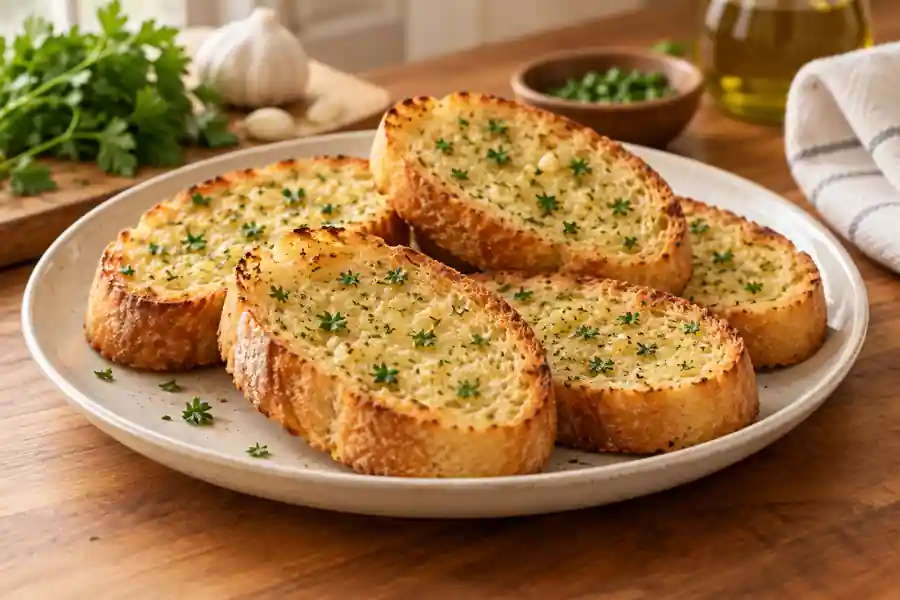
Broiler garlic bread turns slices of French or Italian bread into a buttery side with lightly crisp edges and a soft middle. The topping uses softened butter, finely grated garlic and parsley, so each slice gets an even layer without needing a separate sauce.
The broiler supplies strong heat from above, which means the bread can change quickly near the end. Stay beside the oven and look for golden edges and bubbling butter instead of treating the timer as an exact finish signal. This recipe uses individual slices so you can see how each piece is browning.
Jump to the recipe card, or follow the four steps below for pan setup, garlic butter and broiling cues.
Why Use the Broiler for Garlic Bread?
Broiler garlic bread is useful when you want the exposed surface toasted rather than a foil-wrapped loaf warmed through. The direct top heat melts the butter and browns the edges, while the thickness of the bread helps keep some softness inside.
This is a sliced-bread method, not a way to bake bread dough. Start with a ready-baked loaf. For a large party, cook separate trays in batches instead of stacking bread or crowding a pan; pieces hidden from the top heat will not toast evenly.
Ingredients for Broiler Garlic Bread
- 250 g French or Italian bread: cut into 8 slices about 3/4 inch thick.
- 4 tablespoons unsalted butter: 57 g; softened, not melted.
- 2 small garlic cloves: about 6 g; finely grated.
- 1 tablespoon fresh parsley: finely chopped.
- 1/8 teaspoon fine salt: balances the garlic butter.
A French or Italian loaf with a firm crust and a moderately open crumb works well. Very soft sandwich bread toasts faster and can become fragile under the butter. Dense artisan bread may need more warming before its surface browns, so keep an eye on the center as well as the crust.
Grate the garlic finely or crush it into a paste. Large garlic pieces can brown before the bread has finished. Softened butter is easier to distribute than melted butter, which can run through the crumb and pool on the pan.
If you use salted butter, leave out the added salt. Dried parsley can replace fresh parsley in a smaller amount, about 1 teaspoon, though it has a different texture. Keep cheese out of the base batch if you want the recipe and nutrition below to match.
Pan and Rack Setup for Broiler Garlic Bread
Use an unlined metal pan that its manufacturer rates for broiling. Parchment paper, silicone baking mats and ordinary glass baking dishes do not belong under this direct heat. Have oven mitts and a heatproof resting spot ready before the bread goes in.
Follow your oven manual for rack position, broiler preheating and whether the door should be open or closed. GE Appliances broiling guidance recommends using the setup specified for your particular model. Oven designs differ, so there is no single door position for every broiler.
Where the manual permits it, begin with the bread surface around 6–8 inches from the heat source and use low broil if available. This is a starting point, not a universal setting. If the oven has only high broil, watch even more closely and use an allowed lower rack position.
How to Make Broiler Garlic Bread
1. Slice the bread and set up the broiler
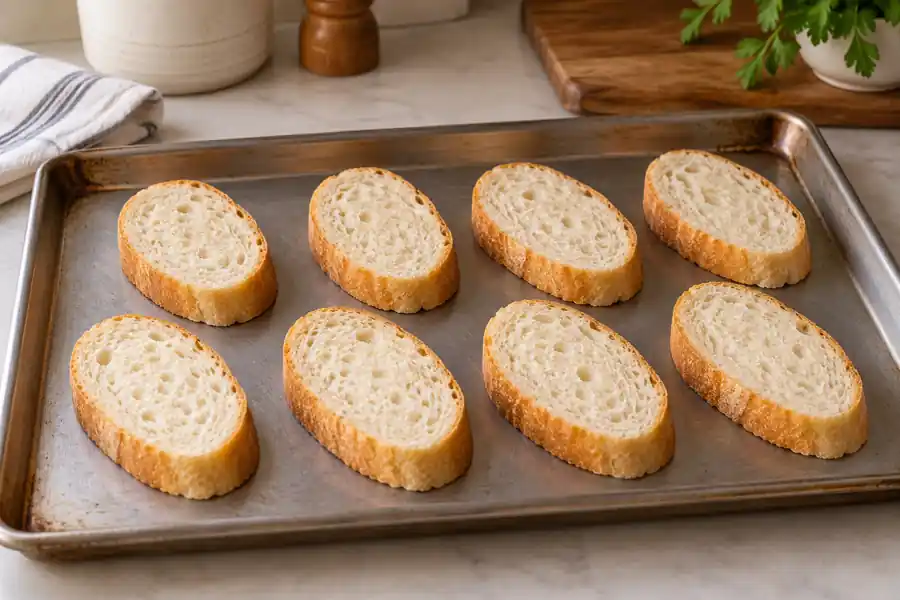
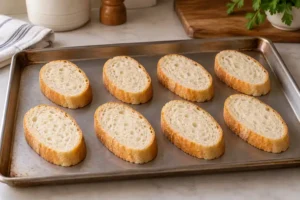
Cut 250 g French or Italian bread into 8 slices about 3/4 inch thick. Arrange them in one layer on an unlined, broiler-safe metal pan. Before heating, position the rack according to your oven manual; where permitted, start with the bread surface about 6–8 inches from the heating element. Preheat and use the oven-door position specified by the manufacturer. Choose low broil if available.
2. Mix the garlic butter
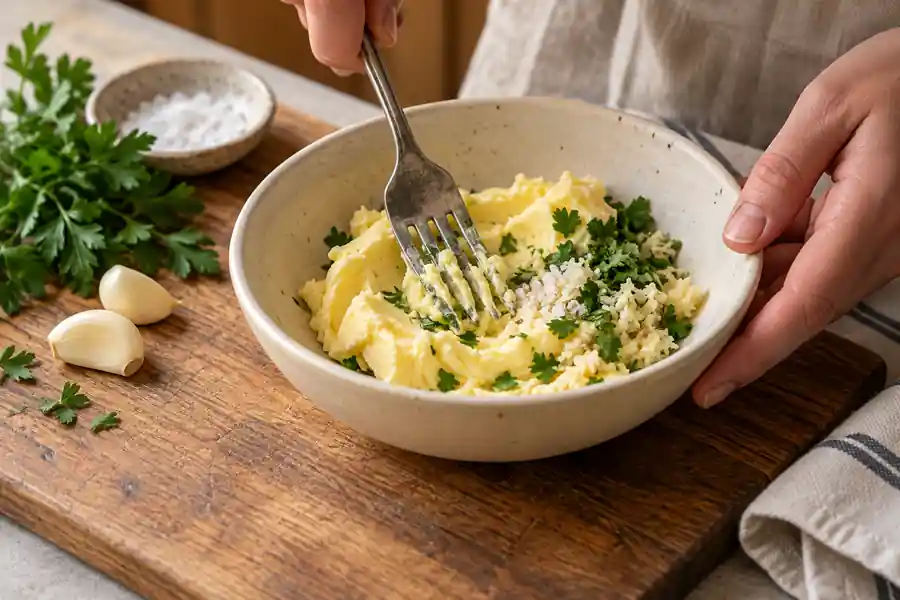
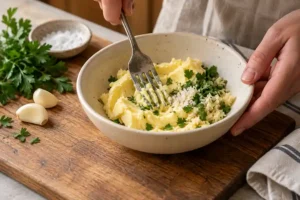
Mash 4 tablespoons (57 g) softened unsalted butter with 2 small garlic cloves (about 6 g), finely grated, 1 tablespoon finely chopped fresh parsley and 1/8 teaspoon fine salt. Mix until evenly combined. The butter should be soft enough to spread, not melted.
3. Spread an even layer
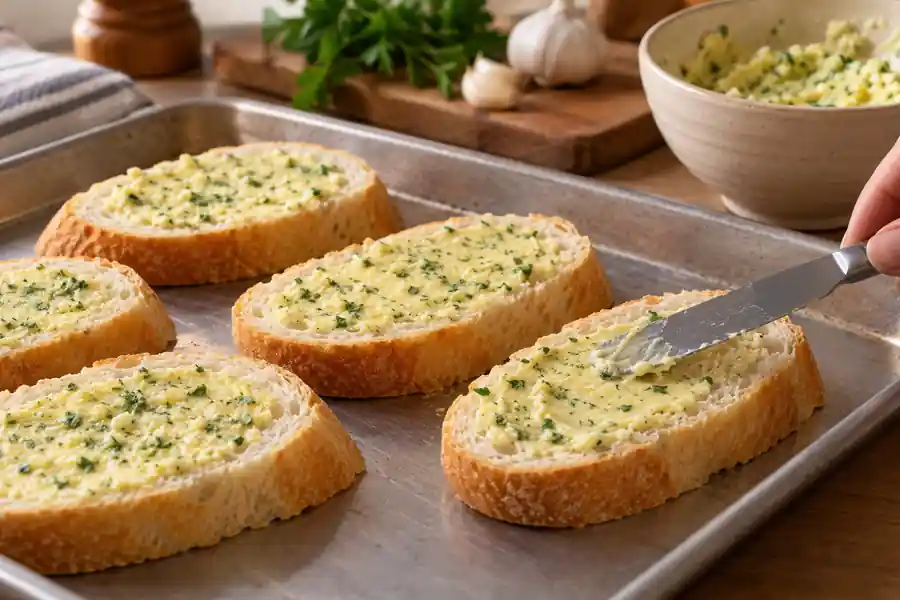
Spread the garlic butter evenly over the top of all 8 bread slices, reaching the edges. Keep the grated garlic dispersed through the butter rather than leaving clumps on the surface. Leave a little space between slices.
4. Broil and serve
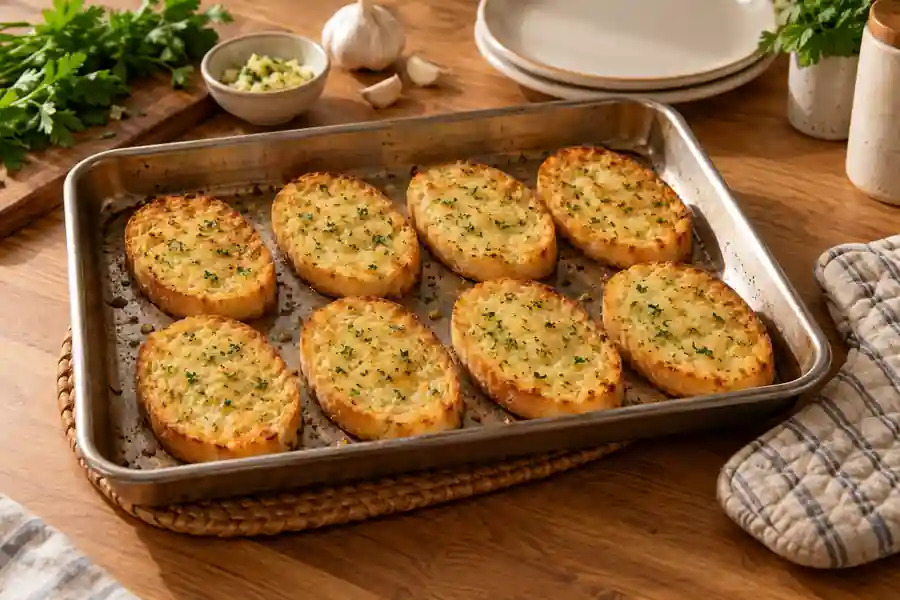
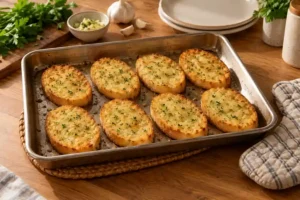
Place the pan under the broiler and watch continuously. Begin checking after about 30 seconds; the bread may take roughly 1–4 minutes to develop lightly golden edges and a bubbling butter topping, depending on the oven. Remove as soon as the desired browning appears. If the garlic darkens before the edges toast, stop and lower the rack for the next batch, moving it only once safe to do so. Lift out the hot pan with oven mitts, let the bread cool briefly and serve warm.
How Long Should Broiler Garlic Bread Cook?
Broiler garlic bread may brown in roughly 1–4 minutes, but heat strength, rack distance, bread thickness and the temperature of the topping all affect the result. Begin checking early, around 30 seconds, and stay by the oven the whole time.
Look for butter that has melted across the surface and edges that have turned lightly golden. The garlic should smell fragrant without looking dark brown. The surface may still be soft in places; it does not need to become uniformly dark to taste toasted.
As GE Appliances explains about broiling, browning accelerates as the surface dries. Keep watching closely toward the finish. Remove the pan as soon as the bread reaches the texture you want.
Troubleshooting Broiler Garlic Bread
- Garlic browns too soon: remove the pan, then use a lower permitted rack position for the next batch. Grate the garlic finer and spread the topping evenly.
- Some slices brown faster: the broiler may have hot spots. If needed, carefully rotate the pan using oven mitts while watching the bread.
- Butter runs off: start with softened butter rather than melted butter. Spread a thin layer over the crumb and avoid thick piles.
- Bread becomes hard: remove it sooner, or use slightly thicker slices. Broiling is for surface browning; it does not need a long cooking period.
- Edges burn while the middle stays soft: lower the heat or distance from the element, following the manual. A soft middle is normal for this style; do not keep broiling just to dry it out.
Optional Cheese and Garlic Powder Variations
For cheesy broiler garlic bread, sprinkle about 2 tablespoons finely grated Parmesan over the buttered slices before broiling. Watch carefully because the cheese changes the browning pattern. This is an optional variation and adds an ingredient, calories and sodium.
If fresh garlic is unavailable, try 1/2 teaspoon garlic powder in the butter instead of the two cloves. Use garlic powder, not garlic salt. It gives a more even texture and a different flavor from fresh garlic; keep the other ingredients unchanged.
Neither variation needs a separate recipe page. Keep the same sliced-bread method and adjust the topping within this batch. If cooking for someone with a dairy allergy, a suitable dairy-free spread may behave differently under the broiler, so check its label and watch closely.
What to Serve With Broiler Garlic Bread
Serve a slice beside creamy garlic pasta or New England-style clam chowder. The crisp edges are useful for dipping into a sauce or soup, while the bread remains a small side rather than the whole meal.
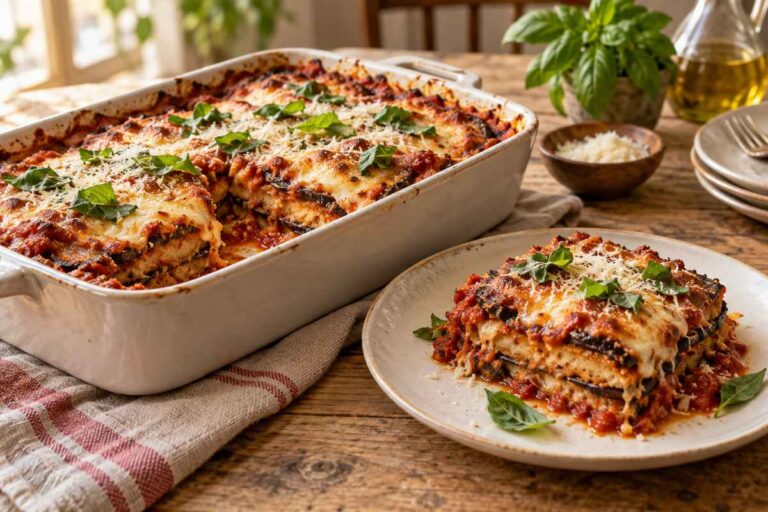
For a tomato-based dinner, pair it with eggplant Parmesan. A simple green salad or plain roasted vegetables can balance a plate that already includes a rich main dish.
Storing and Reheating Broiler Garlic Bread
Let leftover bread release steam briefly, then refrigerate it in a covered container at 40°F or below. Plan to use it within 3–4 days. Refrigerate within 2 hours, or within 1 hour when the air temperature is above 90°F. Do not store a homemade fresh-garlic butter topping at room temperature.
For freezing, separate the cooled slices with parchment inside a freezer container or bag, label them and use within about 2 months for best texture. The parchment is for storage only; remove it before heating under a broiler.
Reheat in a conventional oven at 350°F on a suitable metal pan until hot through, covering loosely with foil if needed to slow drying. USDA leftovers guidance recommends reheating leftovers to 165°F. If you finish with a brief broil, watch continuously again.
Broiler Garlic Bread Nutrition and Calories
The recipe card estimates about 140 calories per slice, based on 250 g bread divided into eight pieces and all the measured butter. Bread brands, actual slice weights and any optional cheese change the calculation. It is an approximate ingredient-based estimate, not a lab analysis.
Frequently Asked Questions
Can I make broiler garlic bread without baking it first?
Yes, this recipe broils ready-baked bread slices directly. You do not need a separate bake stage for the specified slice thickness. A thicker or very dense loaf may need a different method to warm its center.
Should I use high or low broil?
Use low broil if your oven offers it, following the manual. With high-only broilers, use an allowed rack position farther from the heat and check earlier. The browning cues matter more than a fixed timer.
Can I put parchment under the bread?
No. Use an unlined, broiler-safe metal pan for this recipe. Parchment and silicone liners should be kept away from the broiler’s direct heat.
Can I make the garlic butter ahead?
You can mix it ahead, cover it and refrigerate it. Let a small portion soften enough to spread before assembling the bread. Keep homemade fresh-garlic butter refrigerated and use promptly rather than leaving the bowl on the counter.
Why does the garlic taste bitter?
It may have browned too far. Remove the bread earlier, grate the garlic finely and use a lower permitted rack position. Large exposed pieces scorch more easily than garlic mixed evenly through the butter.
A Crisp Garlic Side for Your Next Dinner
For easy broiler garlic bread with fresh garlic and parsley, use even slices, spread softened butter carefully and watch the oven closely. A lightly toasted surface is enough to give pasta, soup or a simple vegetable dinner a warm, buttery side.
Recipe Card
Follow us on Pinterest for more recipes and cooking ideas. · Follow us on Instagram

Broiler Garlic Bread
Ingredients
Equipment
Method
- Cut 250 g French or Italian bread into 8 slices about 3/4 inch thick. Arrange them in one layer on an unlined, broiler-safe metal pan. Before heating, position the rack according to your oven manual; where permitted, start with the bread surface about 6–8 inches from the heating element. Preheat and use the oven-door position specified by the manufacturer. Choose low broil if available.
- Mash 4 tablespoons (57 g) softened unsalted butter with 2 small garlic cloves (about 6 g), finely grated, 1 tablespoon finely chopped fresh parsley and 1/8 teaspoon fine salt. Mix until evenly combined. The butter should be soft enough to spread, not melted.
- Spread the garlic butter evenly over the top of all 8 bread slices, reaching the edges. Keep the grated garlic dispersed through the butter rather than leaving clumps on the surface. Leave a little space between slices.

- Place the pan under the broiler and watch continuously. Begin checking after about 30 seconds; the bread may take roughly 1–4 minutes to develop lightly golden edges and a bubbling butter topping, depending on the oven. Remove as soon as the desired browning appears. If the garlic darkens before the edges toast, stop and lower the rack for the next batch, moving it only once safe to do so. Lift out the hot pan with oven mitts, let the bread cool briefly and serve warm.
Notes
Get easy recipes in your inbox
Join TasteWiser for new recipes, cooking tips and fresh inspiration.
Confirm your email to subscribe. Unsubscribe anytime.