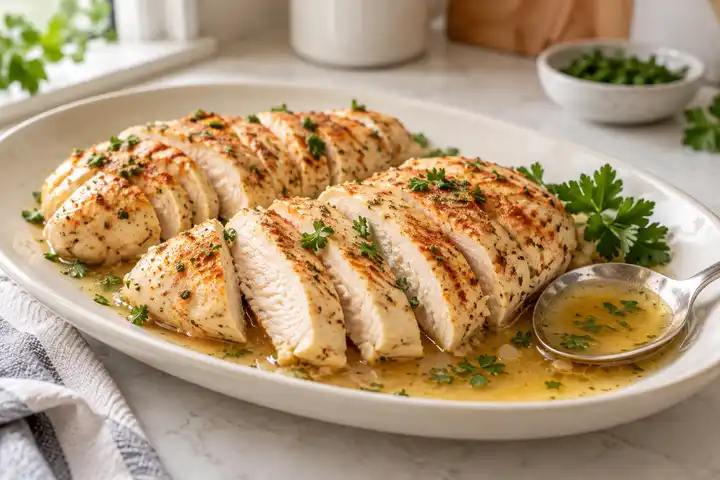
Simple Marinade for Shrimp (Lemon Garlic Recipe)
This simple marinade for shrimp uses olive oil, lemon, garlic and pantry seasonings for a bright skillet dinner. It is designed for raw peeled shrimp and a short refrigerator marinating period, followed by cooking until the flesh is opaque and cooked through.
Lemon zest supplies citrus aroma, while a measured spoonful of juice adds tang. Garlic, paprika and oregano round out the seasoning. The skillet finish below gives you a complete method, rather than leaving you with a bowl of marinade and no cooking directions.
Why the lemon-garlic combination works
- A light coating: oil spreads the garlic and seasonings over the shrimp.
- Controlled acidity: a modest amount of juice adds brightness; zest reinforces the lemon flavor.
- Flexible serving: cooked shrimp work beside rice, vegetables or pasta.
- A short soak: extended marinating is unnecessary for this version.
Ingredients for a simple marinade for shrimp
These quantities coat 1 pound of raw peeled shrimp and make four portions. Use large shrimp labeled roughly 21–25 per pound for the skillet timing guide; count per pound is more useful than a size word alone.
- 1 pound raw shrimp: peeled, deveined and fully thawed. Remove tails if preferred.
- 3 tablespoons olive oil.
- 1 tablespoon fresh lemon juice and 1 teaspoon lemon zest: grate only the yellow outer layer.
- 2 garlic cloves, finely minced.
- 1/2 teaspoon paprika: regular or smoked.
- 1/2 teaspoon dried oregano.
- 1/4 teaspoon fine salt and 1/8 teaspoon black pepper: coarse salt measures differently by volume.
- Optional parsley and lemon wedges: for serving.
How to use this simple marinade for shrimp
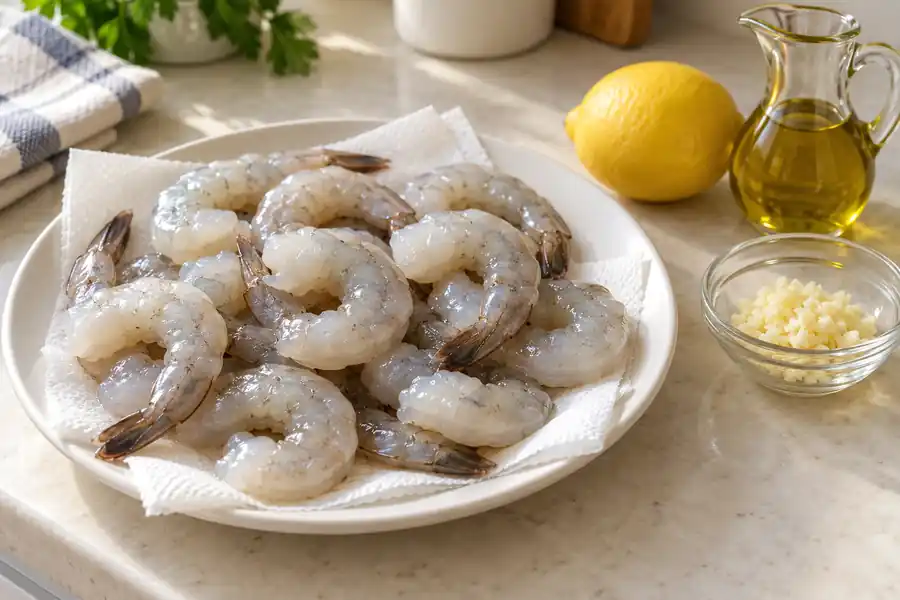
1. Thaw and dry the shrimp
Thaw frozen shrimp in the refrigerator overnight. For a quicker option, use a sealed bag in cold water and cook promptly after thawing. Pat the peeled shrimp dry with disposable paper towels. Keep raw seafood and its utensils away from ready-to-eat foods.
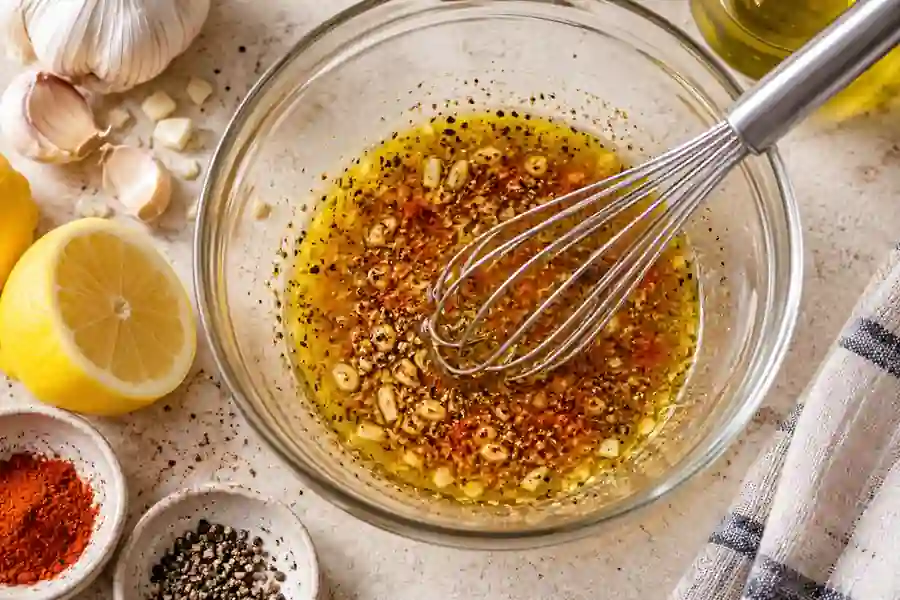
2. Whisk the marinade
Combine the oil, lemon juice, zest, garlic, paprika, oregano, salt and pepper in a glass or other nonreactive bowl. Whisk until the seasonings are dispersed. Oil and lemon juice separate as they stand, so stir again before adding shrimp.
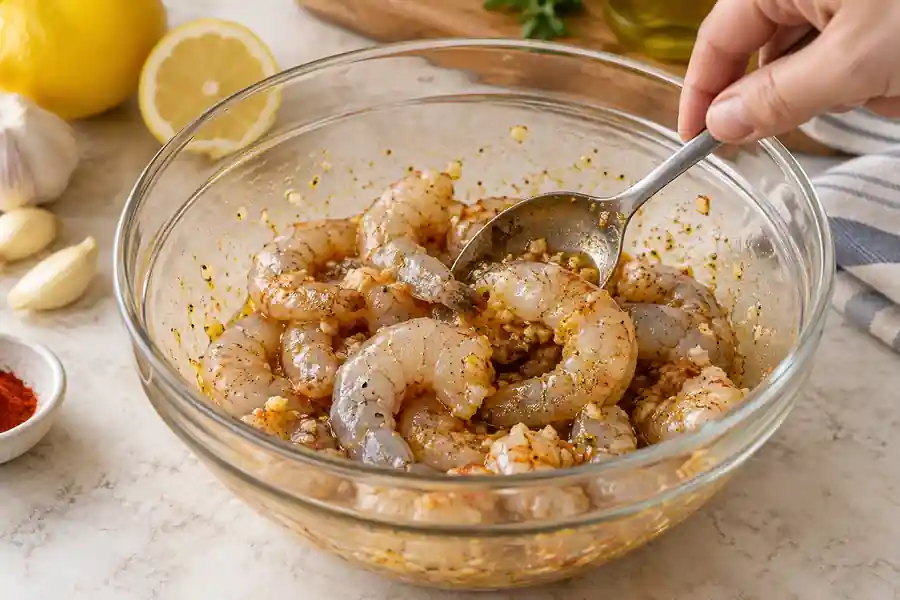
3. Coat the raw shrimp
Add the shrimp and turn them gently through the mixture until coated. A food-safe bag set inside a bowl is another option. Do not taste the liquid after it has touched raw shrimp.
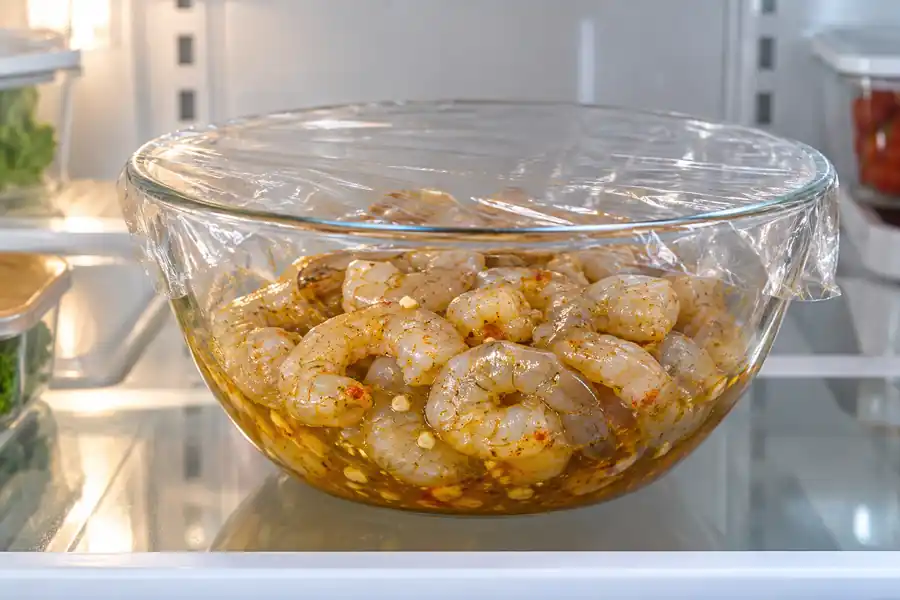
4. Cover and refrigerate
Cover and refrigerate for 15 minutes. For this simple marinade for shrimp, use a 15–30 minute window for texture and avoid an overnight soak. Lemon juice changes proteins as the shrimp sit; that change does not make raw shrimp safe to eat.
5. Cook in a skillet
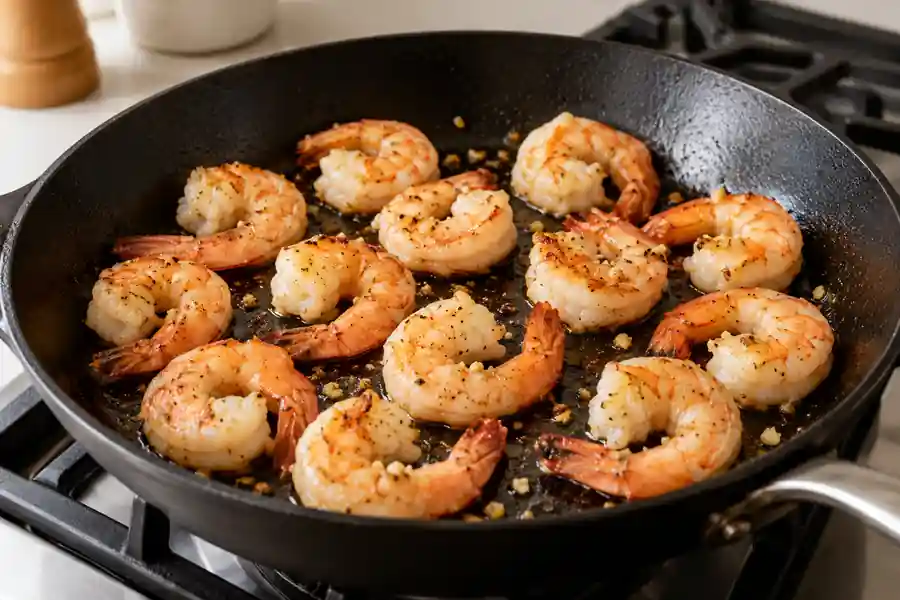
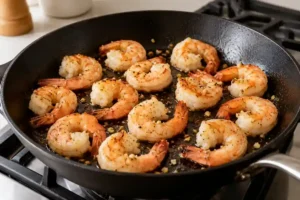
Heat a large nonstick or well-seasoned skillet over medium-high heat. Lift the shrimp from the marinade, letting excess drip off. Arrange in a single layer with space between pieces, cooking in batches if needed. About 2–3 minutes per side is a starting guide.
Check doneness rather than relying only on minutes. Use a food thermometer in the thickest part where practical, with 145°F (63°C) as the seafood target. Shrimp flesh should also be firm, pearly and opaque throughout. Size, pan temperature and batch count change timing. Discard the used marinade.
6. Transfer to a clean plate
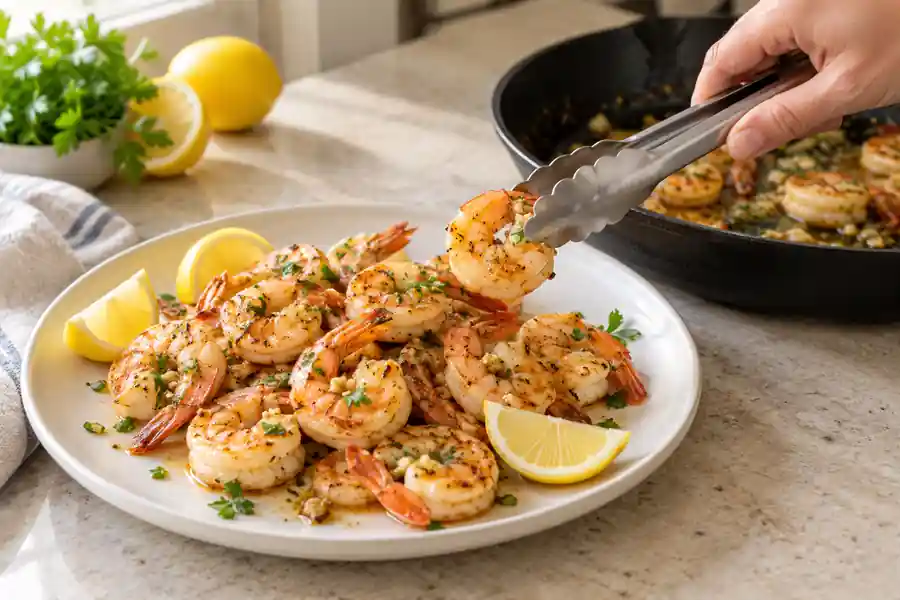
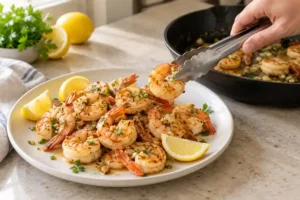
Use a clean plate and clean serving utensils. Finish with optional parsley and lemon wedges, then serve promptly. Leaving cooked shrimp in the hot pan can make them continue to firm up.
How long should shrimp marinate?
The 15–30 minute recommendation applies to this lemon-juice mixture and is a texture choice, not a universal food-safety limit. A different acid-to-oil ratio or an acid-free recipe may call for another period. Keep shrimp refrigerated throughout and cook fully afterward.
For planning ahead, measure dry seasonings and keep the raw shrimp separately chilled. Apply the simple marinade for shrimp close to cooking rather than storing shrimp in lemon juice overnight.
Soy sauce variation and other swaps
For a soy sauce marinade for shrimp, replace the fine salt with 1 teaspoon reduced-sodium soy sauce for the entire batch. Keep the other quantities as listed. This changes flavor and sodium and may introduce soy and wheat allergens; check the label.
- Different herbs: use dried thyme in place of oregano.
- A warmer flavor: add a small pinch of chili flakes.
- No lemon zest: omit it rather than increasing the juice, which changes acidity.
Serving ideas
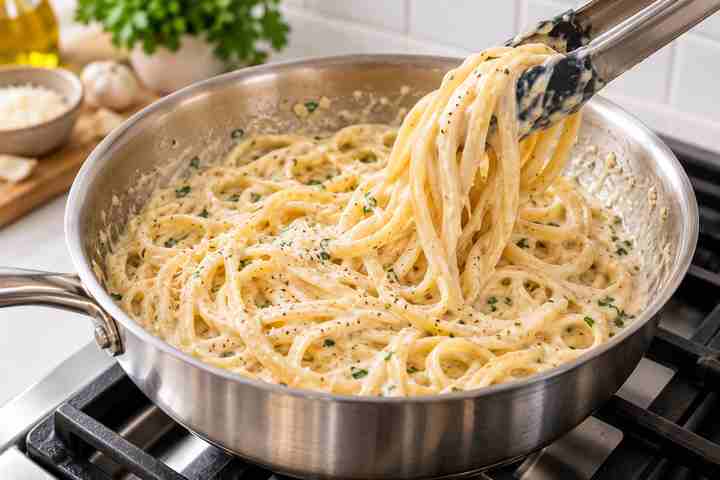
Use this simple marinade for shrimp for a lemon-garlic topping over rice or a salad. For a richer pairing, try creamy garlic pasta. Garlic Parmesan roasted cauliflower makes a vegetable side. Put homemade tartar sauce in a separate bowl if you want a cold dip.
Storage and safe handling
Follow the FDA guidance on seafood handling. Keep raw shrimp at 40°F (4°C) or colder, follow package use-by instructions and marinate in the refrigerator. Wash hands and equipment after handling raw seafood.
Refrigerate cooked leftovers promptly in a covered container and use within 3–4 days, following USDA leftover-storage guidance. Discard perishable food left out longer than 2 hours, or 1 hour above 90°F (32°C).
Used raw-shrimp marinade is not an uncooked serving sauce. Make any separate sauce in a clean bowl before handling raw shrimp. This method discards the used marinade.
Calories per serving
Approximately 195 calories per serving, based on four portions and including all listed marinade ingredients. Actual retained marinade varies because excess is discarded. Sides and garnish are excluded.
Estimated nutrition
| Nutrient | Per serving, approximately |
|---|---|
| Calories | 195 kcal |
| Protein | 23 g |
| Carbohydrates | 2 g |
| Fat | 11 g |
| Saturated fat | 1.5 g |
| Sodium | 300 mg |
These rounded estimates cover the complete recipe, not marinade alone. Shrimp treated with salt solutions can have different sodium levels. Brands, discarded marinade and the soy variation change the final values.
Frequently asked questions
Can I use cooked shrimp in this marinade?
This method is designed for raw shrimp. Pre-cooked shrimp can become tough when cooked again, so use a method intended for cooked shrimp rather than following this skillet finish unchanged.
Can I marinate shrimp overnight?
Avoid overnight soaking in this lemon-juice recipe. Keep the raw shrimp separately chilled and coat shortly before cooking.
Can I make this simple marinade for shrimp without soy sauce?
Yes. The base uses fine salt and contains no soy sauce. Soy is an optional variation, not a required ingredient.
Why did my shrimp turn rubbery?
Overcooking is a common reason; extended exposure to acid can also alter texture. Use the short soak, avoid crowding the pan and remove shrimp when cooked through.
Can I grill the marinated shrimp?
Yes, as a cooking variation. Drain excess marinade, use skewers or a suitable basket and cook over a preheated grill. Check doneness; skillet timing does not transfer exactly to every grill.
Recipe notes and ingredient checks
This simple marinade for shrimp is measured for raw peeled large shrimp. Check for added salt solutions, and remember that shrimp are a shellfish allergen. Look for opaque flesh throughout, supported by a thermometer where practical. Keep raw and cooked utensils separate, and treat the soy variation as a change to flavor, allergens and nutrition.
Conclusion
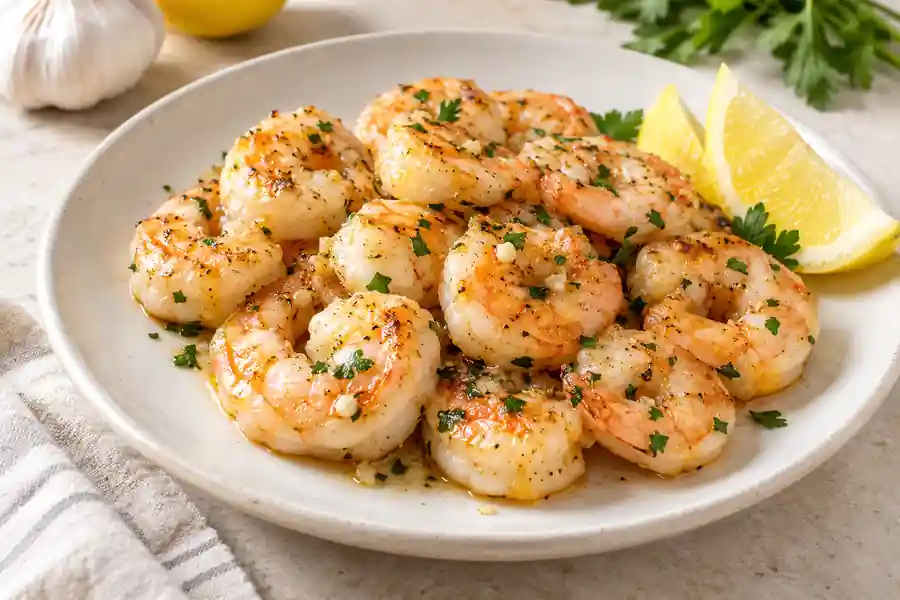
A simple marinade for shrimp with lemon and garlicfits beside rice, pasta or vegetables. Keep the shrimp chilled, use a short citrus soak and check doneness as you cook for a useful skillet dinner with bright flavor.
Lemon garlic shrimp recipe card
Follow us on Pinterest for more recipes and cooking ideas. · Follow us on Instagram

Lemon Garlic Marinated Shrimp
Ingredients
Method
- Thaw the raw shrimp safely, peel and devein if needed, and pat dry with disposable paper towels. Keep chilled while you measure the other ingredients.
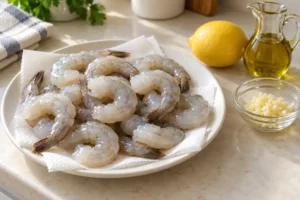
- Whisk olive oil, lemon juice, lemon zest, garlic, paprika, oregano, fine salt and black pepper in a glass or other nonreactive bowl.
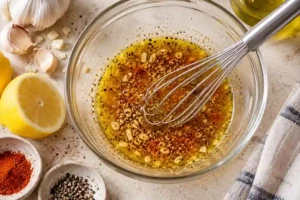
- Add the raw shrimp and toss gently until coated. Do not taste marinade after it touches raw shrimp.
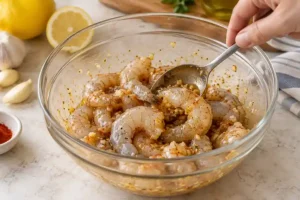
- Cover and refrigerate for 15 minutes. For this lemon-juice mixture, keep marinating to 15–30 minutes for texture; do not leave the shrimp in it overnight.
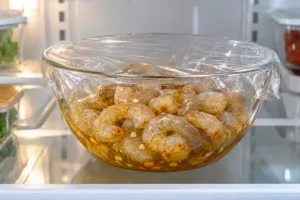
- Heat a large nonstick or well-seasoned skillet over medium-high heat. Lift shrimp from the marinade, letting excess drip off. Cook in a single layer, in batches if needed, about 2–3 minutes per side until cooked through. Check the thickest part with a food thermometer where practical: the seafood target is 145°F (63°C), and shrimp flesh should be firm, pearly and opaque. Discard the used marinade.
- Move cooked shrimp to a clean plate with clean utensils. Add optional parsley and lemon wedges and serve promptly.
Notes
Get easy recipes in your inbox
Join TasteWiser for new recipes, cooking tips and fresh inspiration.
Confirm your email to subscribe. Unsubscribe anytime.